Pavillons et Cocardes des Principales Puissances du Globe
/vexillology/atlas/1837
About
Pavillons et Cocardes des Principales Puissances du Globe, d'après des Documens Officiels (“Flags and cockades of the principal powers of the globe, after official documents”) is an engraved, hand-coloured sheet published in Paris by J. Andriveau-Goujon in 1837, issued as No. 40 of the firm's Atlas Universel. It presents the naval and state flags of the powers of the day in six rows of country groups, together with the cockades (cocardes) of many states, and twelve printed footnotes on usage.
This page catalogues the sheet as a historical source. Printed headings and captions are transcribed as printed, with capitals normalized to mixed case and the engraver's abbreviations (Pav.on, Anc.en, G.d) expanded silently; an English rendering follows each transcription in italics. The printed captions do not by themselves establish that every depicted design was official, current, or colour-accurate at the time of publication.
Source Catalogue

| Printed title | Pavillons et Cocardes des Principales Puissances du Globe, d'après des Documens Officiels |
|---|---|
| Date | 1837, printed beneath the imprint. One of the few sheets in this collection carrying its date. |
| Associated work | Atlas Universel; the sheet is marked Atlas Universel, N° 40 at upper right. |
| Publisher | J. Andriveau-Goujon, Rue du Bac No. 6, Paris: Publié à Paris, par J. Andriveau-Goujon, Rue du Bac, N° 6. |
| Creator of plate | Not stated on the sheet |
| Language | French |
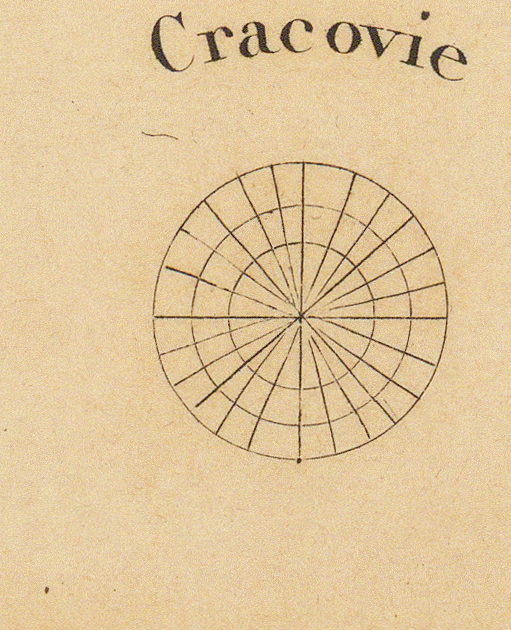
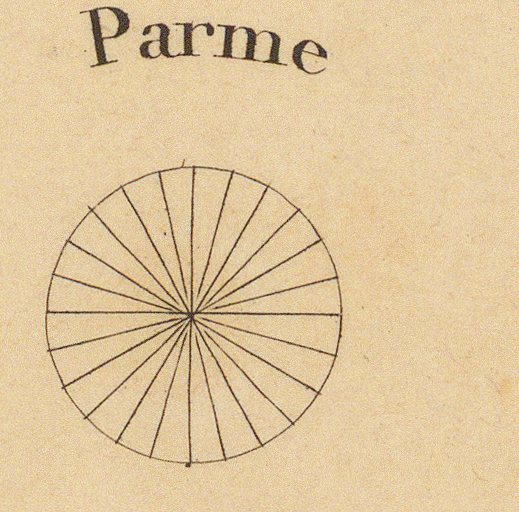
| Format | Engraved sheet, hand-coloured. Two cockades (Cracovie, Parme) were left uncoloured in this copy, showing the engraved line-work beneath the colouring. |
| Physical extent | One sheet; approximately 65 × 50 cm, inferred from the 600 dpi scan. Dimensions of the physical sheet not yet measured directly. |
| Provenance | Not yet recorded |
| Contents | 108 flag panels in six rows of country groups (114 flag drawings: the five French arrondissement panels and the Chinese panel each contain two). A separate band carries 15 labelled cockades of minor states; unlabelled cockades are also drawn beside the flags of most powers. Twelve footnotes, keyed (a)–(r), are printed in two Notes panels. |
| Digital surrogate | Complete sheet: JPEG, 15433 × 11871 pixels at 600 dpi, with a reduced 1024 × 787 JPEG for display. Extracted panels: PNG (123: 108 flag panels and 15 cockades), cropped from the 600 dpi scan. |
| Catalogue status | Preliminary. Bibliographic placement of the Atlas Universel issue, provenance, and individual flag analysis remain subject to revision. |
Editorial convention: Historical names and spellings are retained because they are evidence of the source's terminology — Danemarck, Norwège, Nouvelle Grenade, Buenos-Ayres are kept as printed. Modern identification and analysis are supplied separately, without silently replacing the printed labels.
Index of Flag Panels
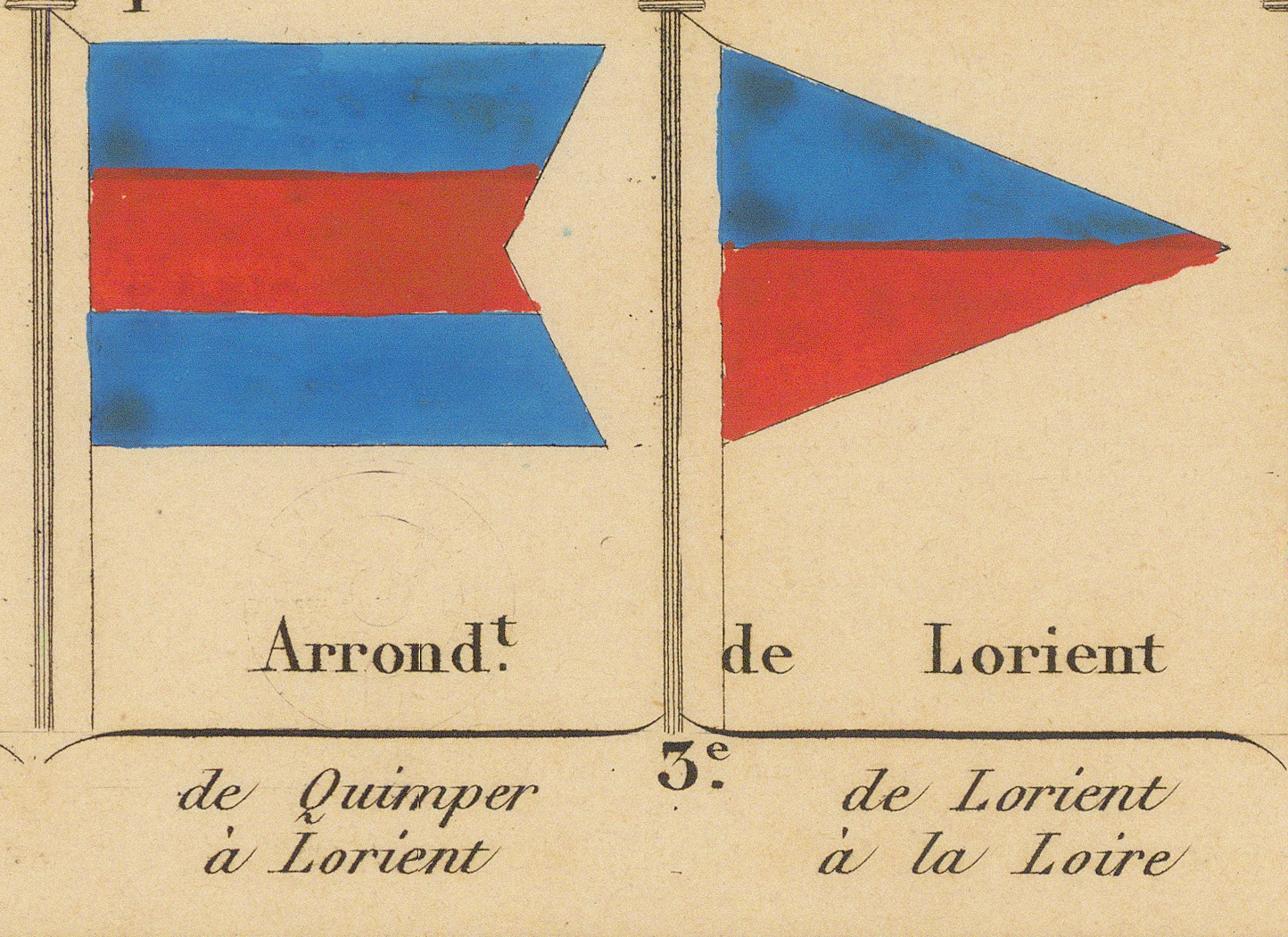
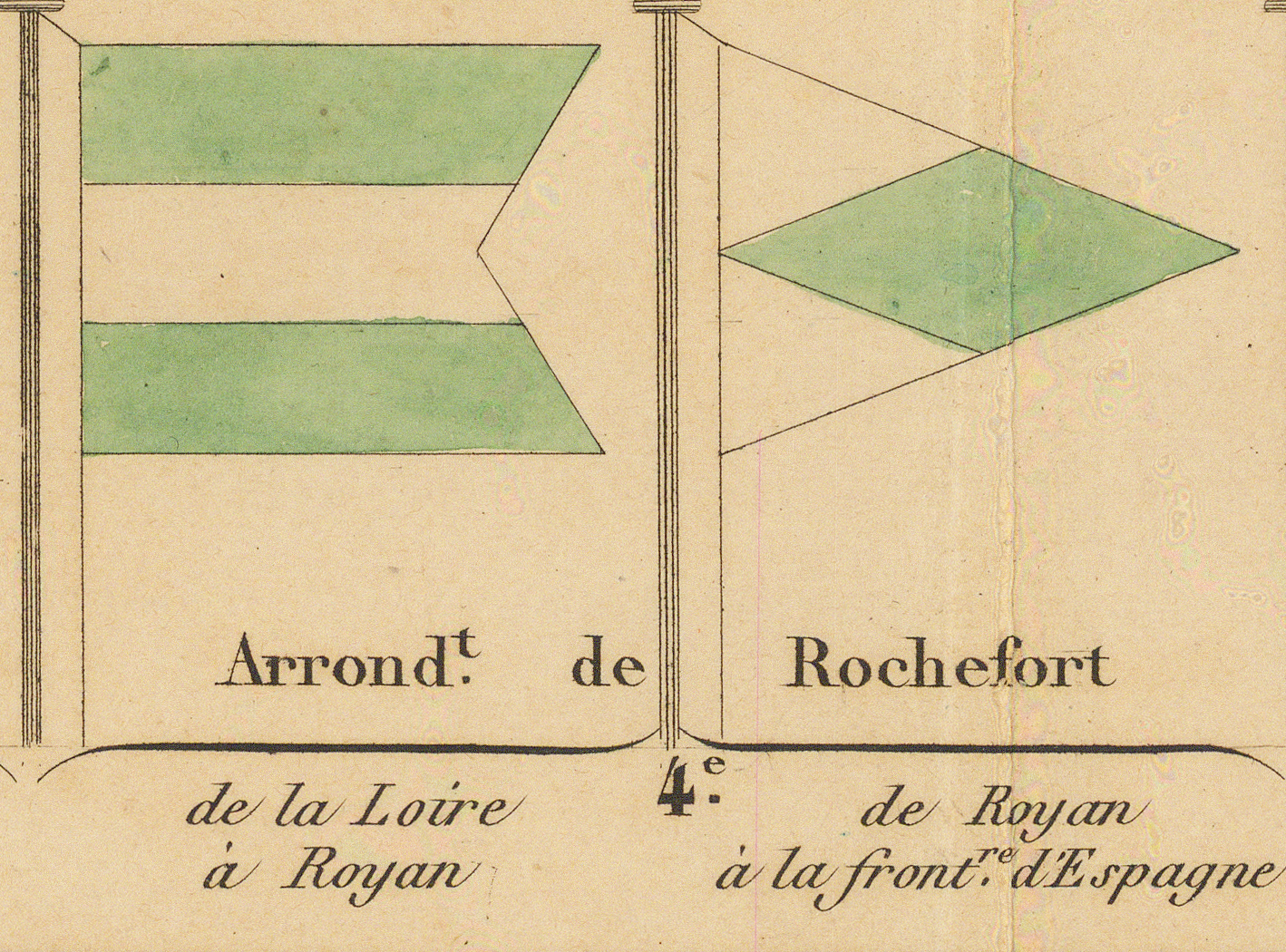
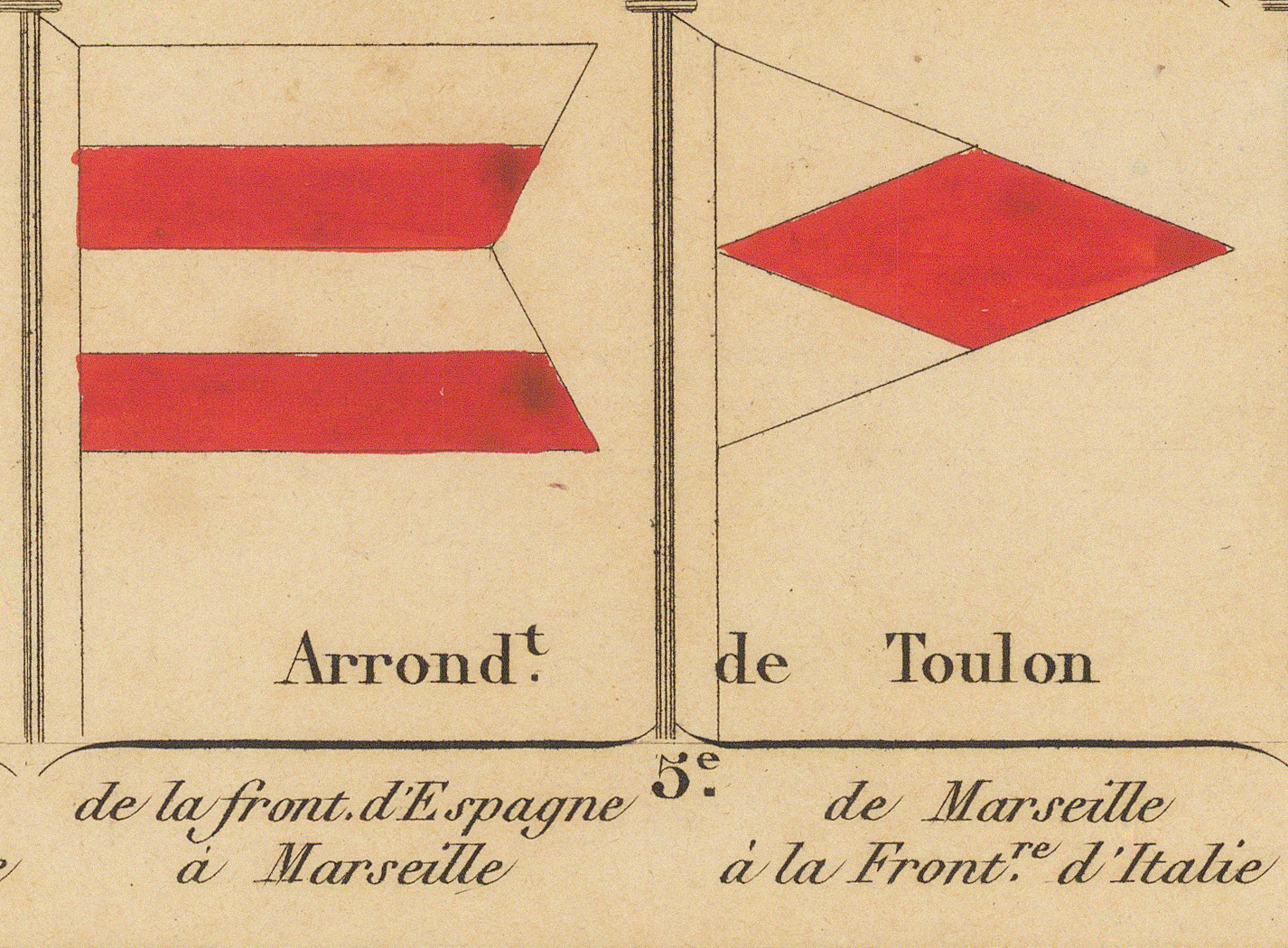
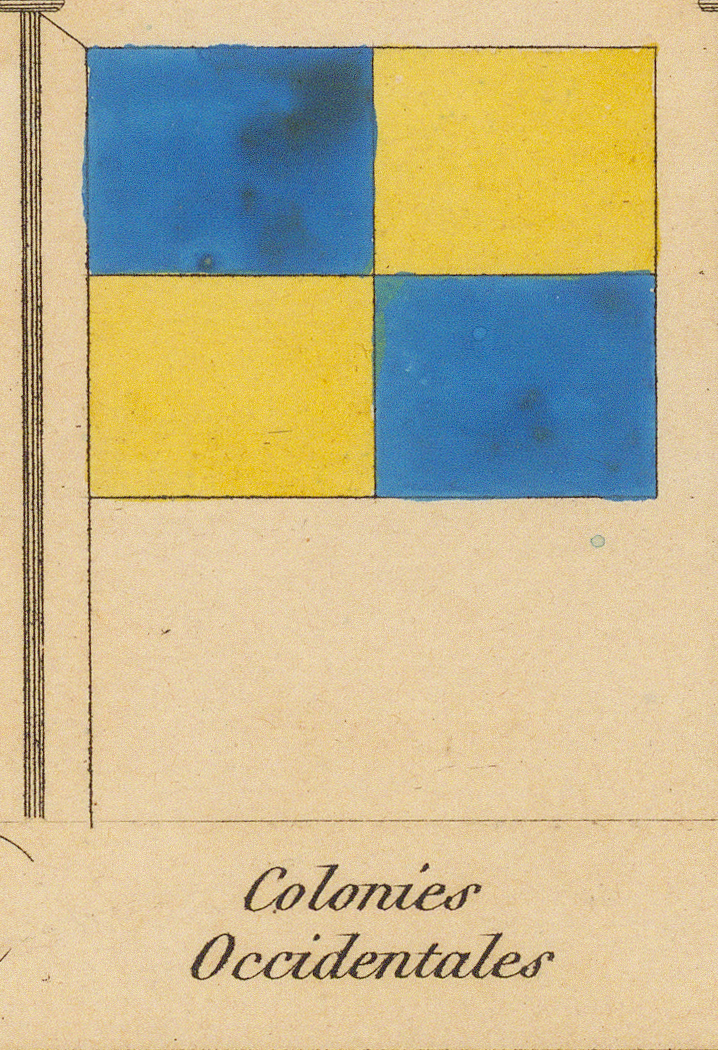
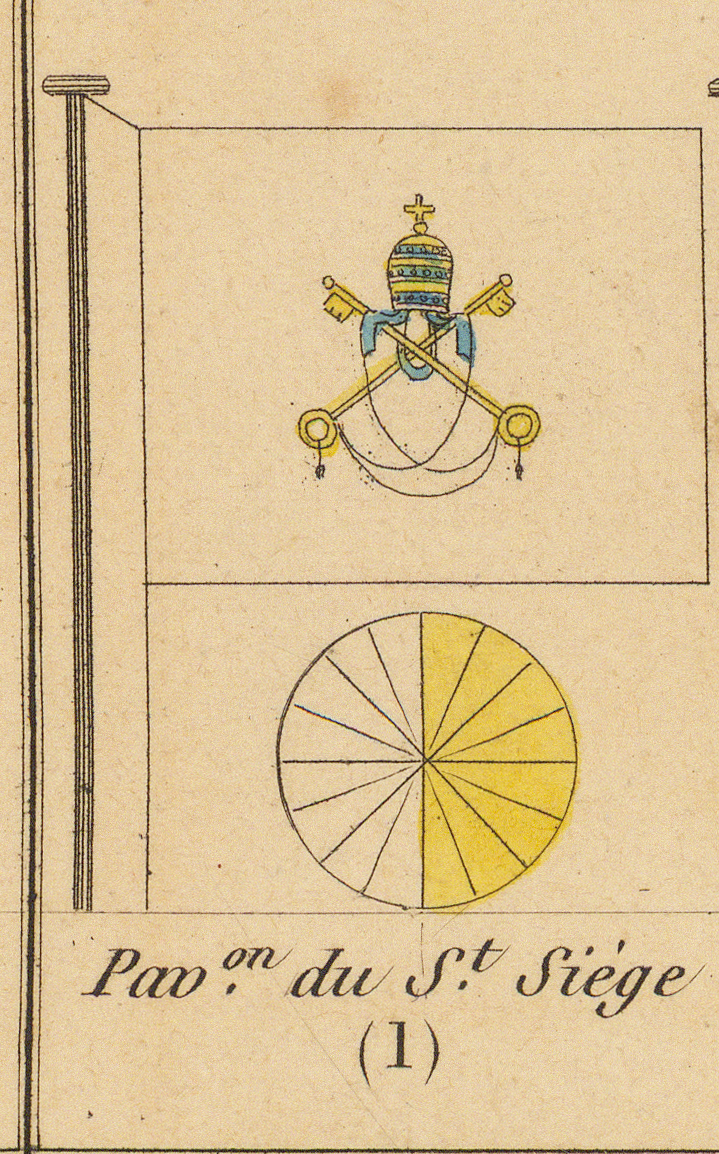
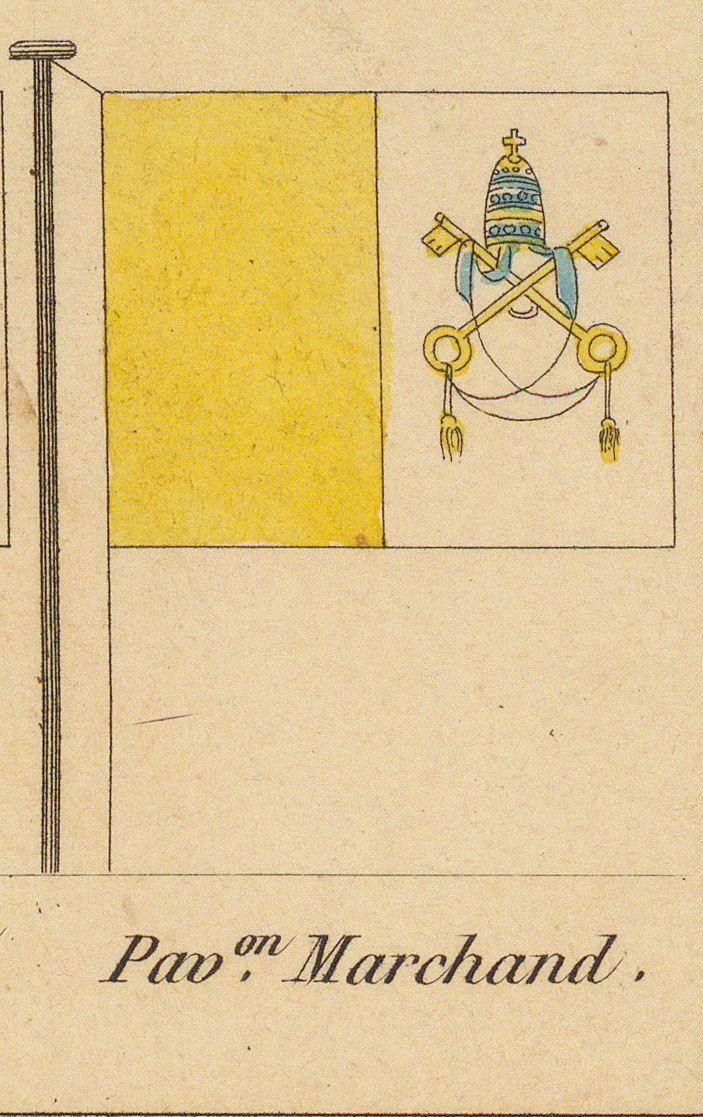
The sheet contains 108 flag panels in six rows, grouped under printed country headings. They are presented here in the order in which they appear on the sheet, read left to right and top to bottom; each entry gives the printed group heading, the printed caption where one exists, and an English rendering in italics. Small unlabelled cockades drawn beside a flag are included in that flag's extraction. The five French arrondissement panels each contain two drawings with a shared caption, as does the Chinese panel. Select any image to open the full-resolution extraction.
France · Suède et Norwège · Oldenbourg – Mecklembourg · Danemarck – Suisse · Autriche – États Sardes · Lucques – Japon · Siam – Pérou · Cocardes
France
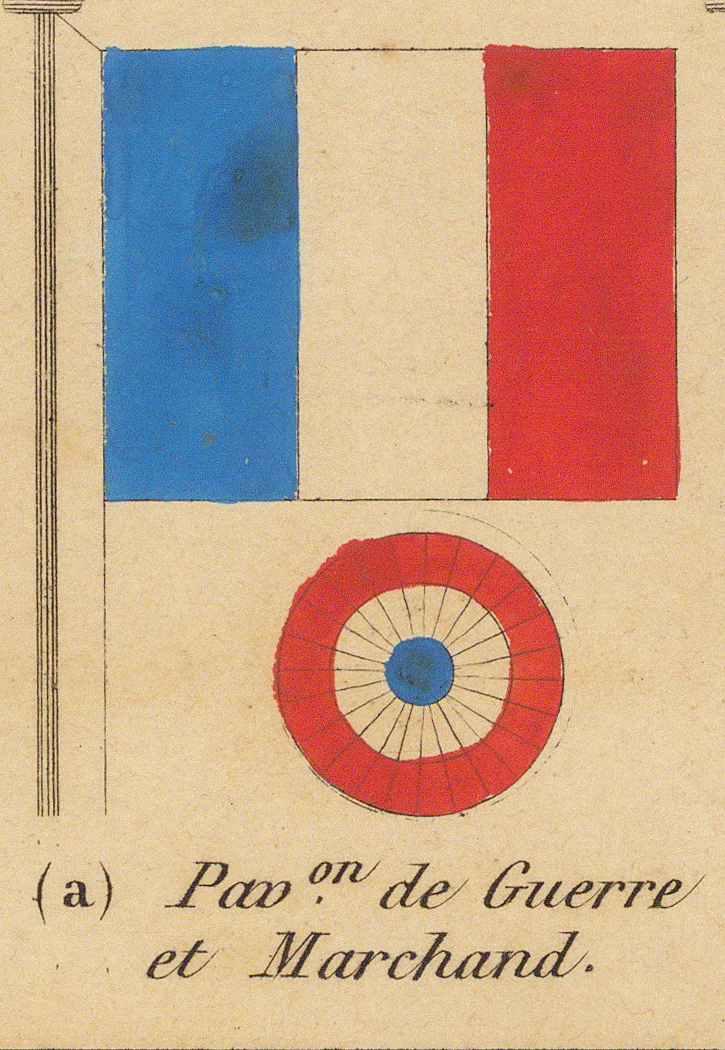
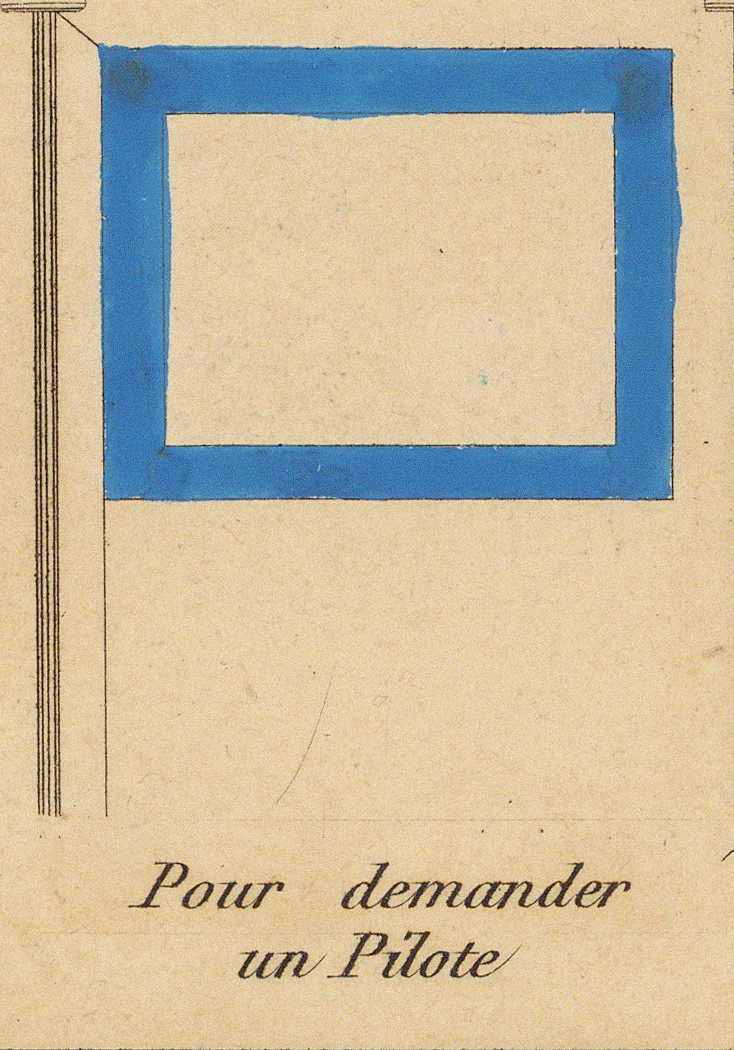
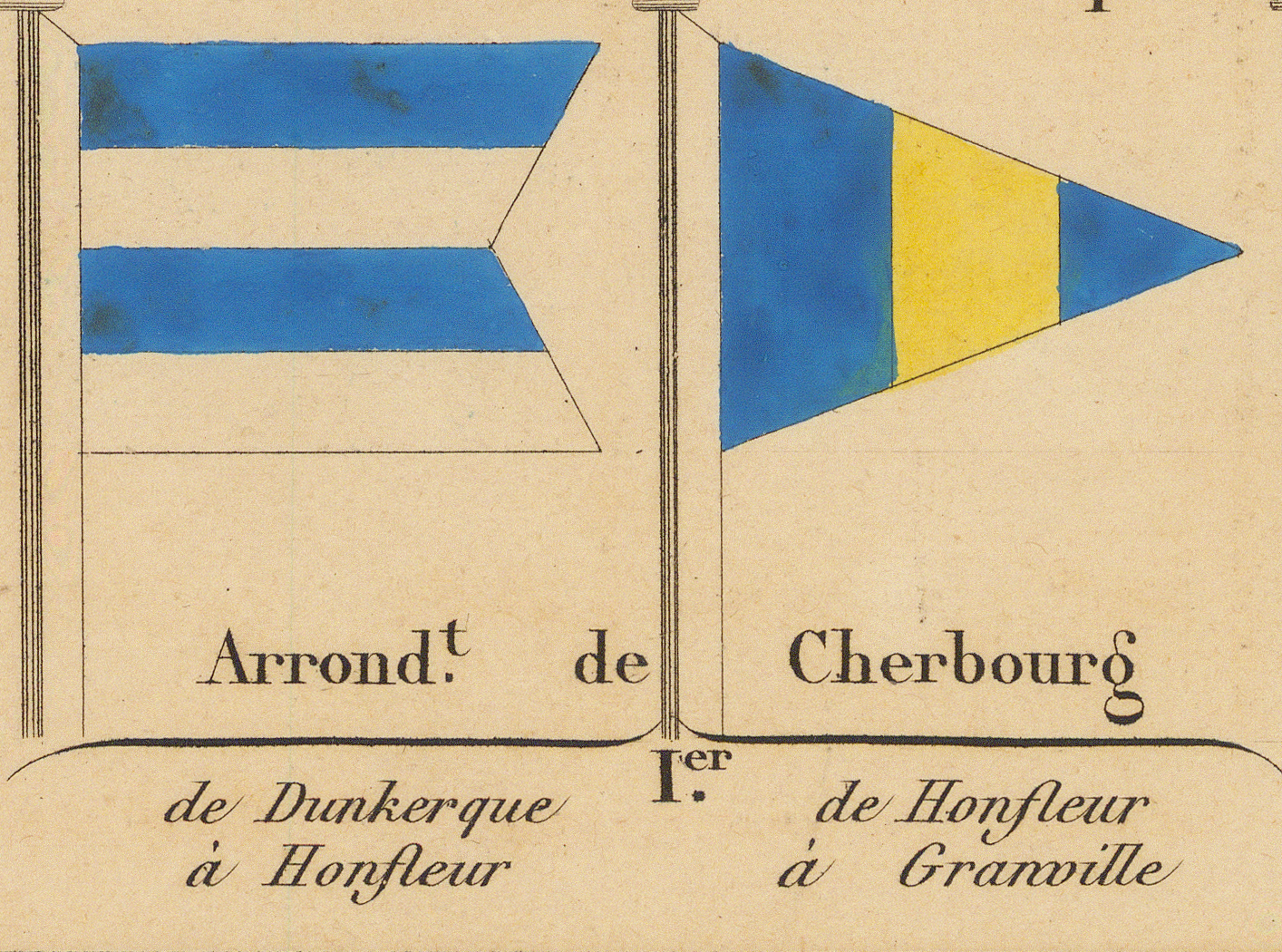
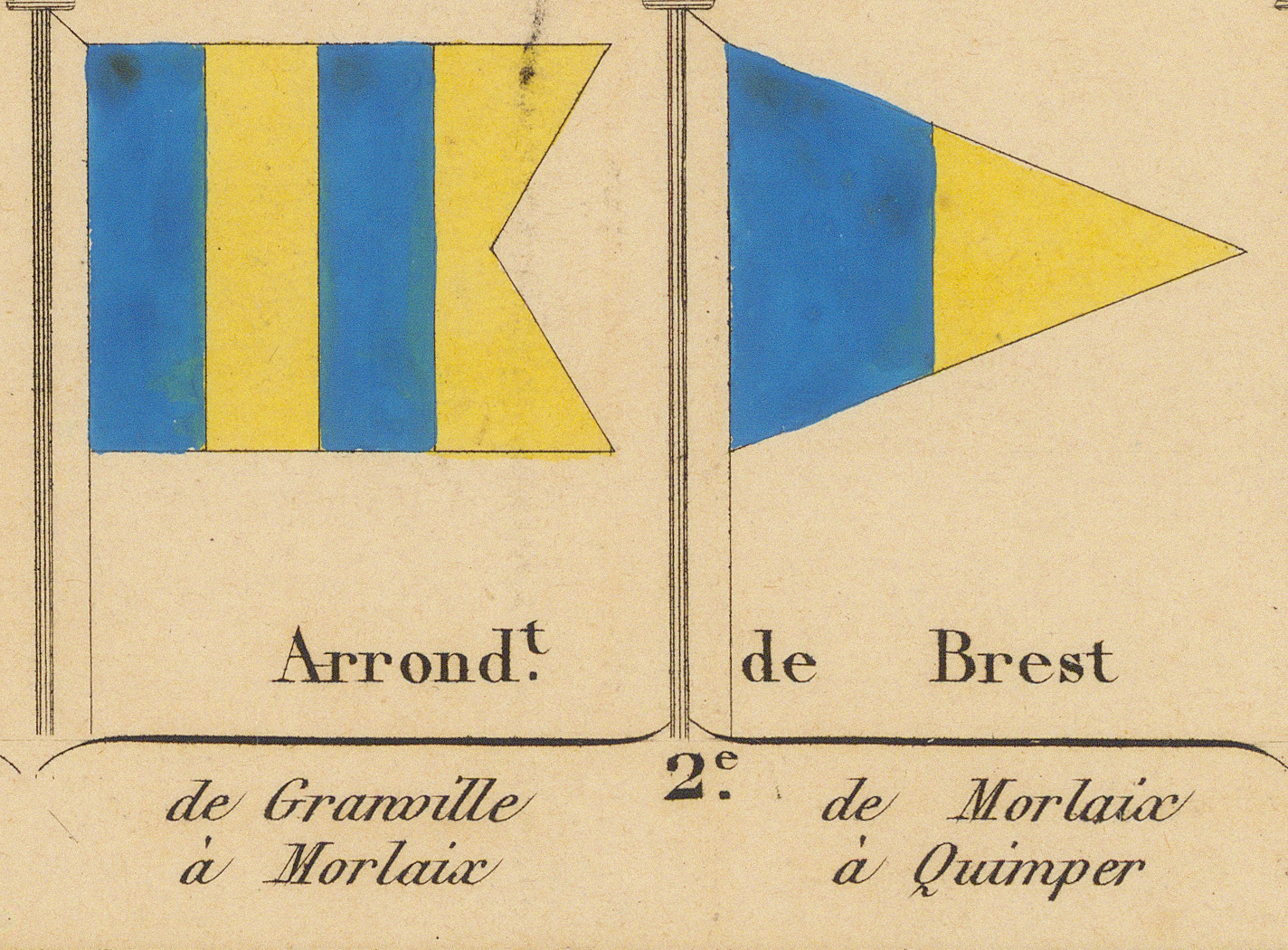
The five arrondissement panels stand under a printed brace headed Pavillons particuliers aux cinq Arrondissemens Maritimes du Commerce (“particular flags for the five maritime districts of commerce”); each panel pairs a pennant and a flag for the two coastal stretches of its district.
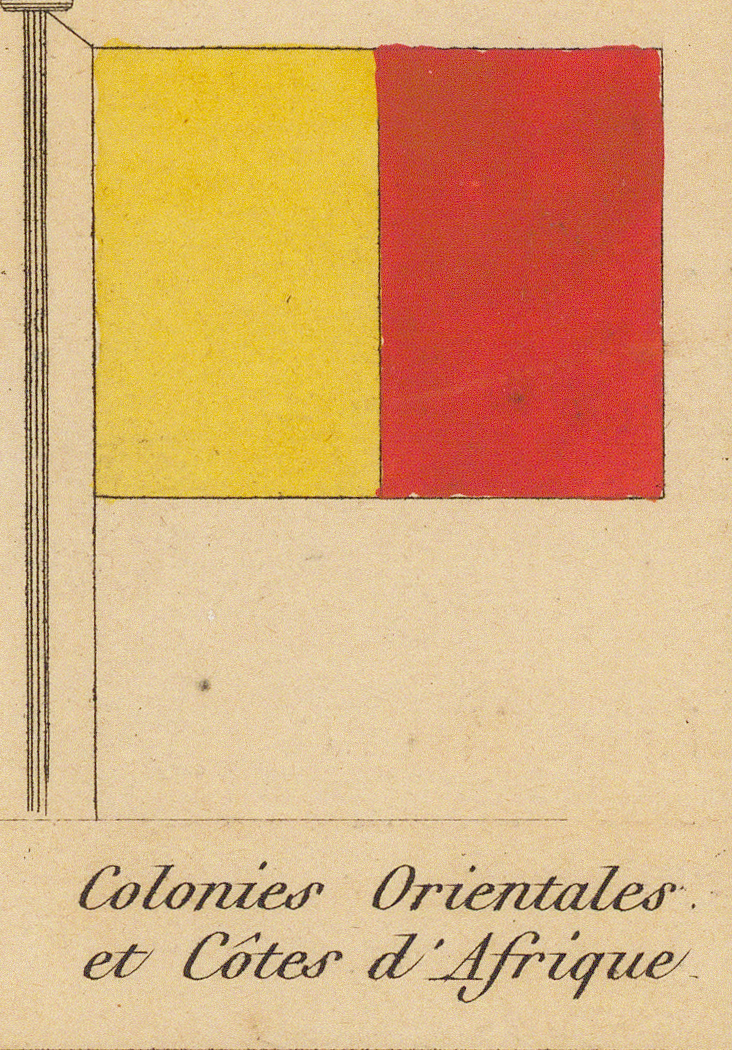
Suède et Norwège
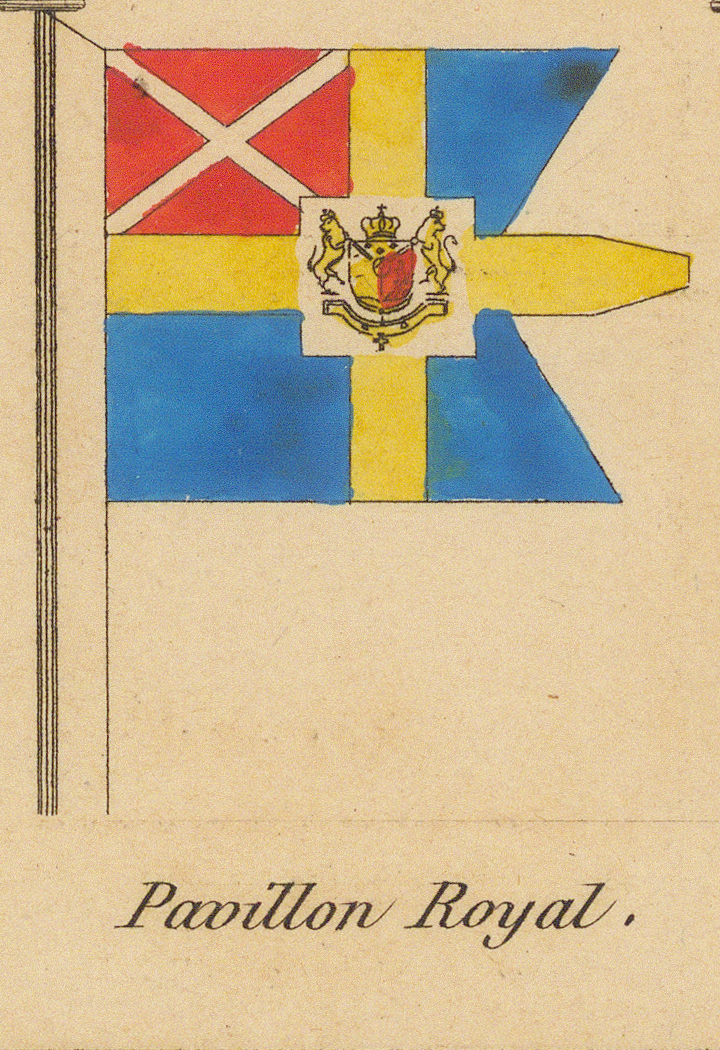
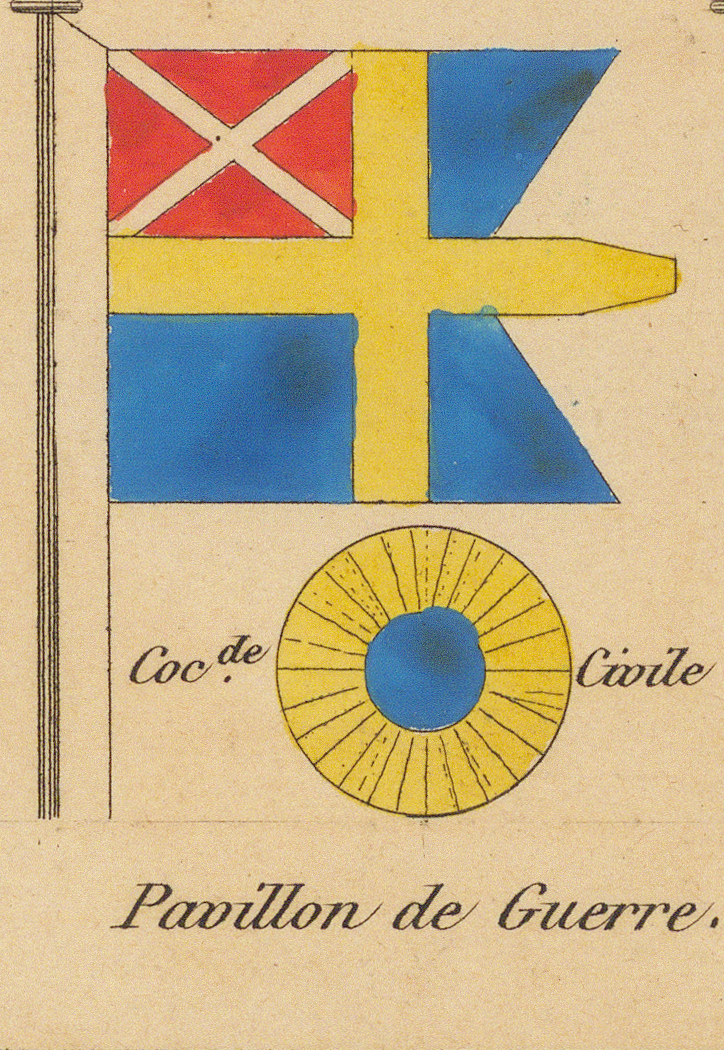
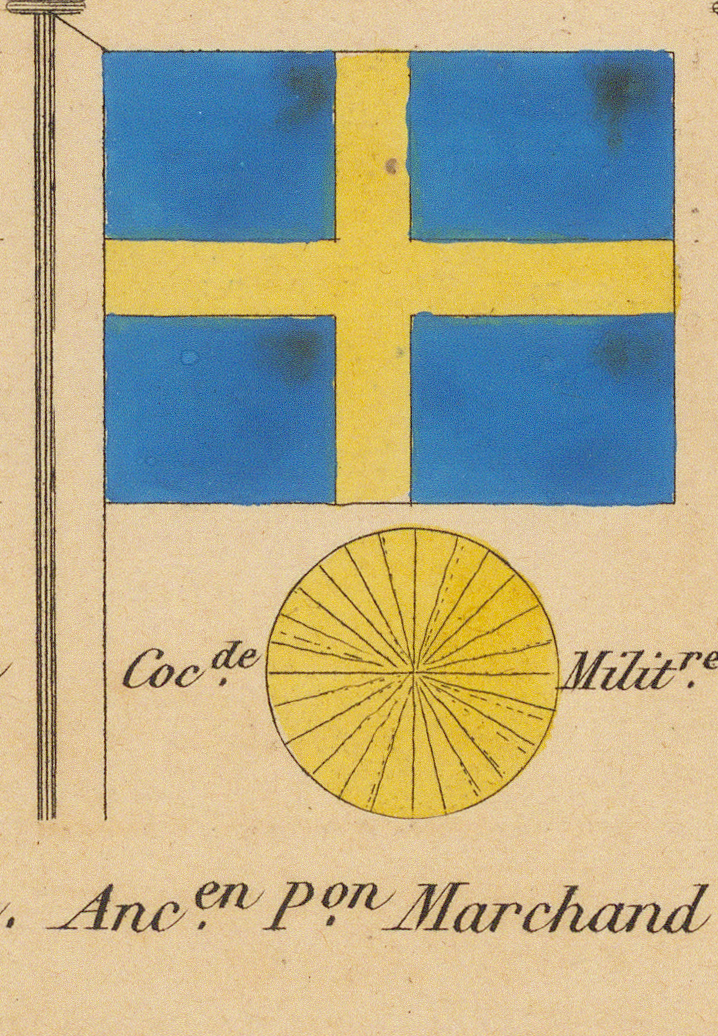
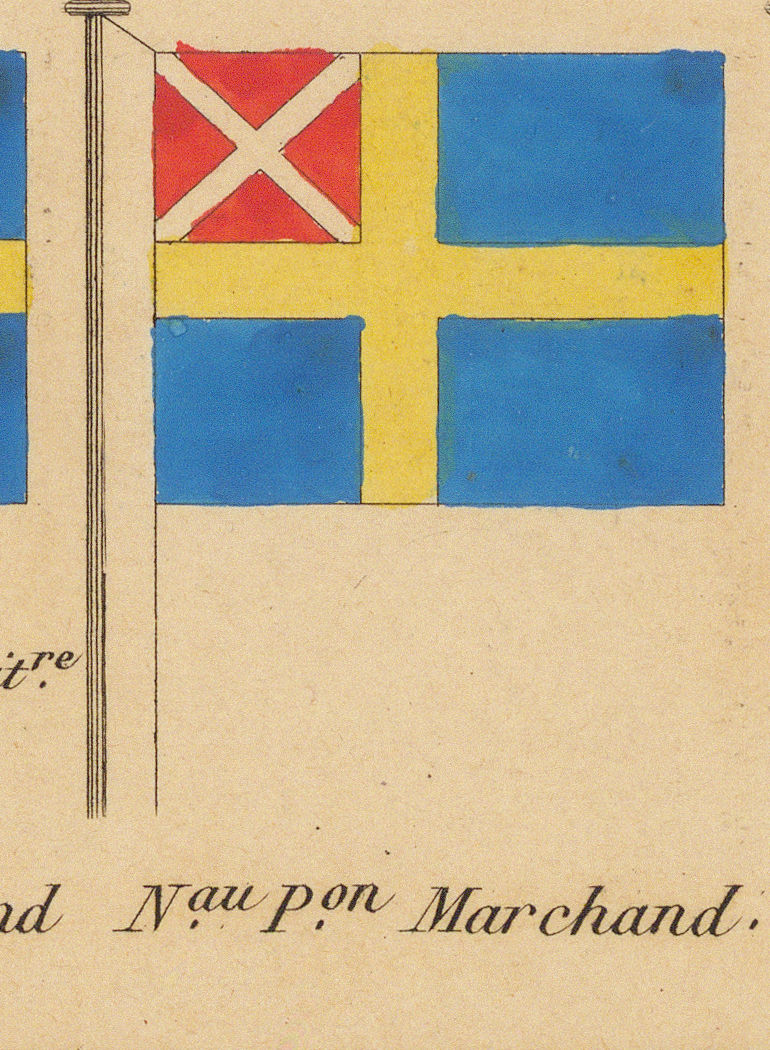
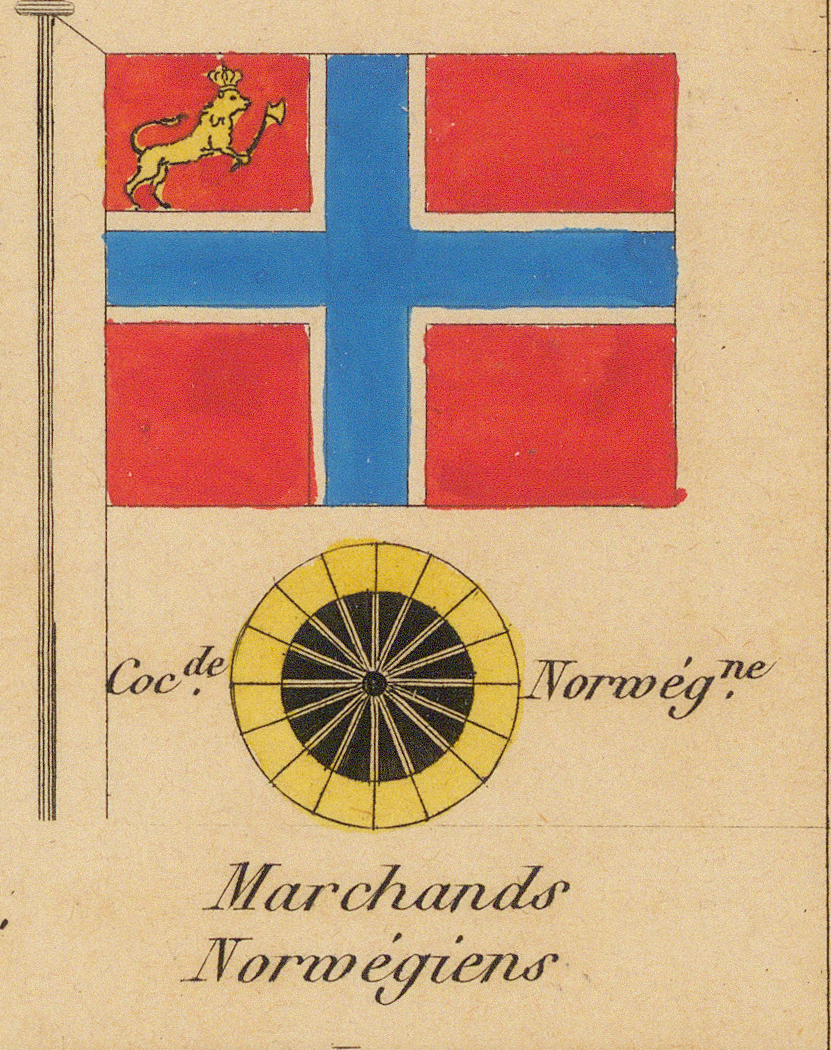
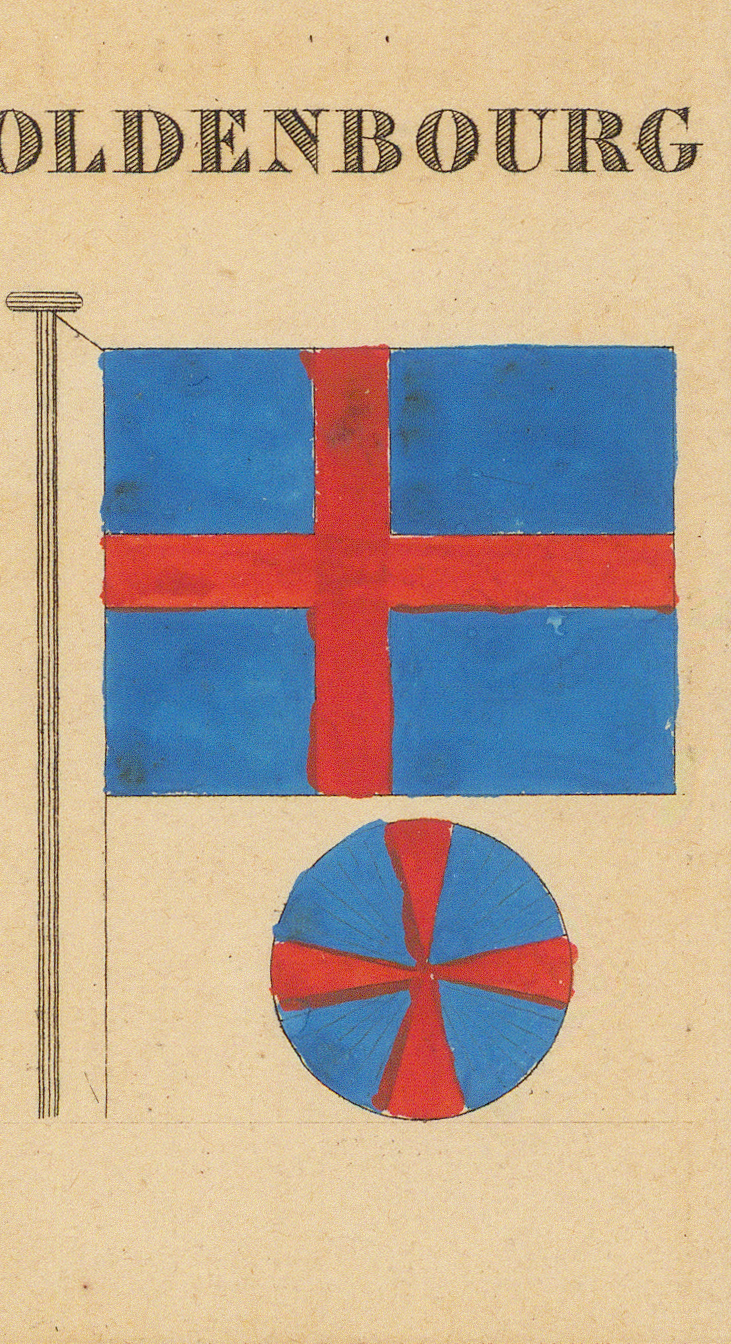
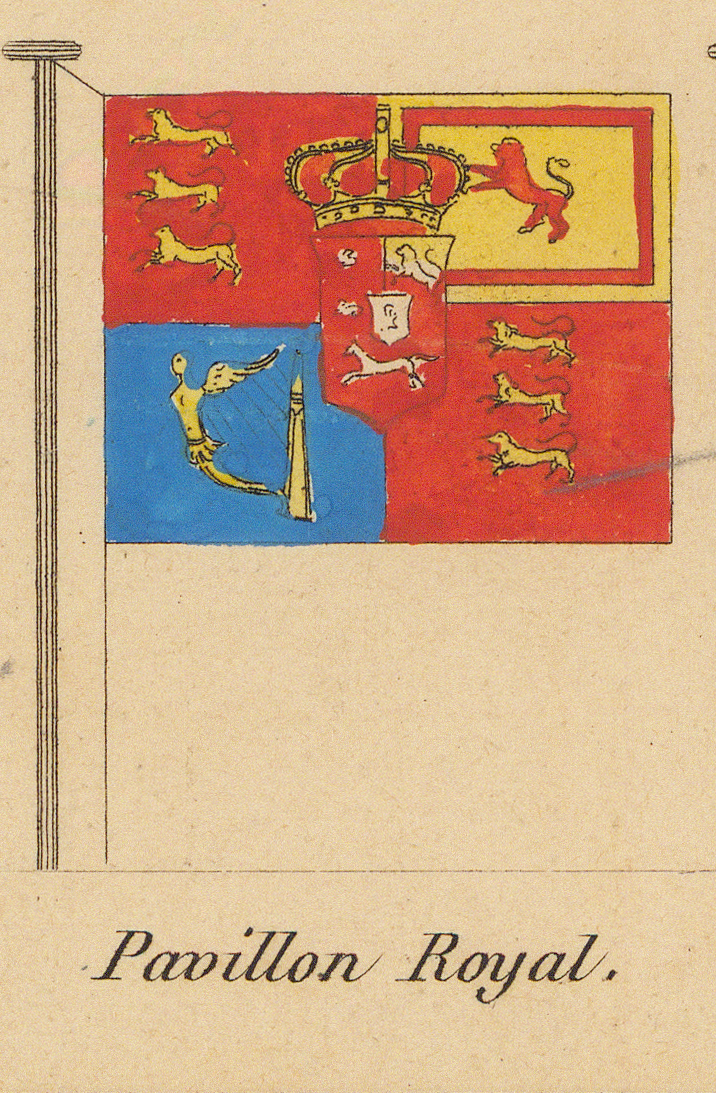
Oldenbourg · Angleterre · Hanôvre · Russie · Pologne · Mecklembourg
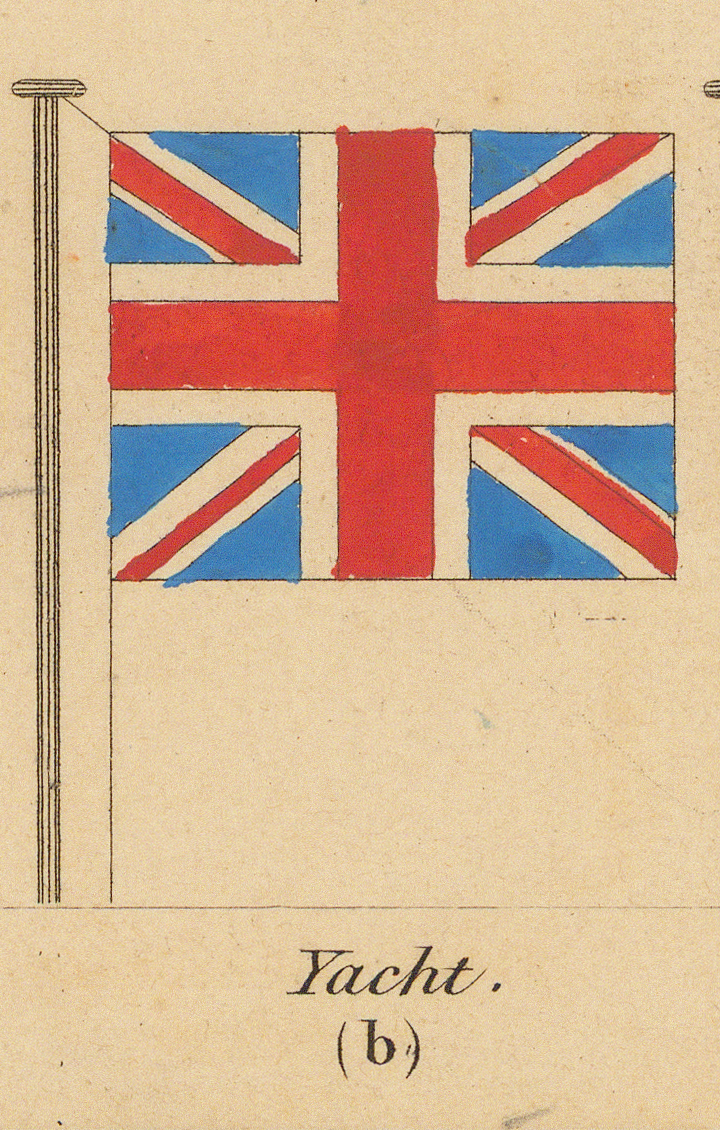
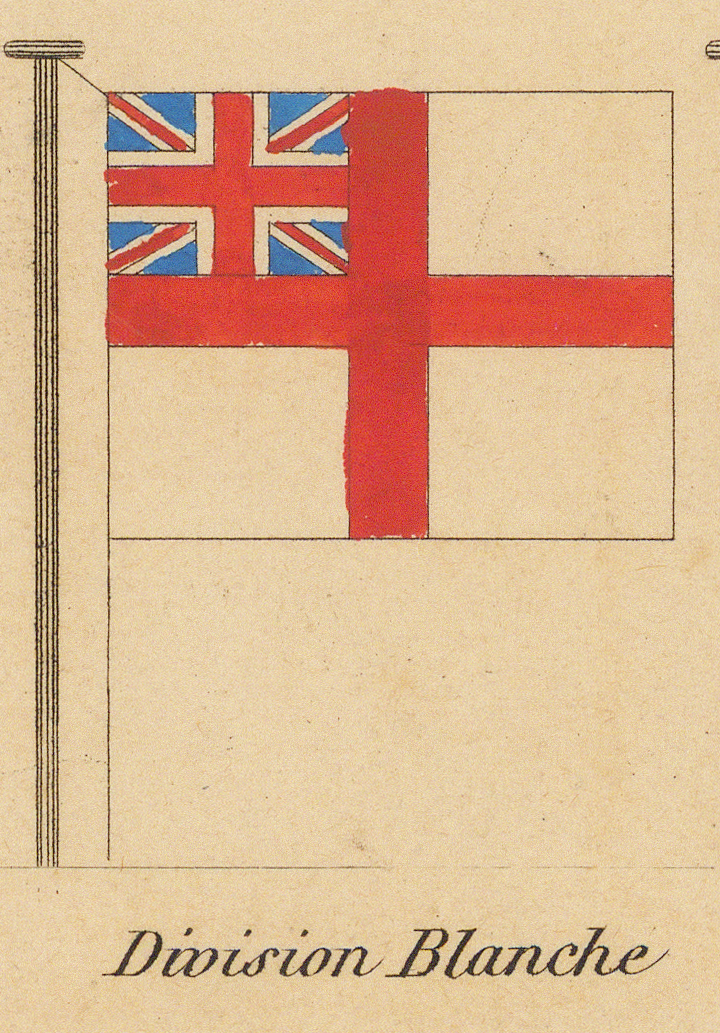
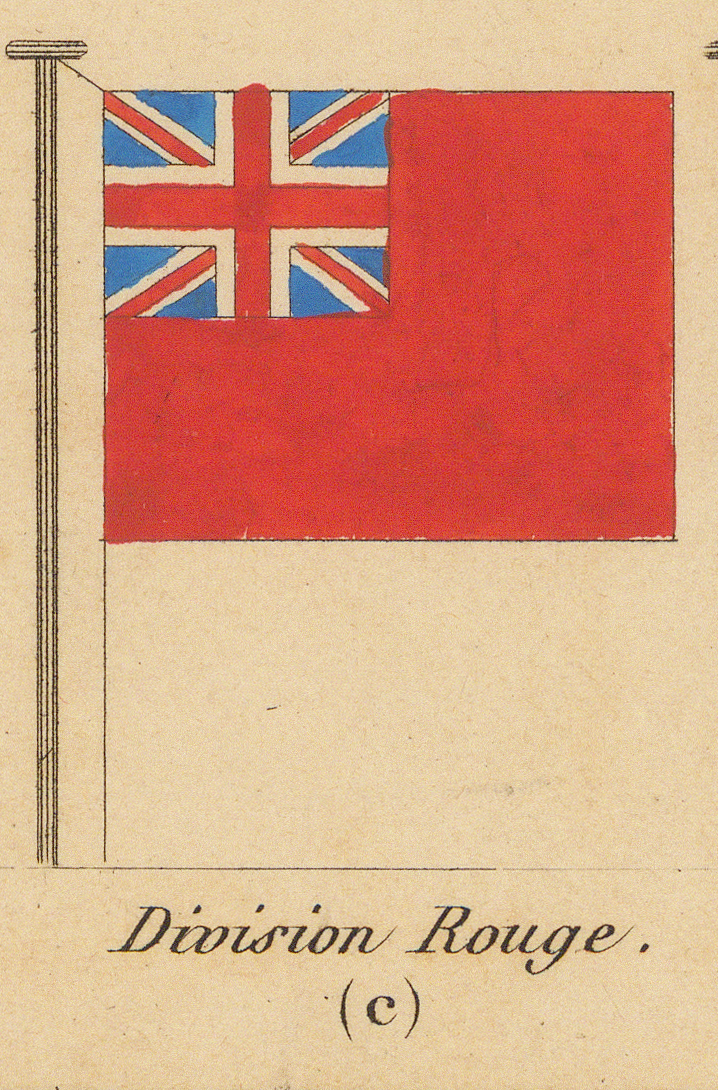
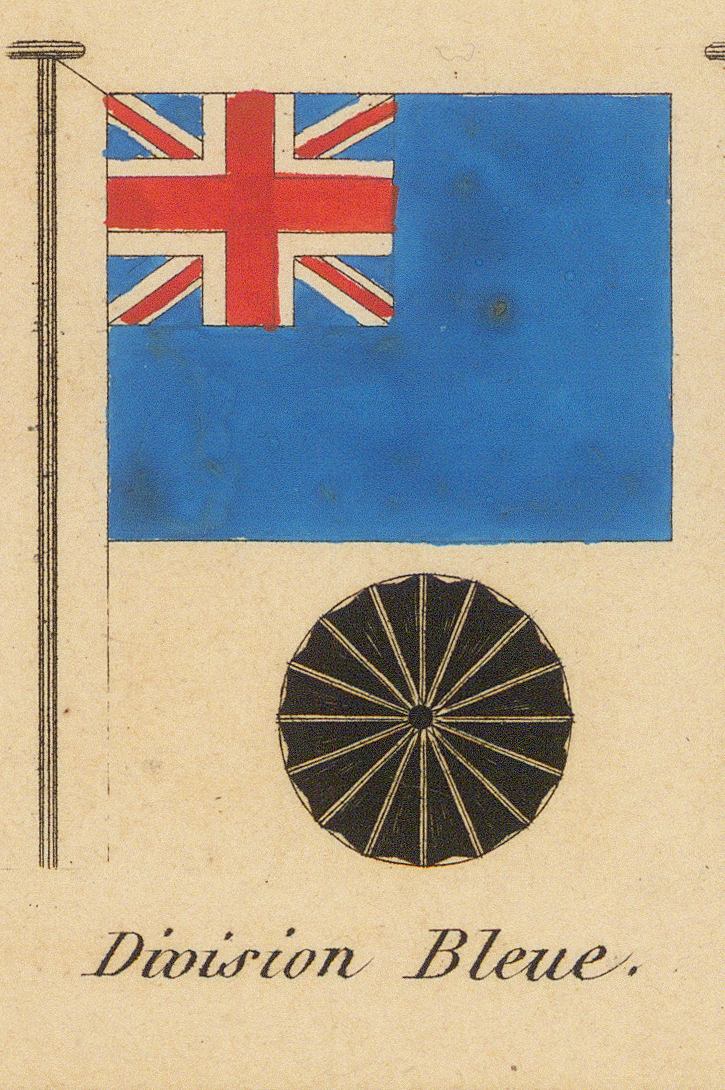
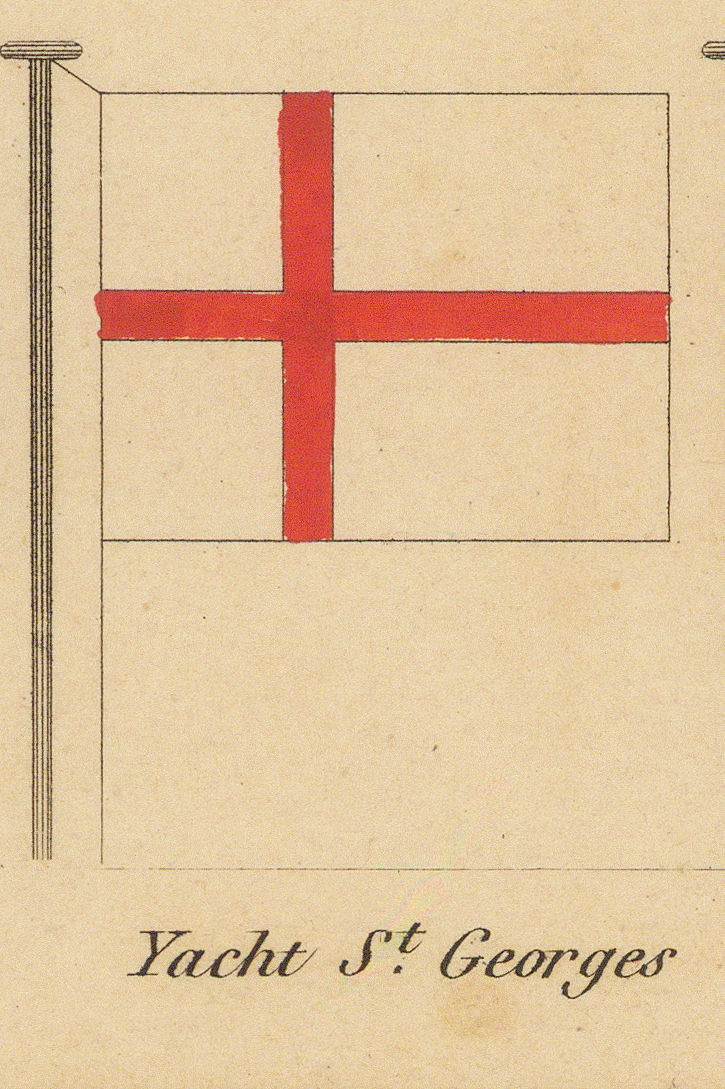
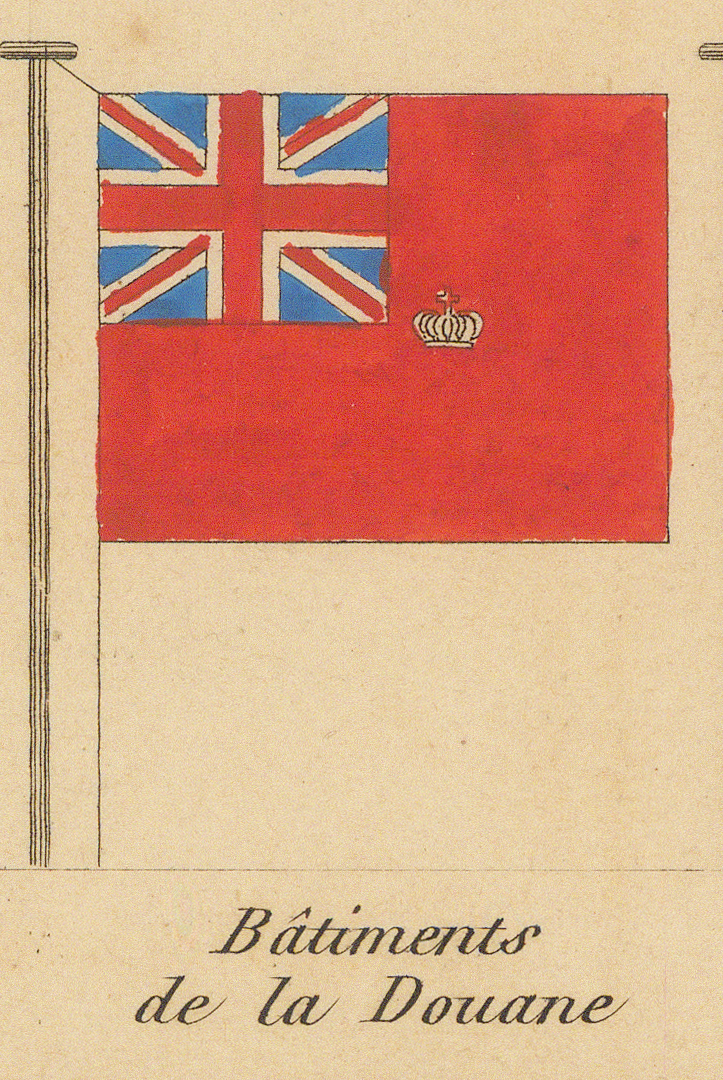
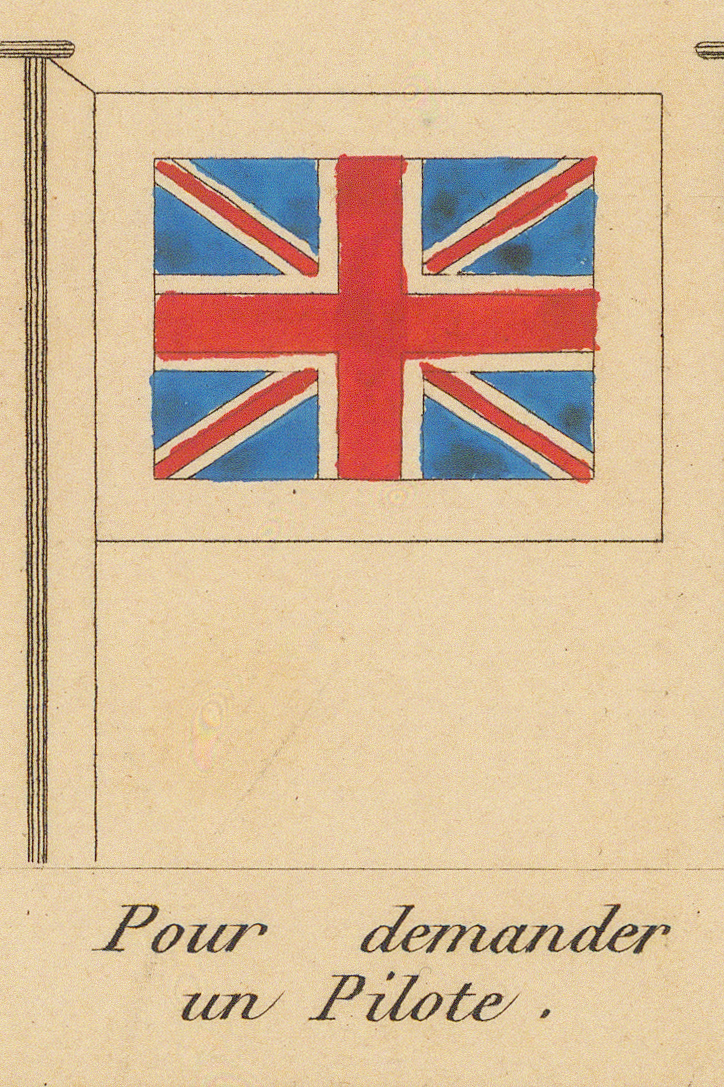
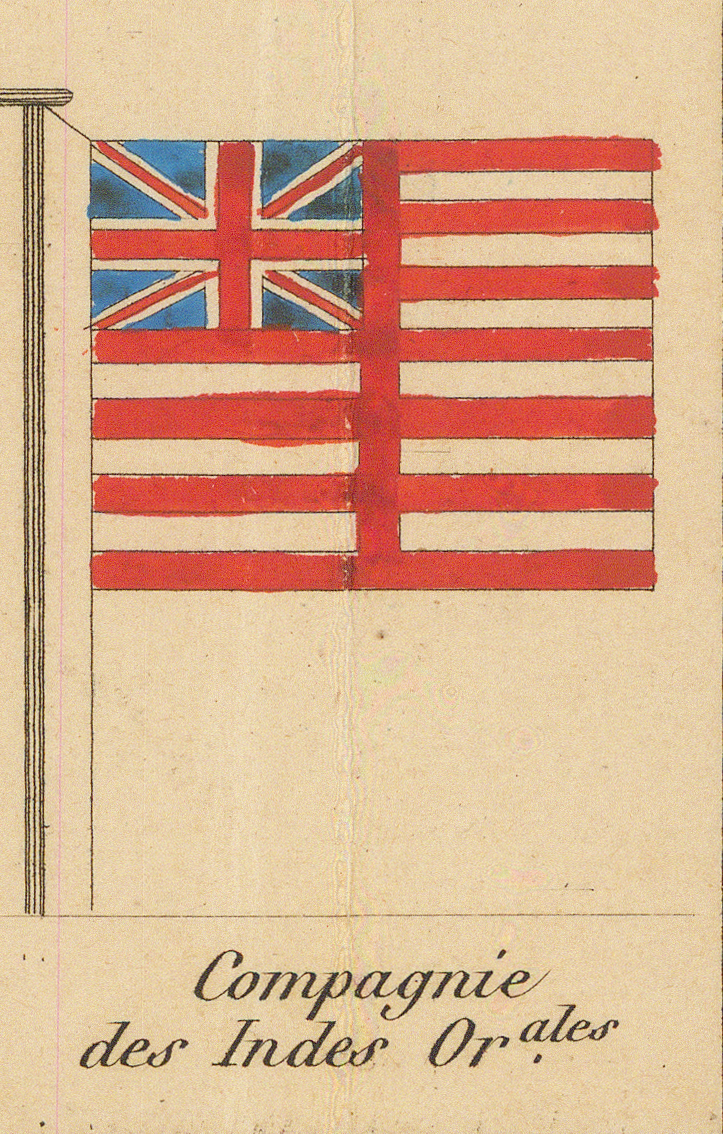
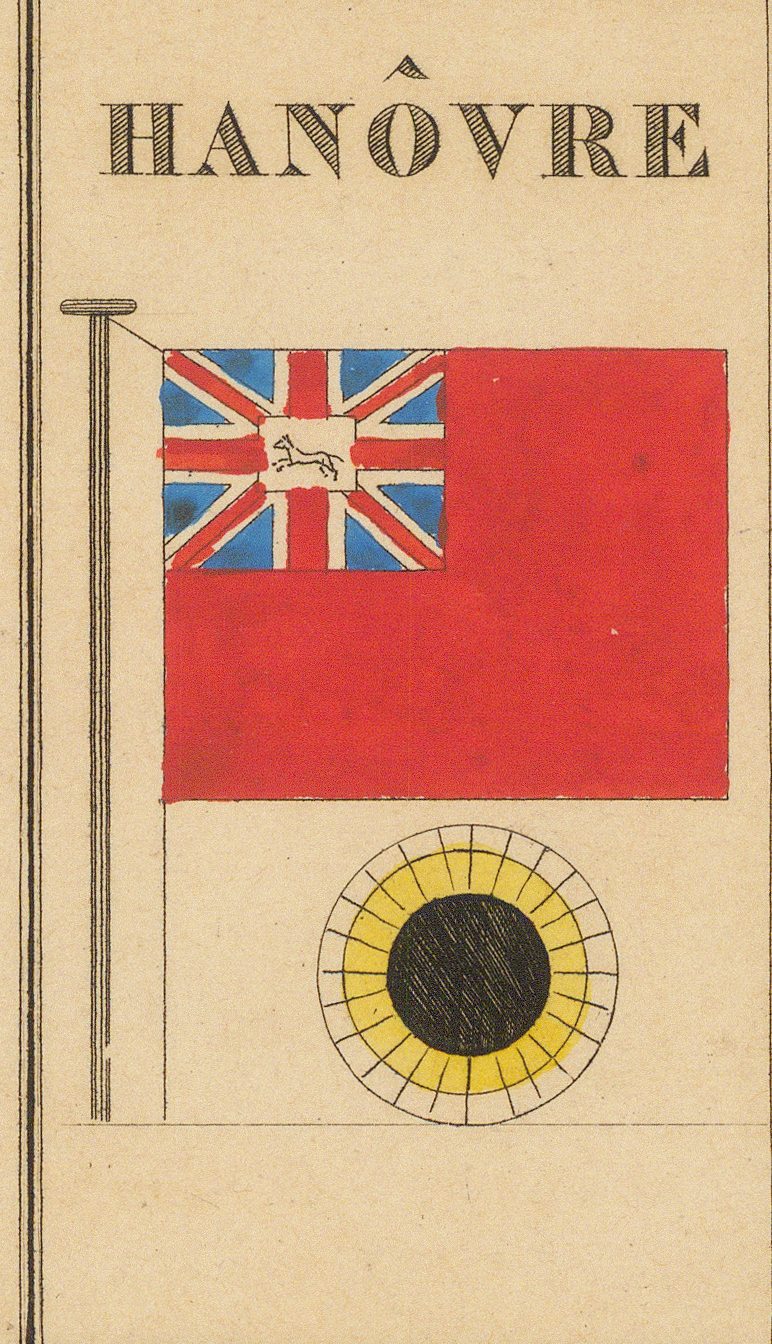
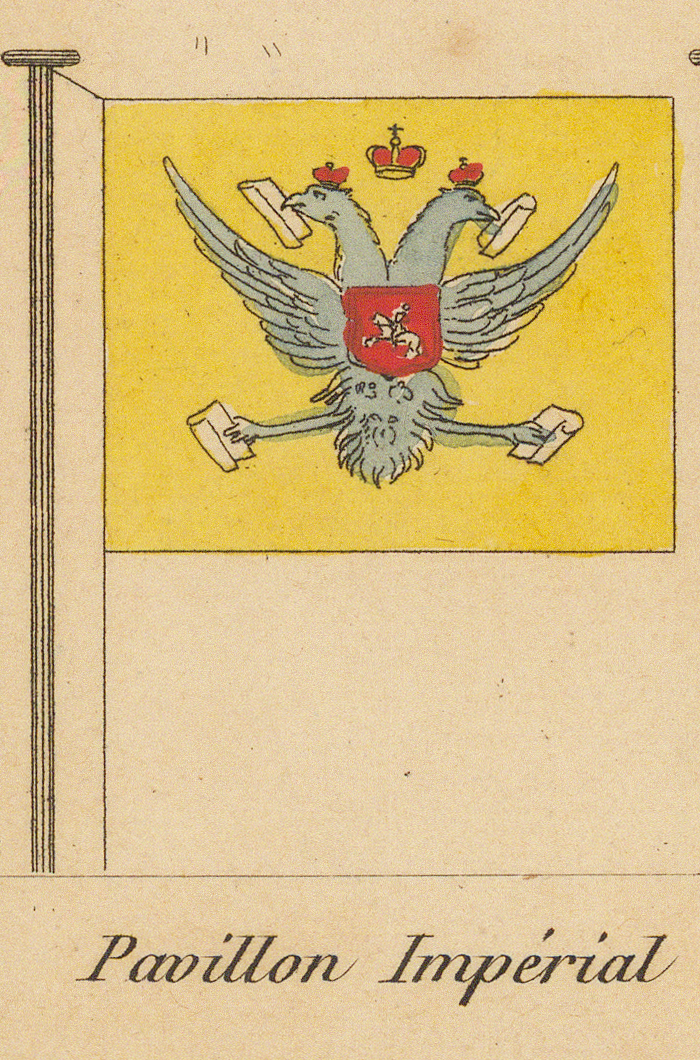
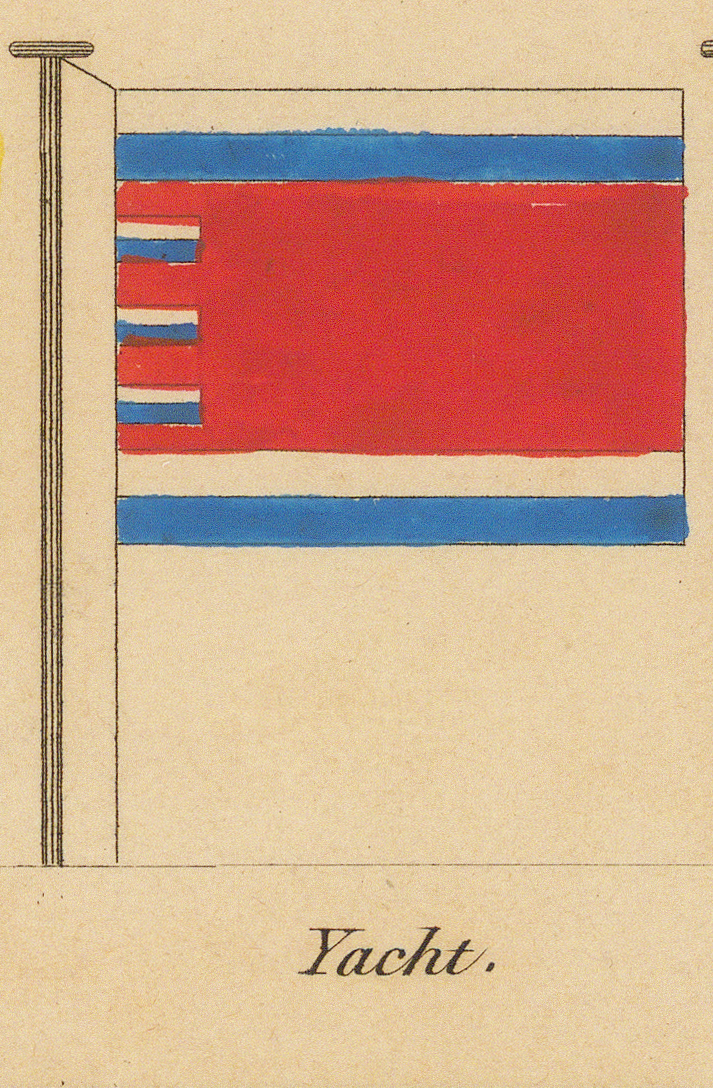
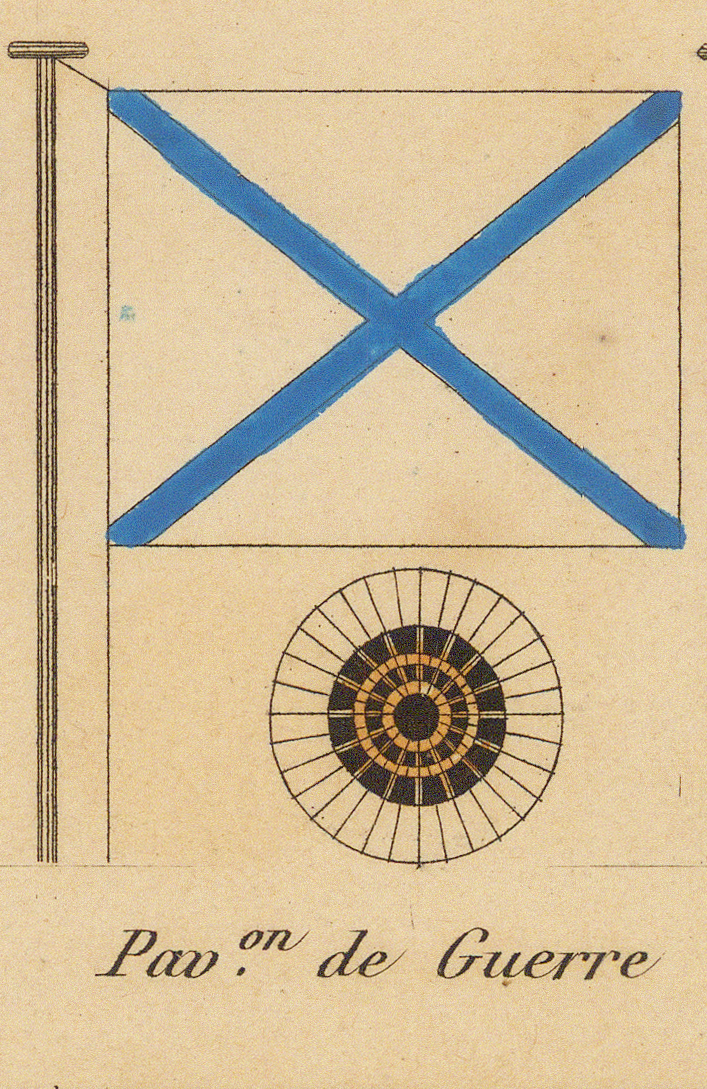
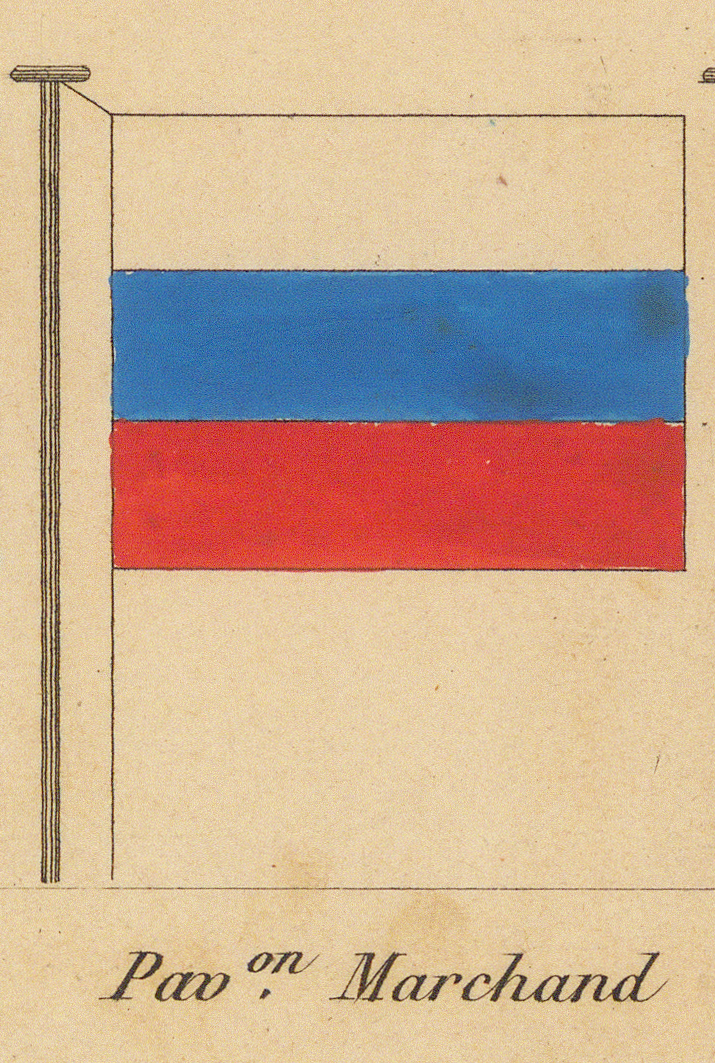
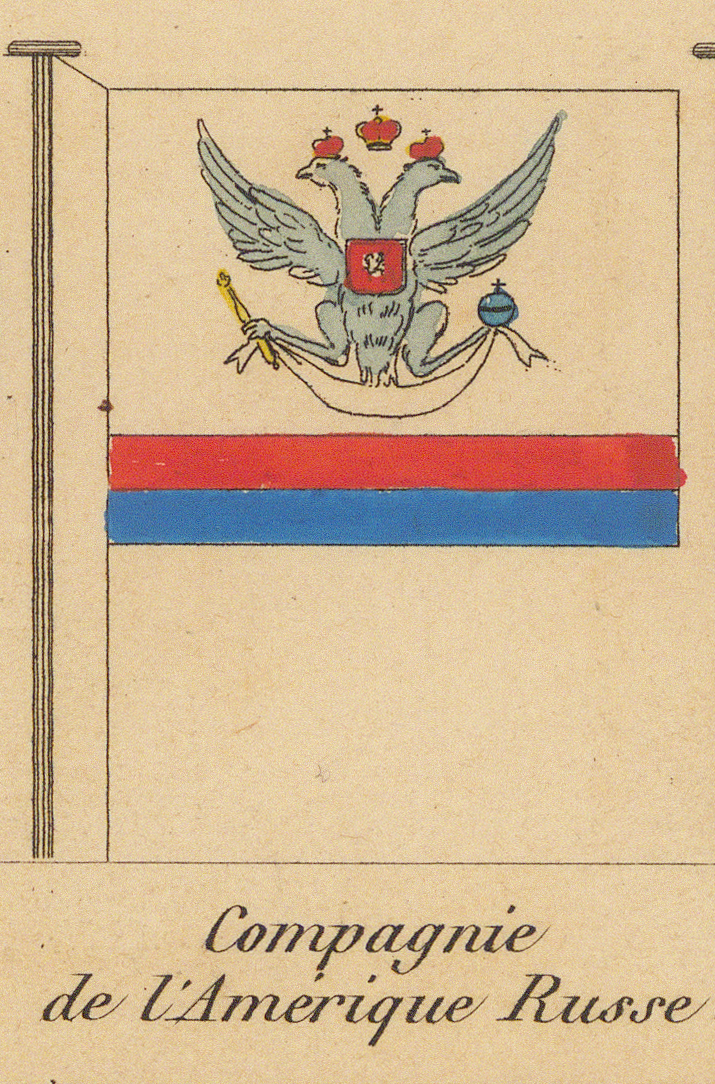
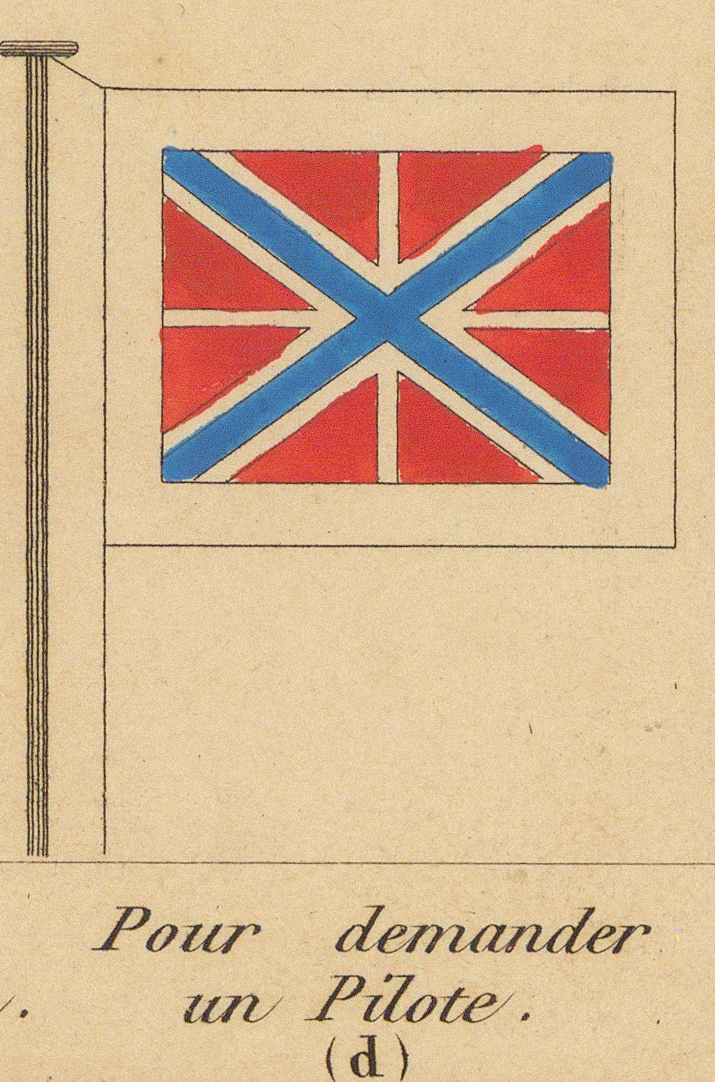
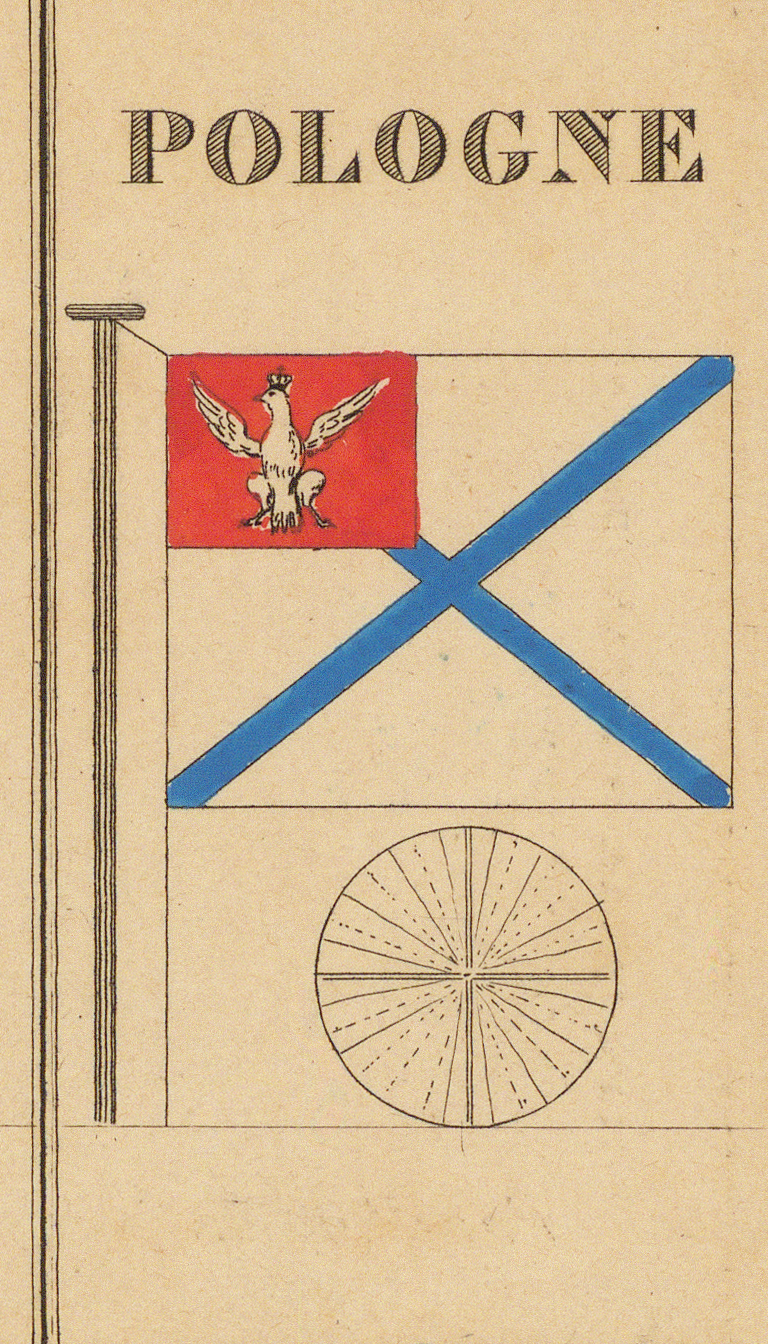
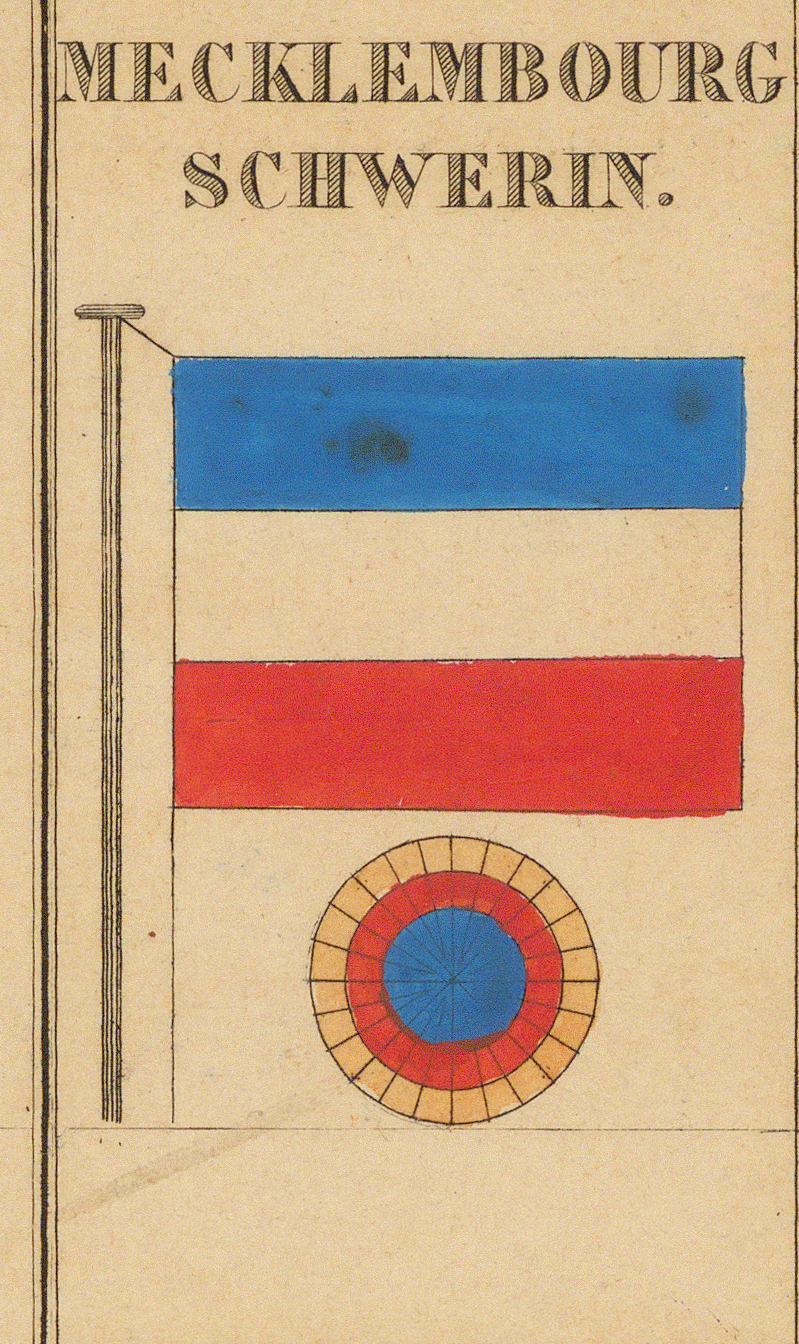
Danemarck · Hollande · Belgique · Villes Libres · Prusse · Suisse
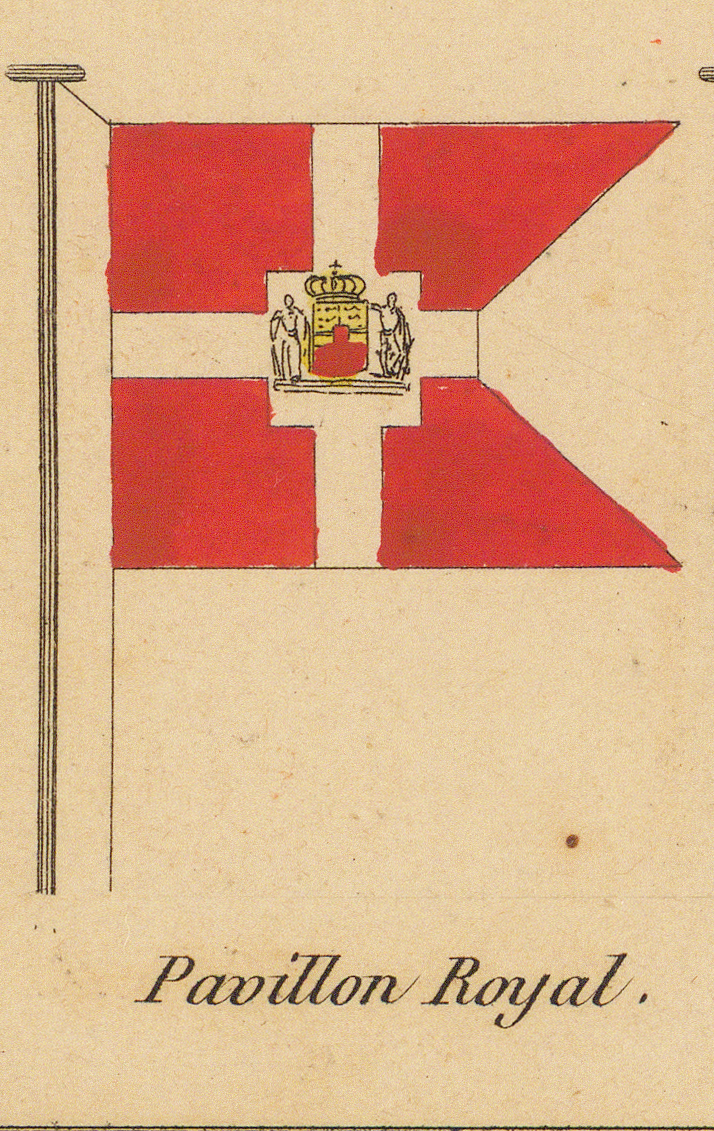
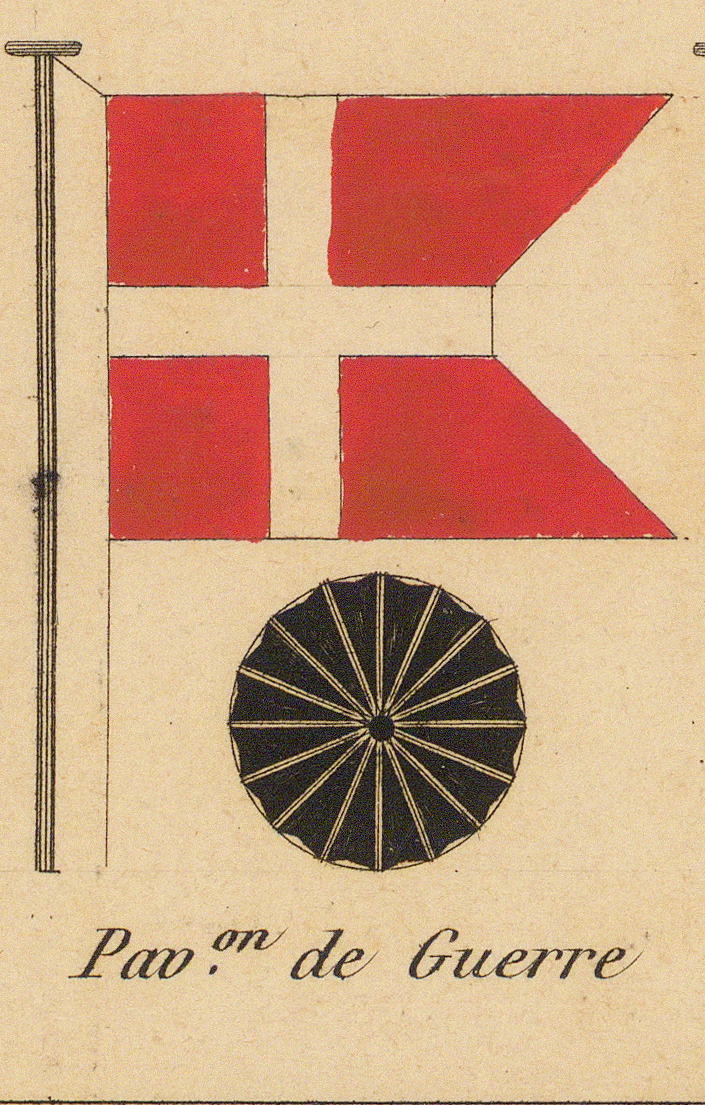
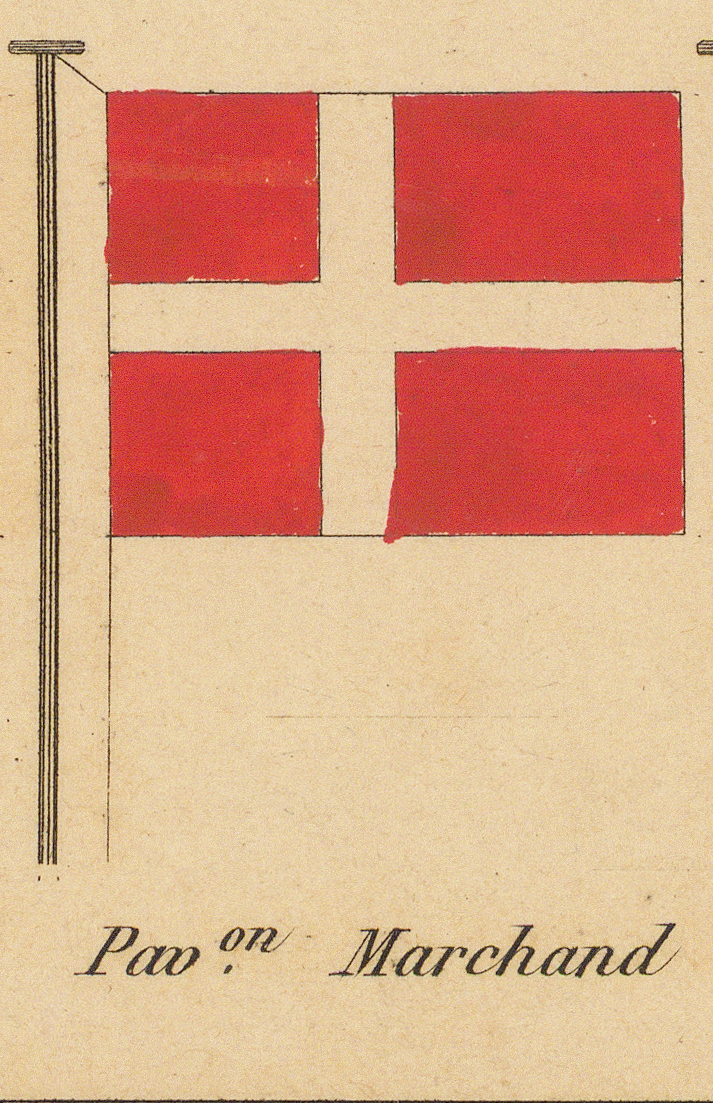
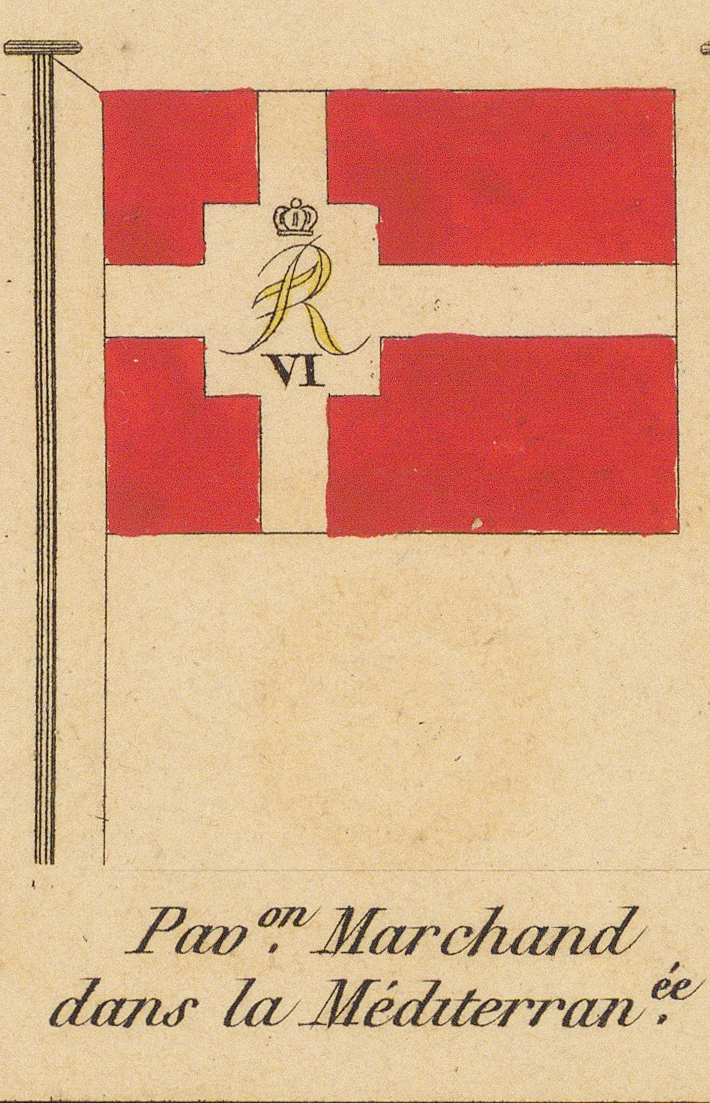
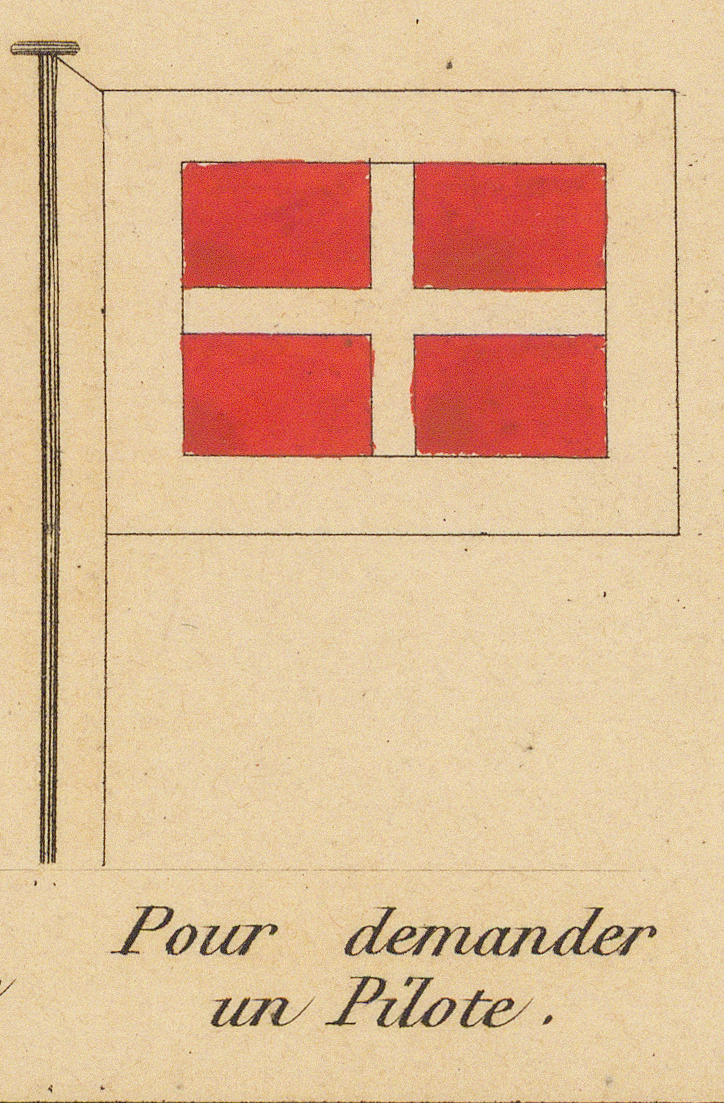
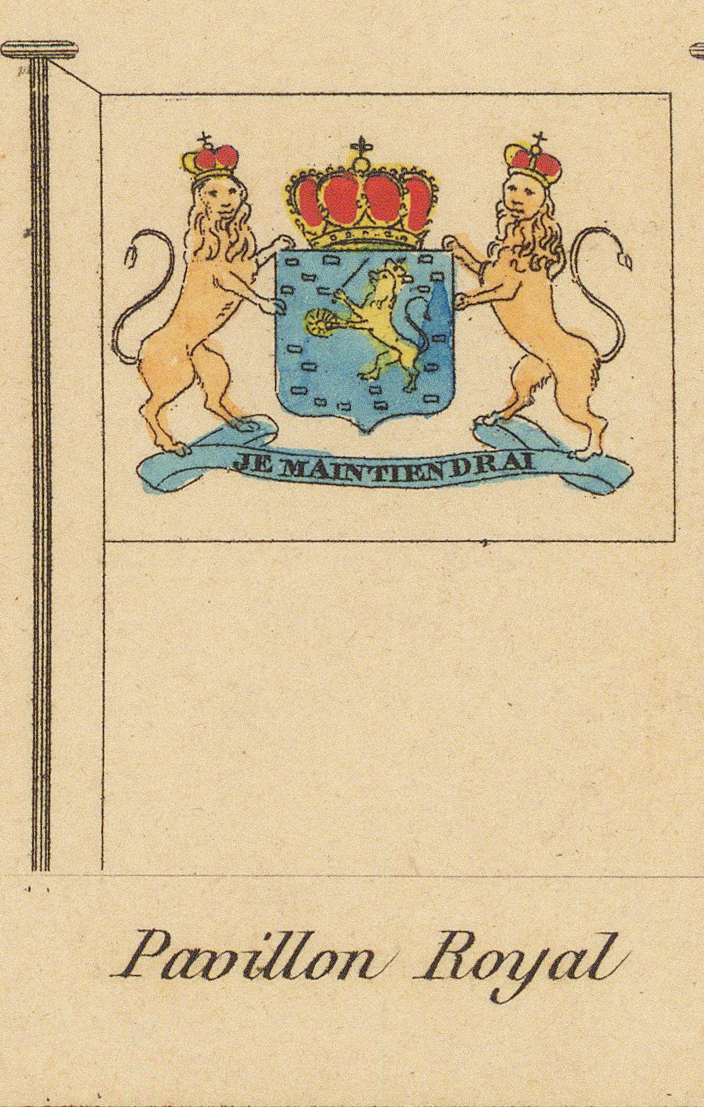
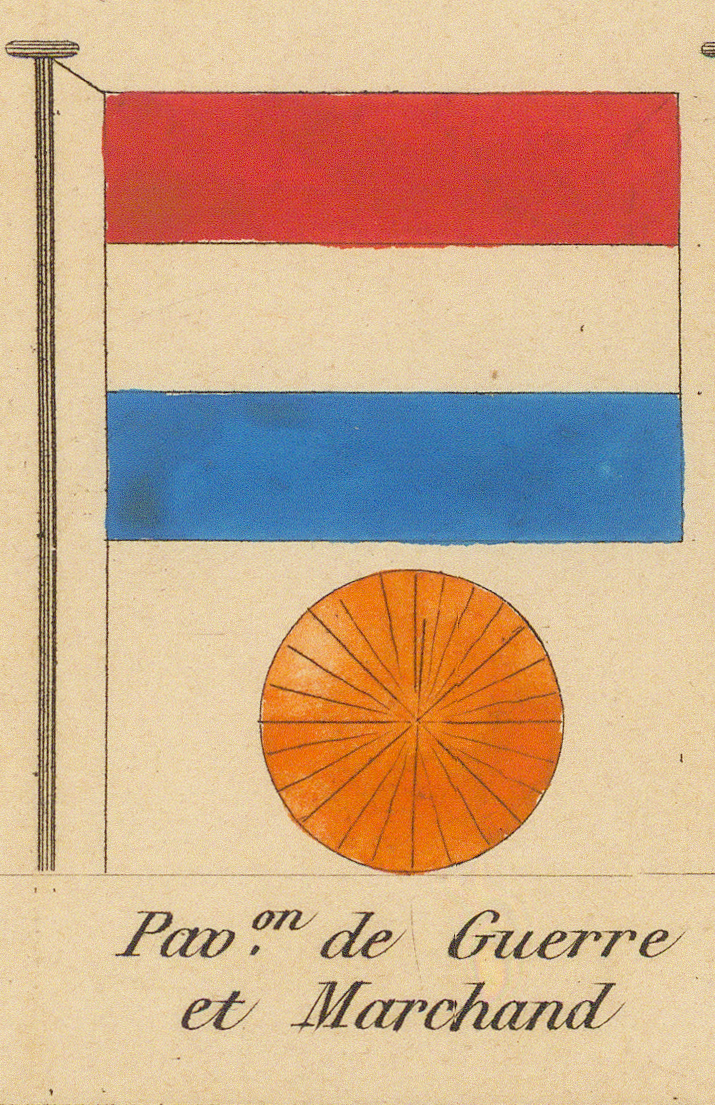
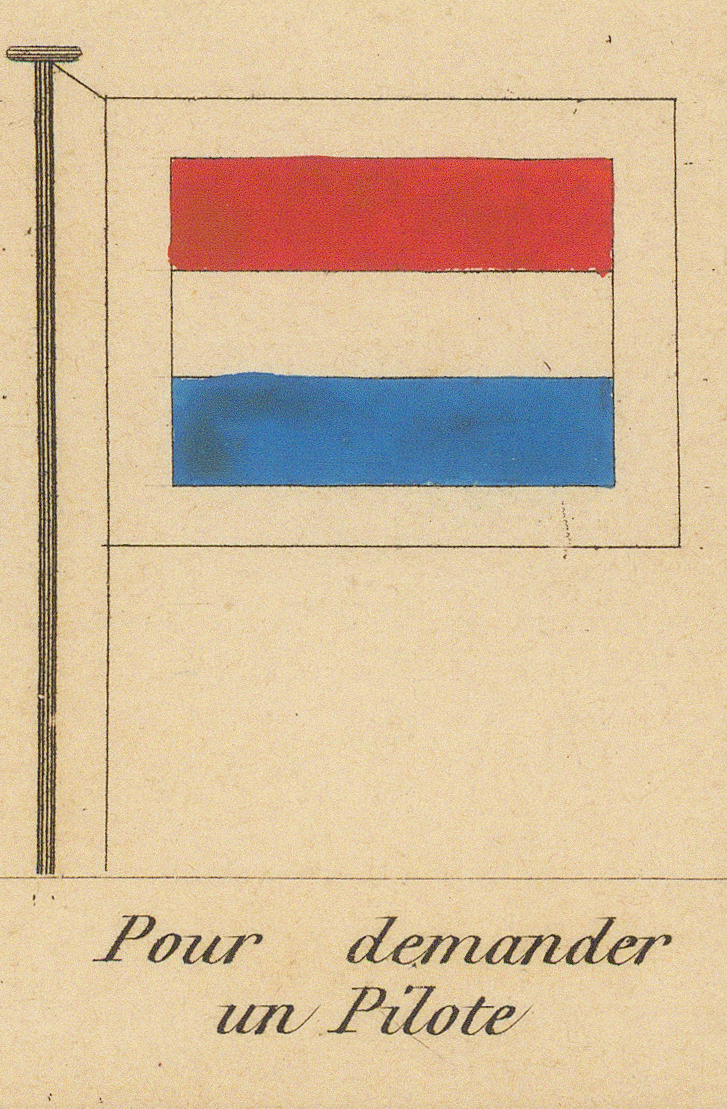
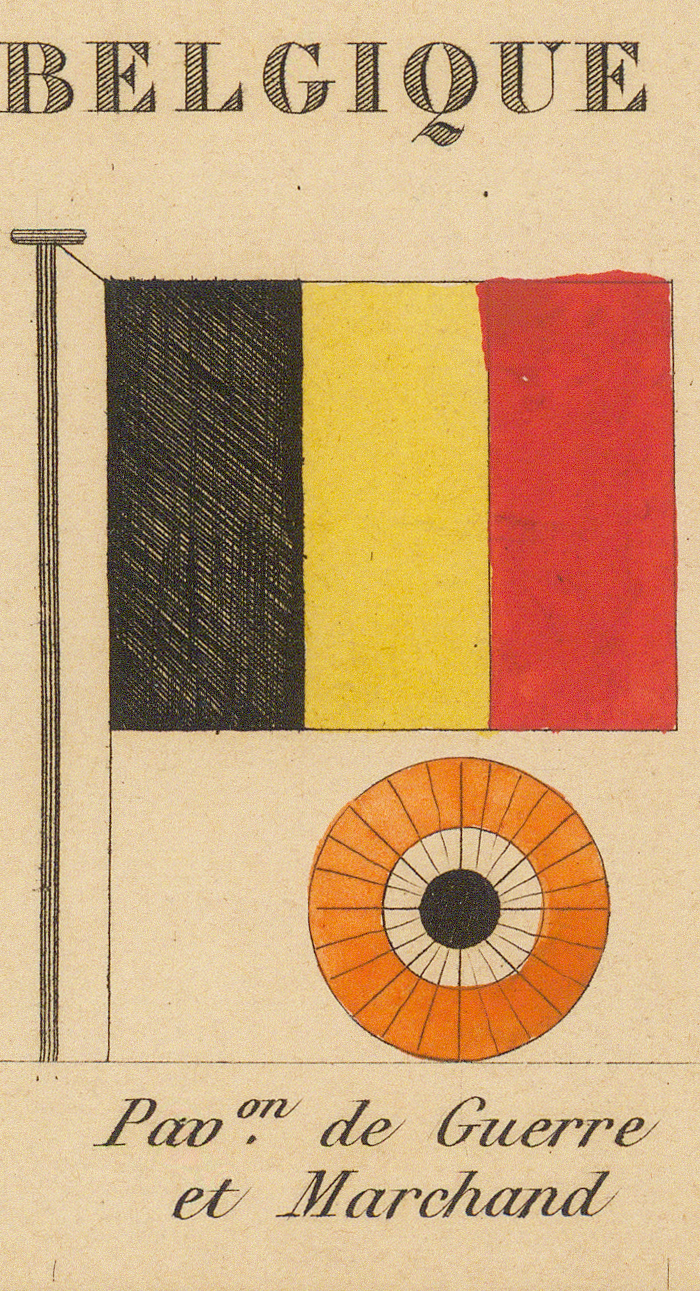
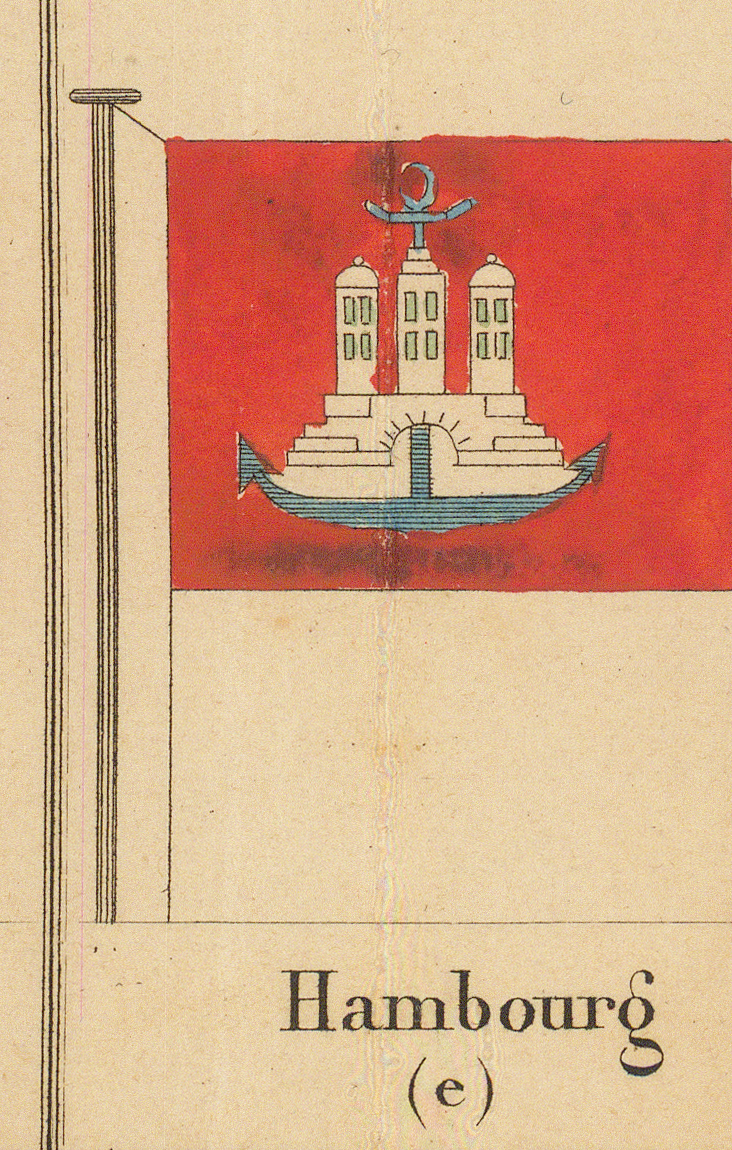
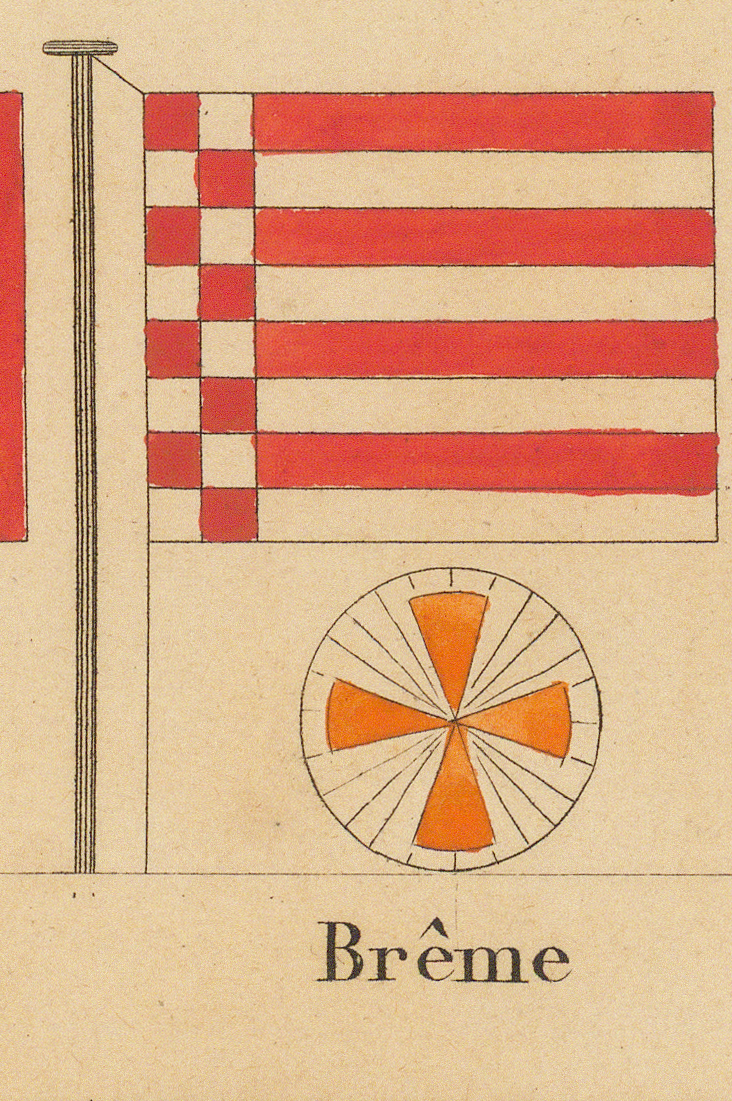
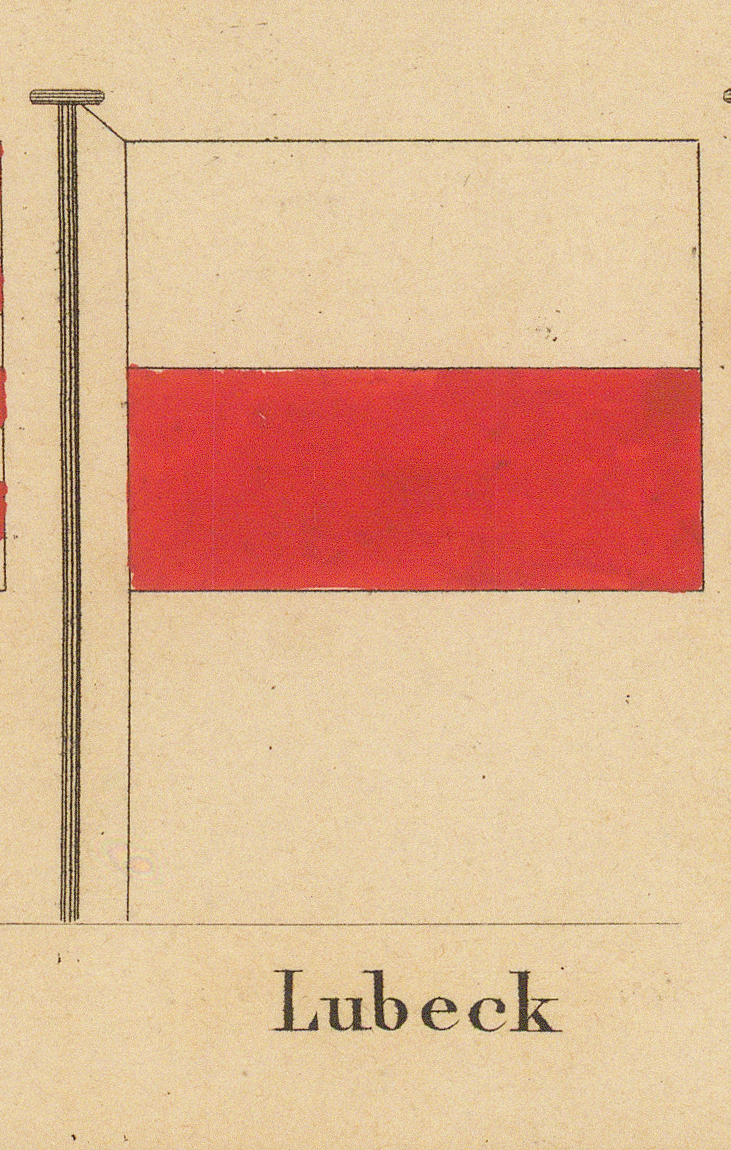
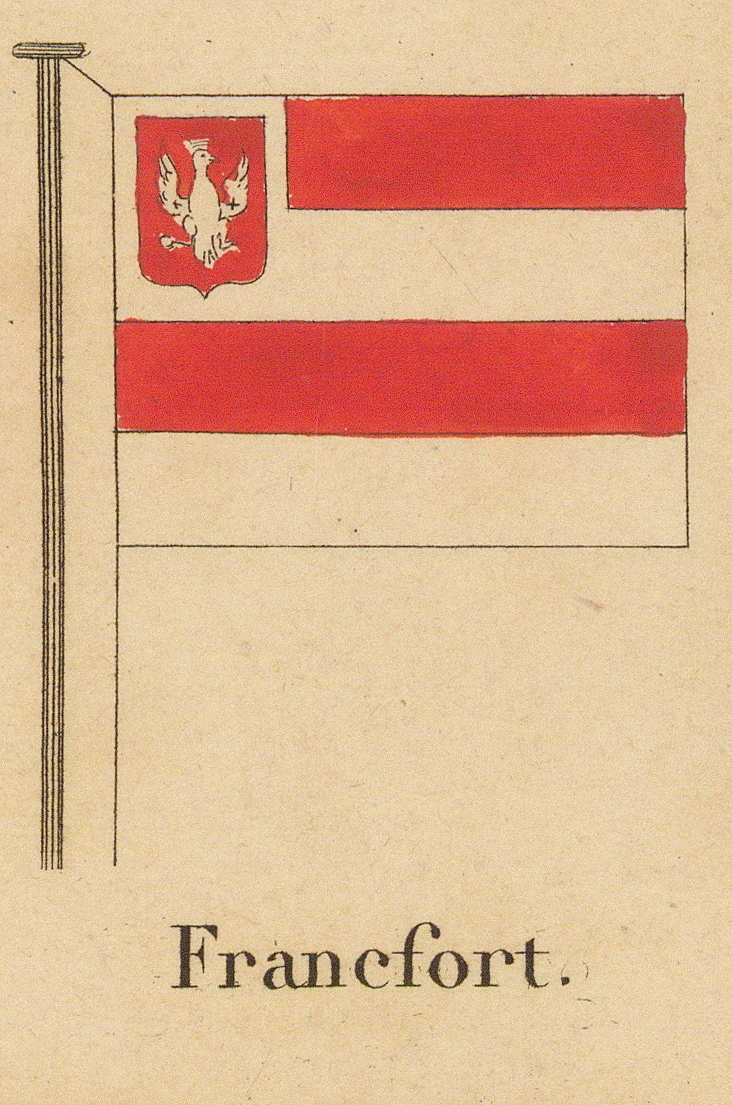
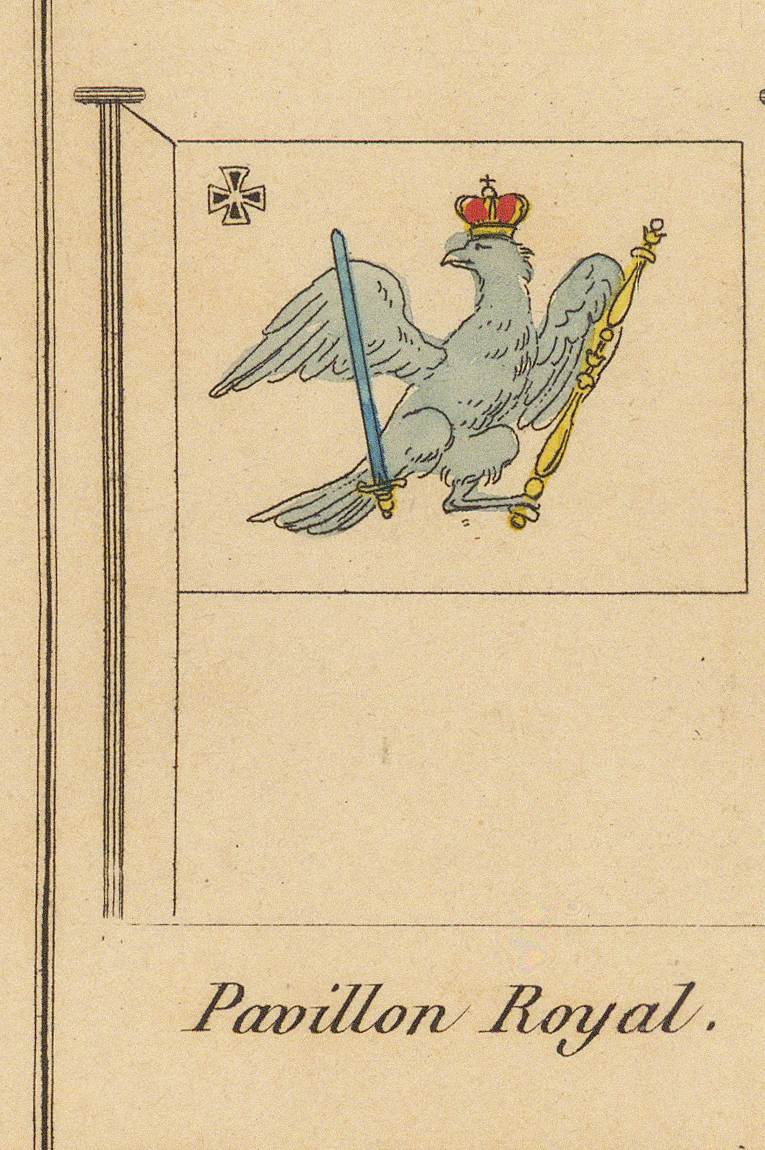
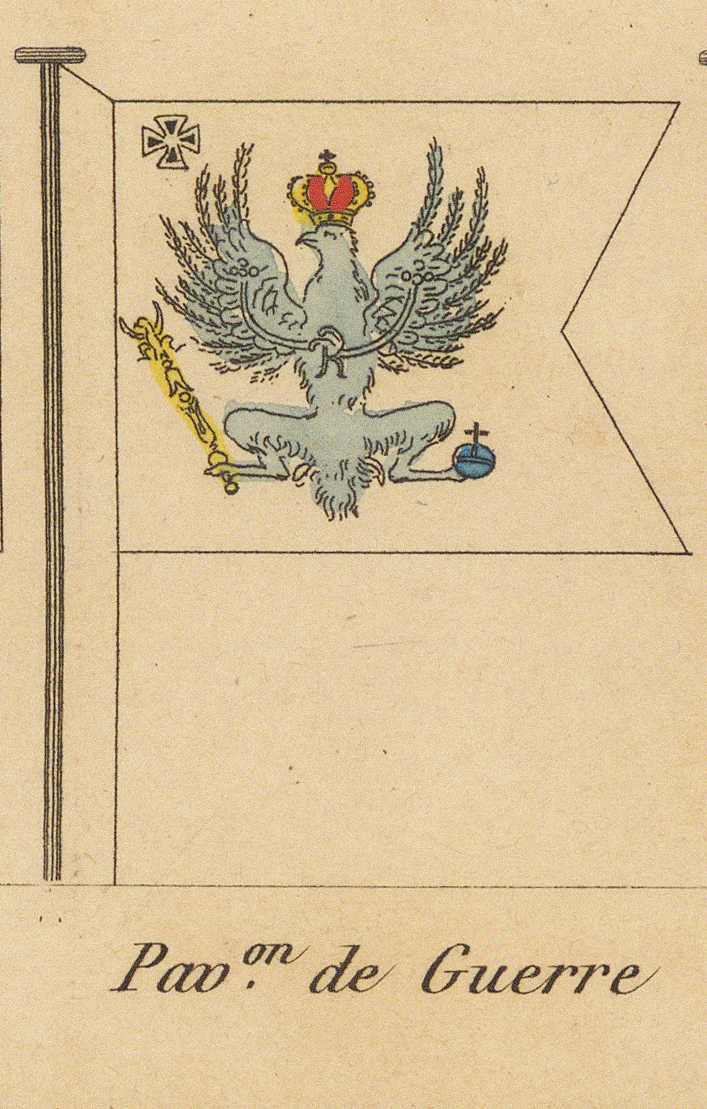
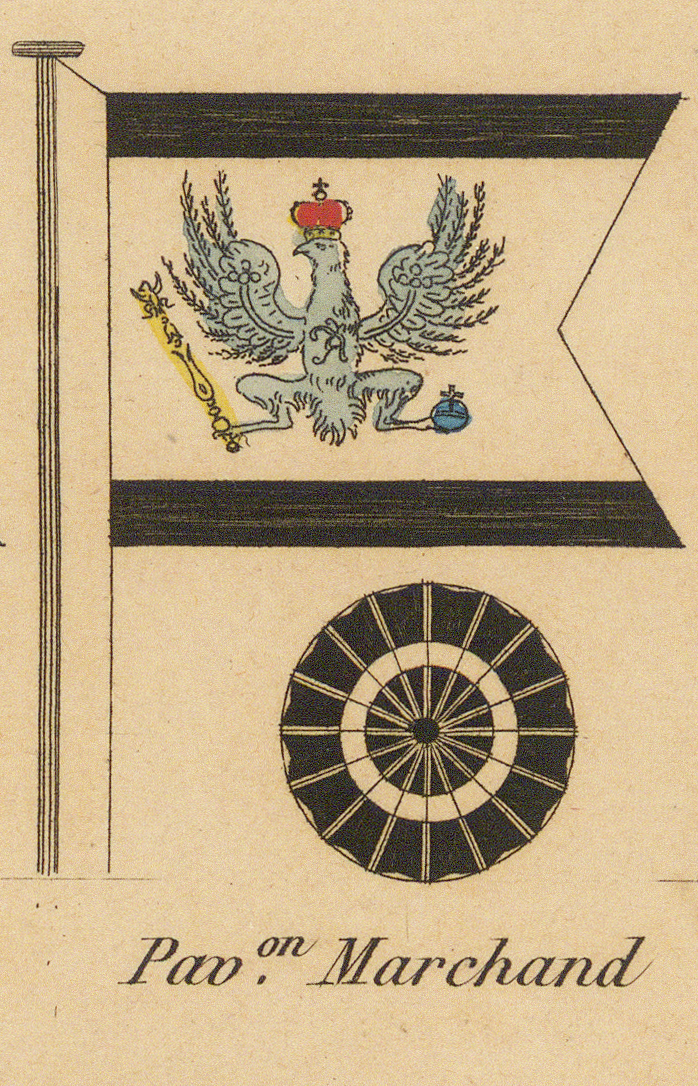
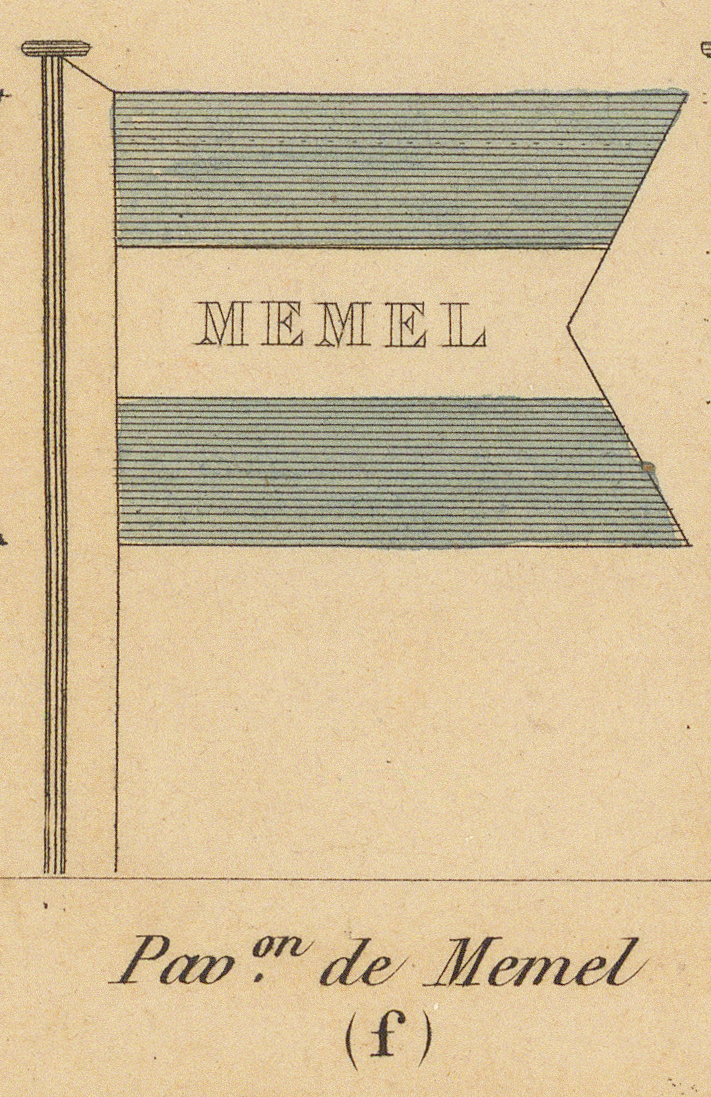
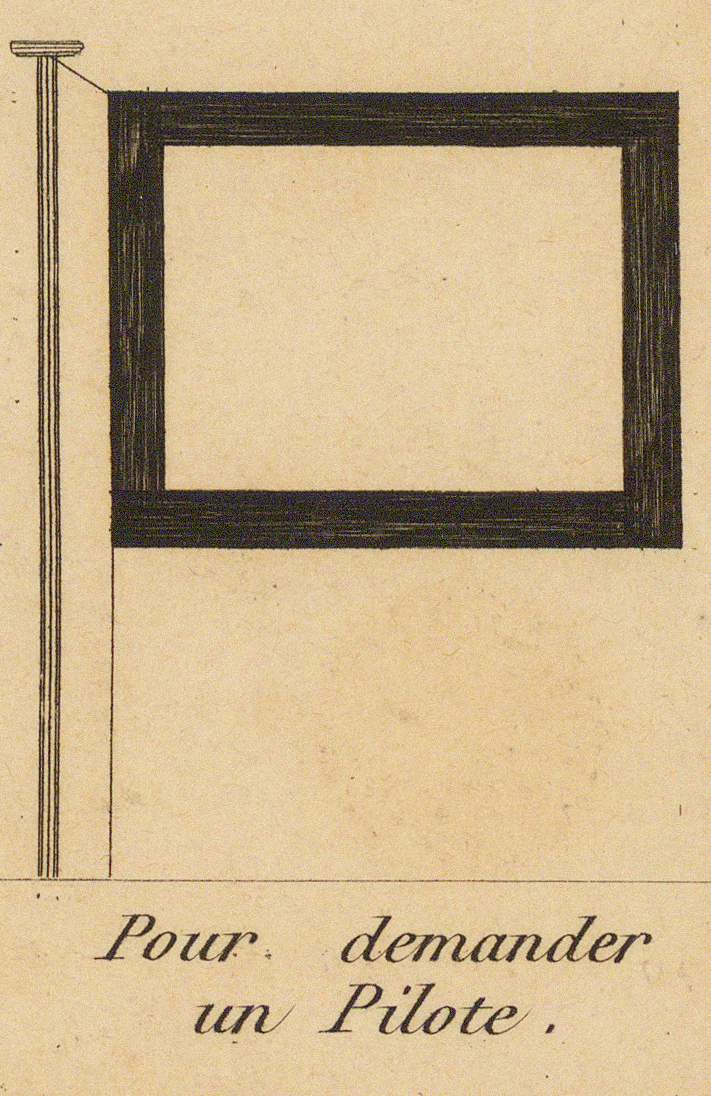
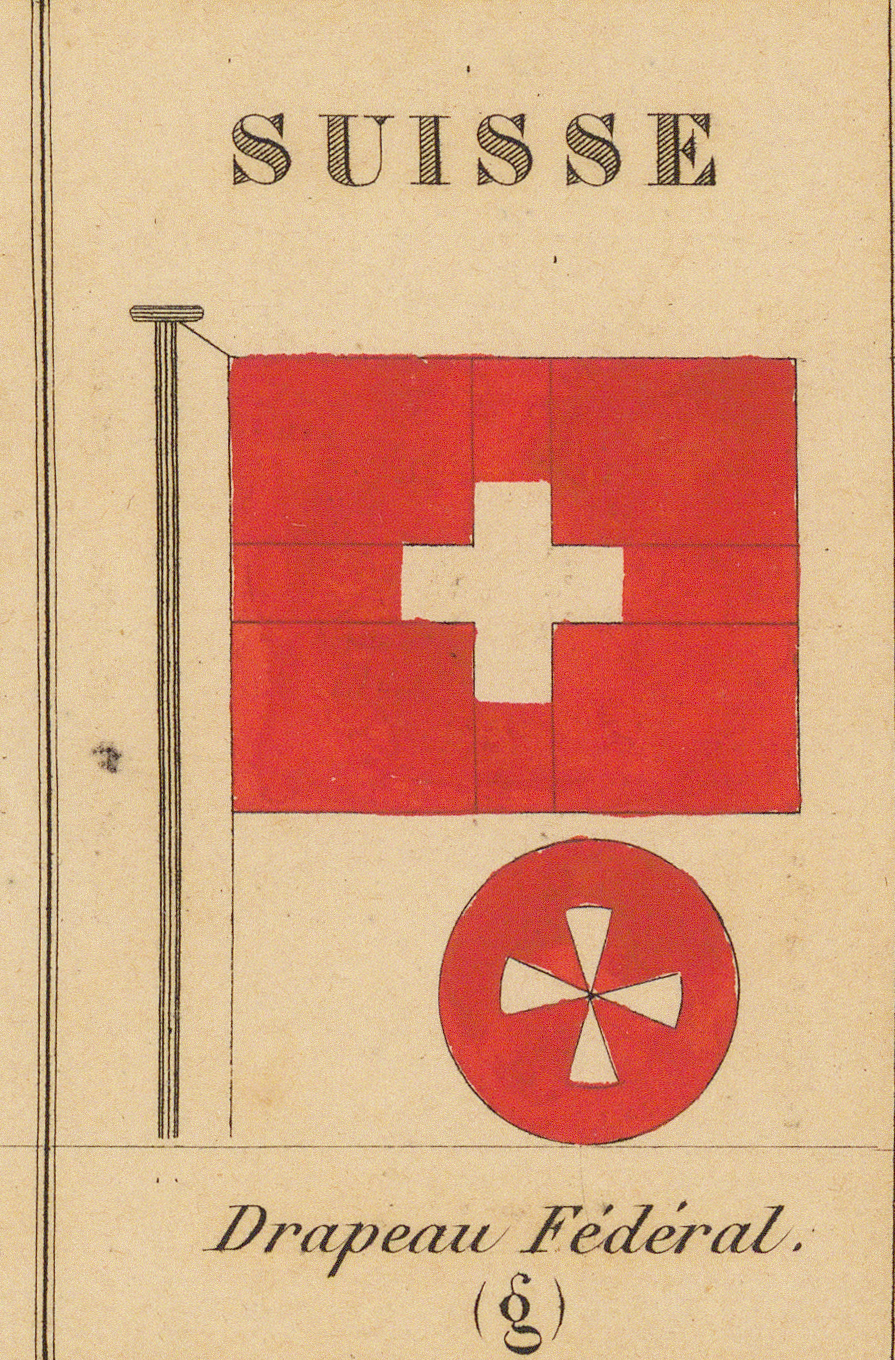
Autriche · Espagne · Portugal · États Sardes
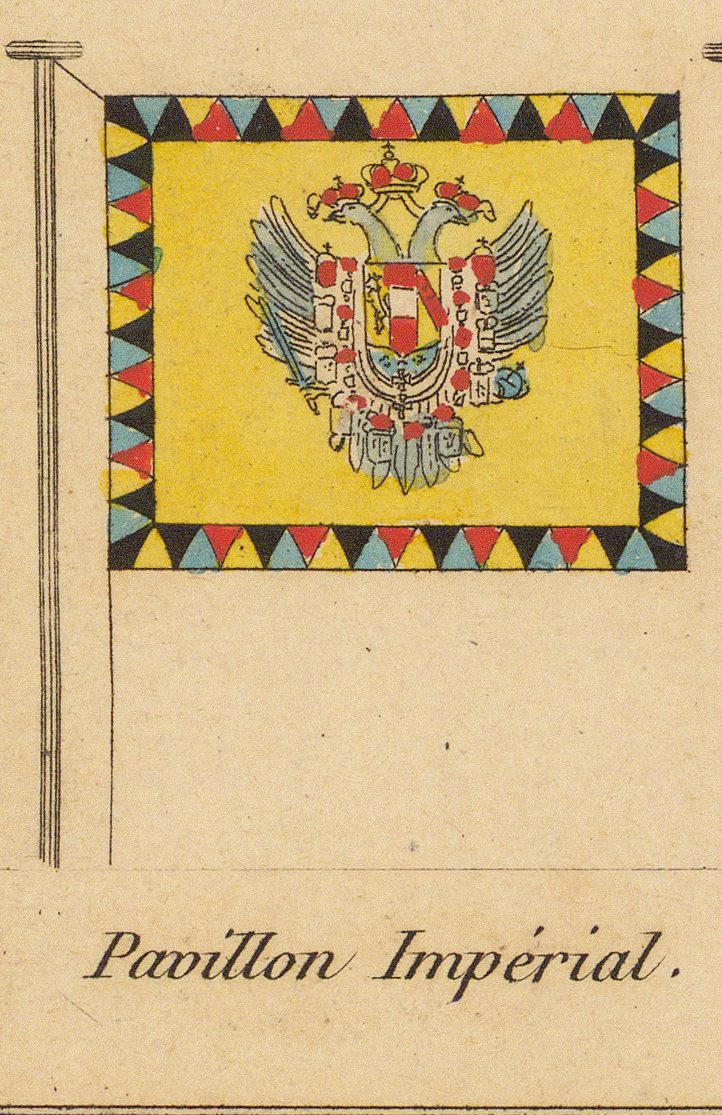
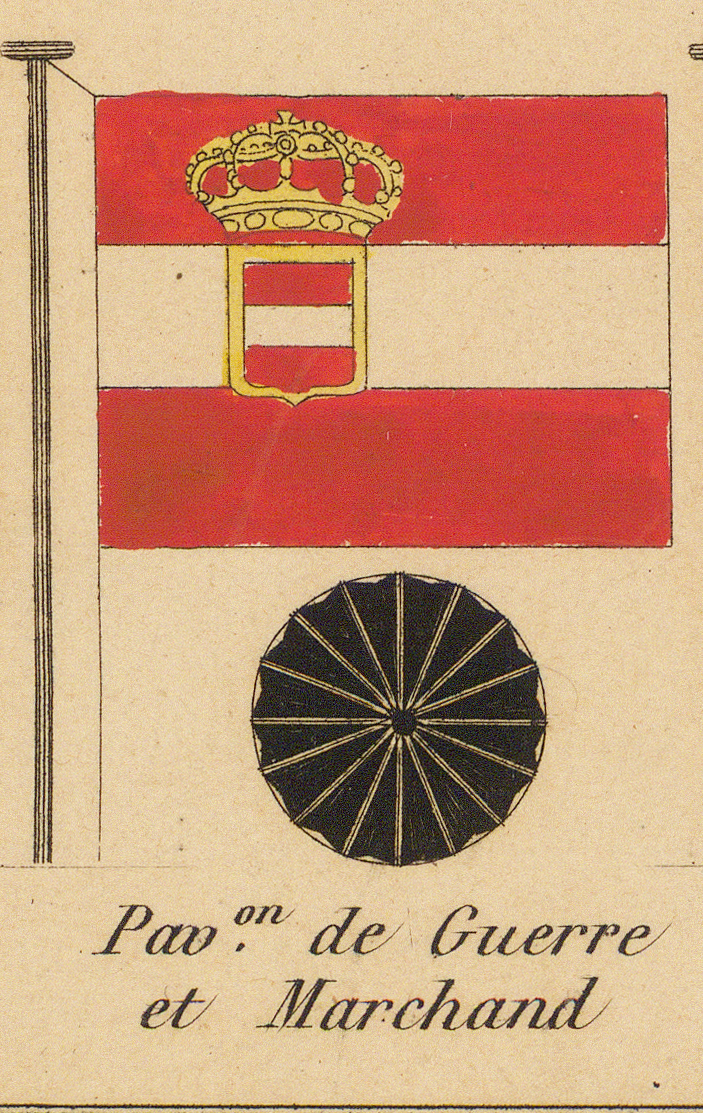
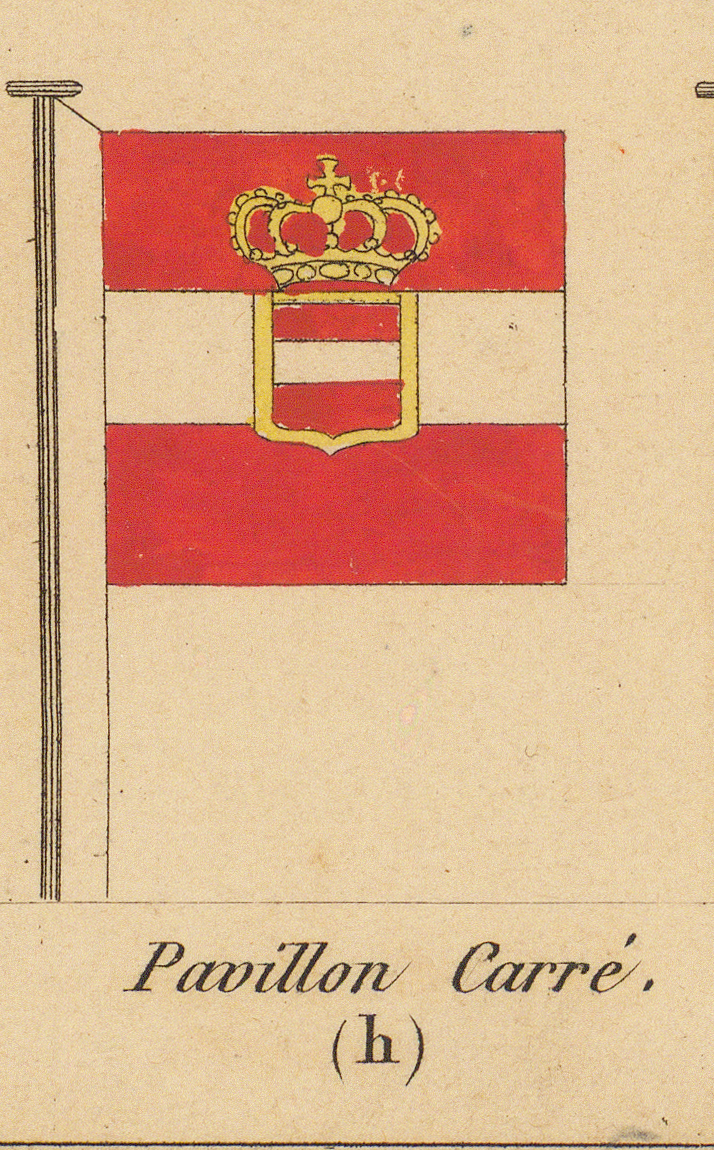
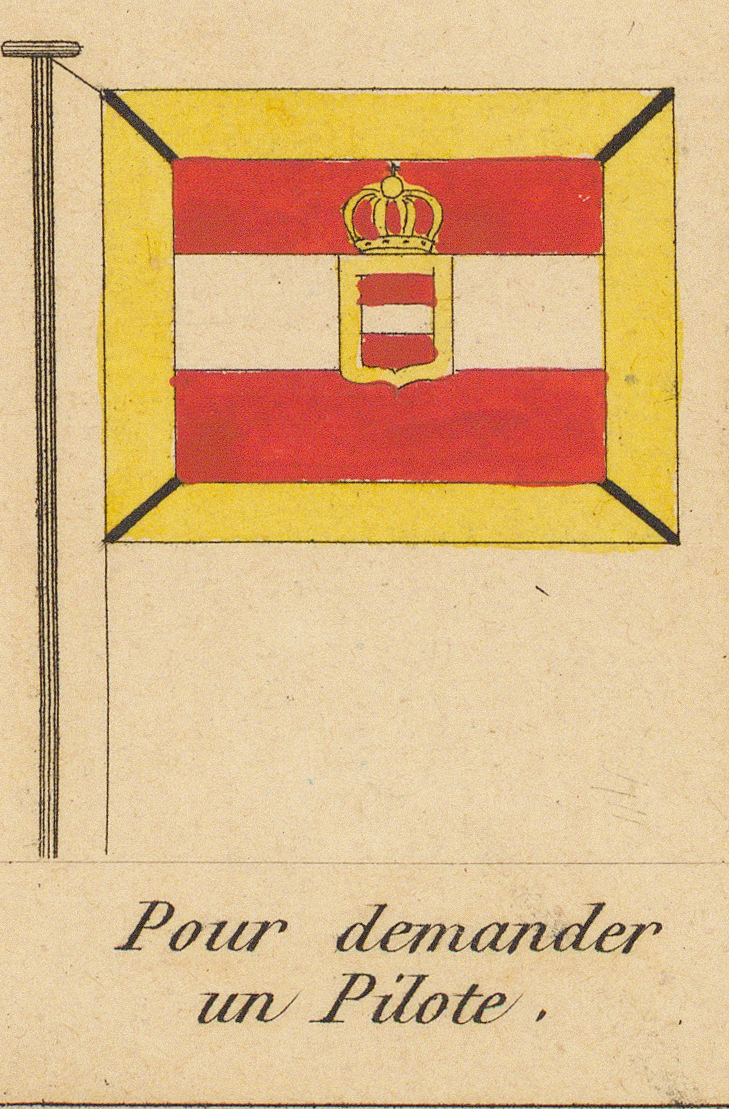
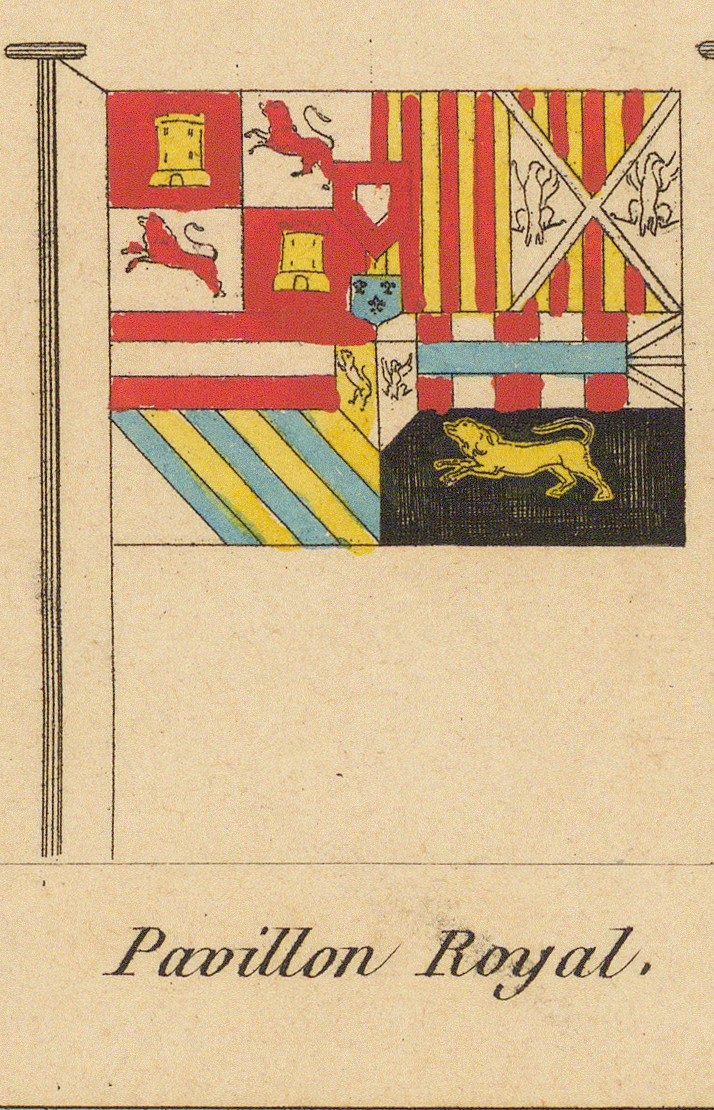
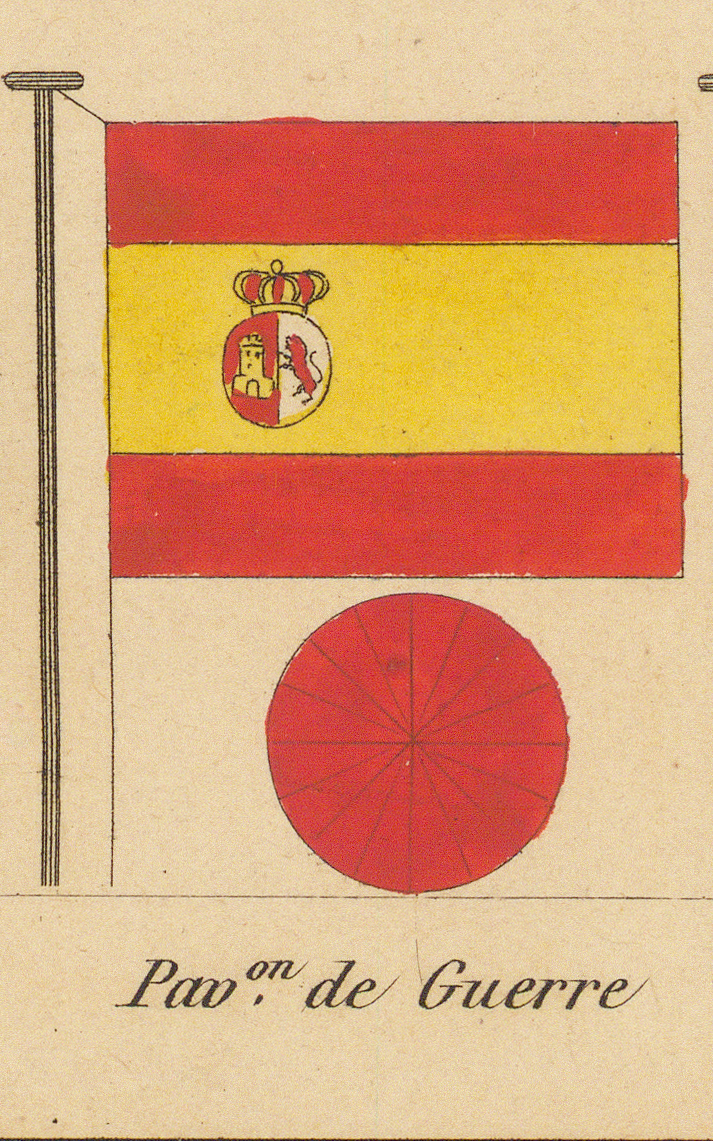
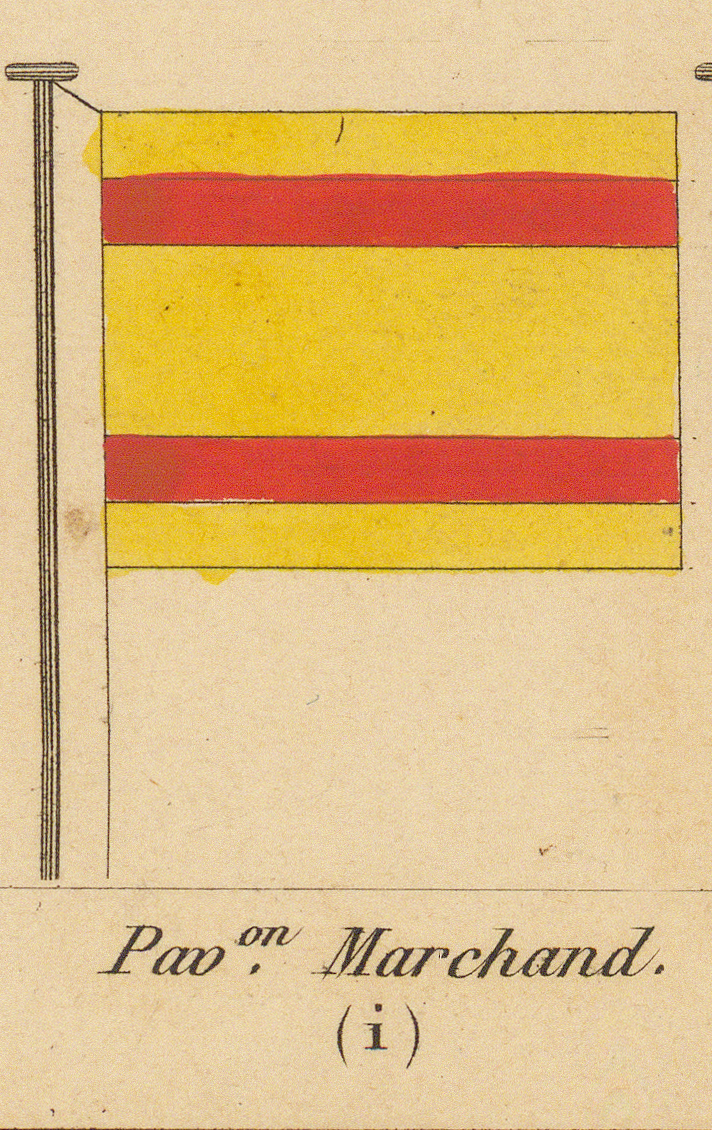
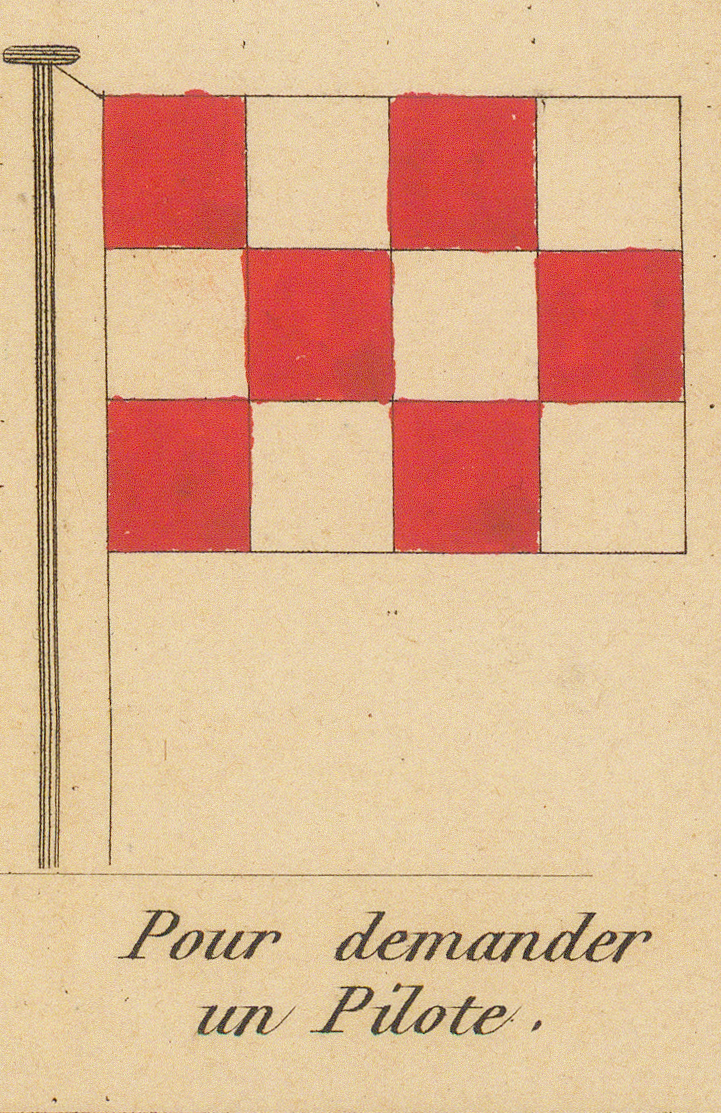
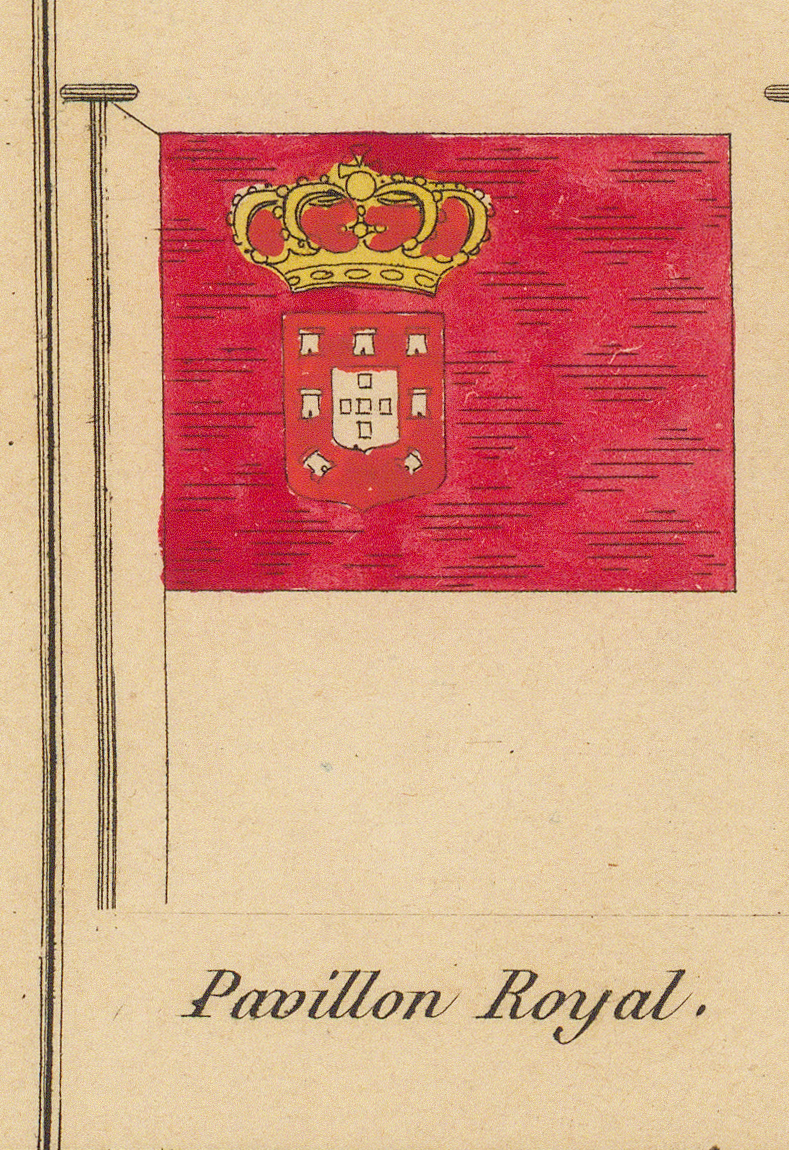
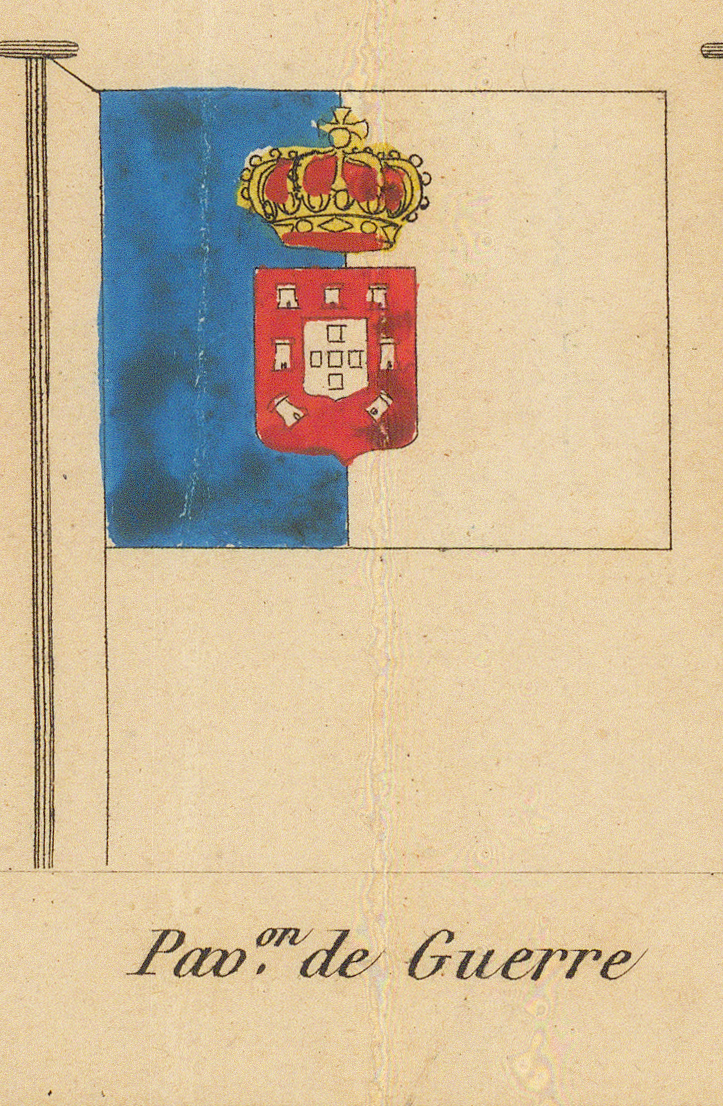
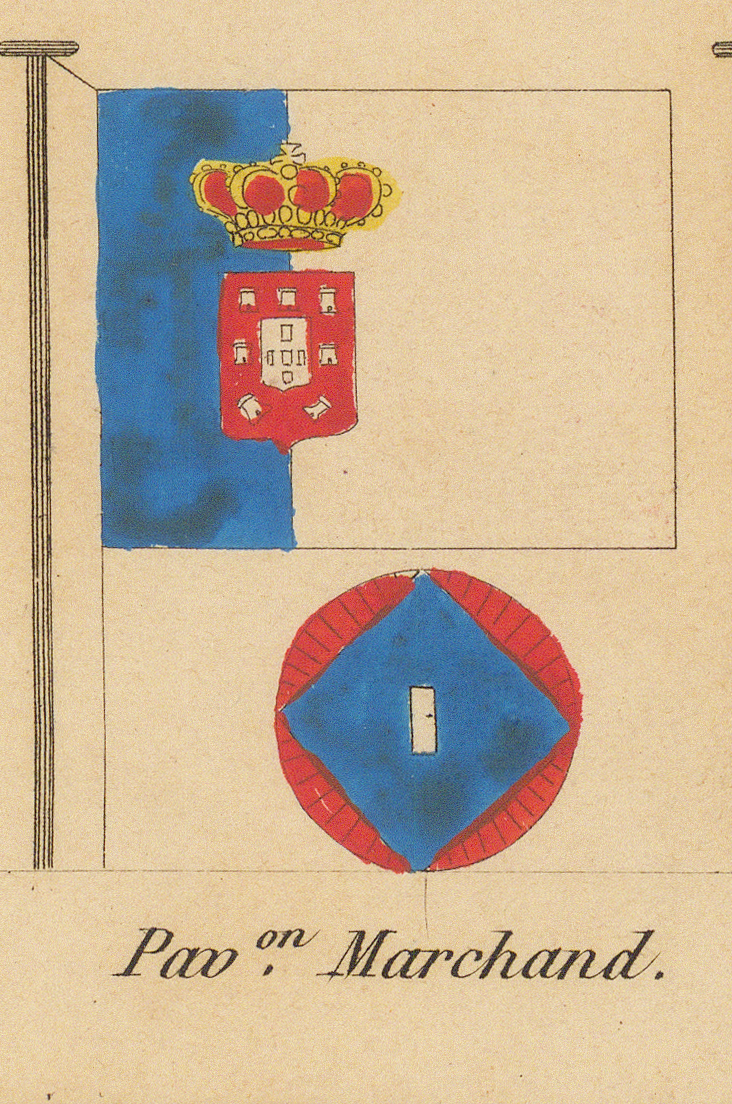
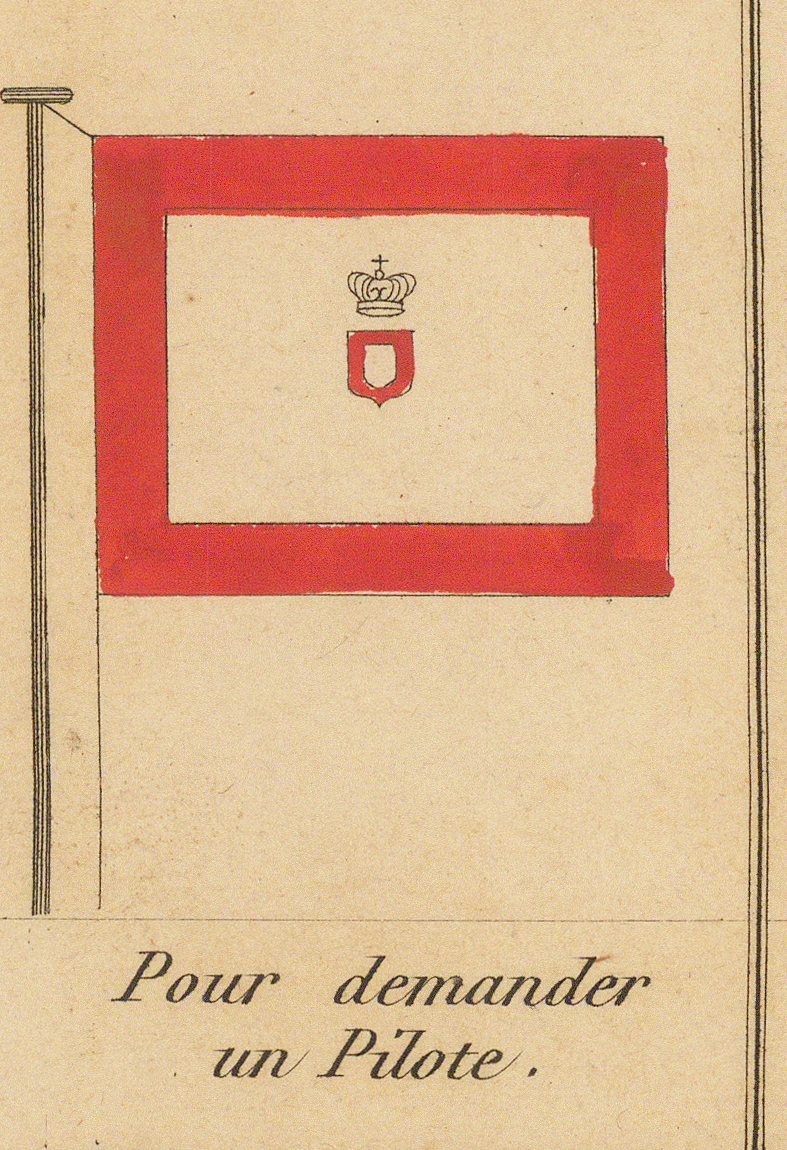
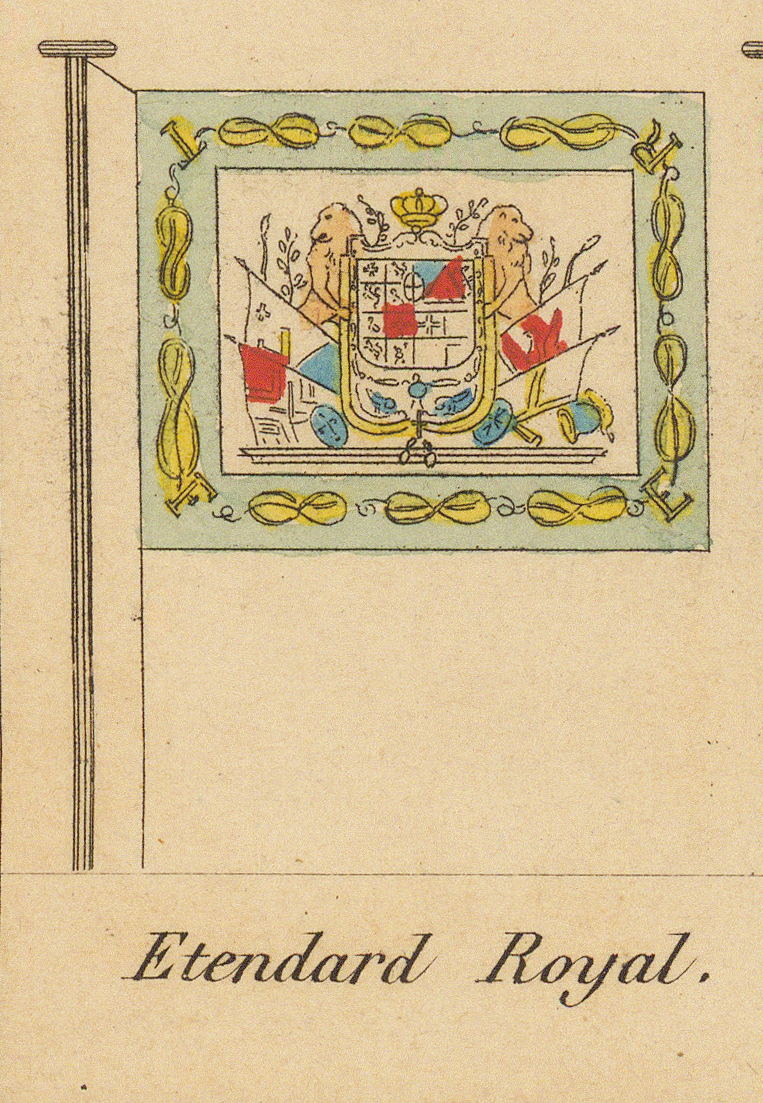
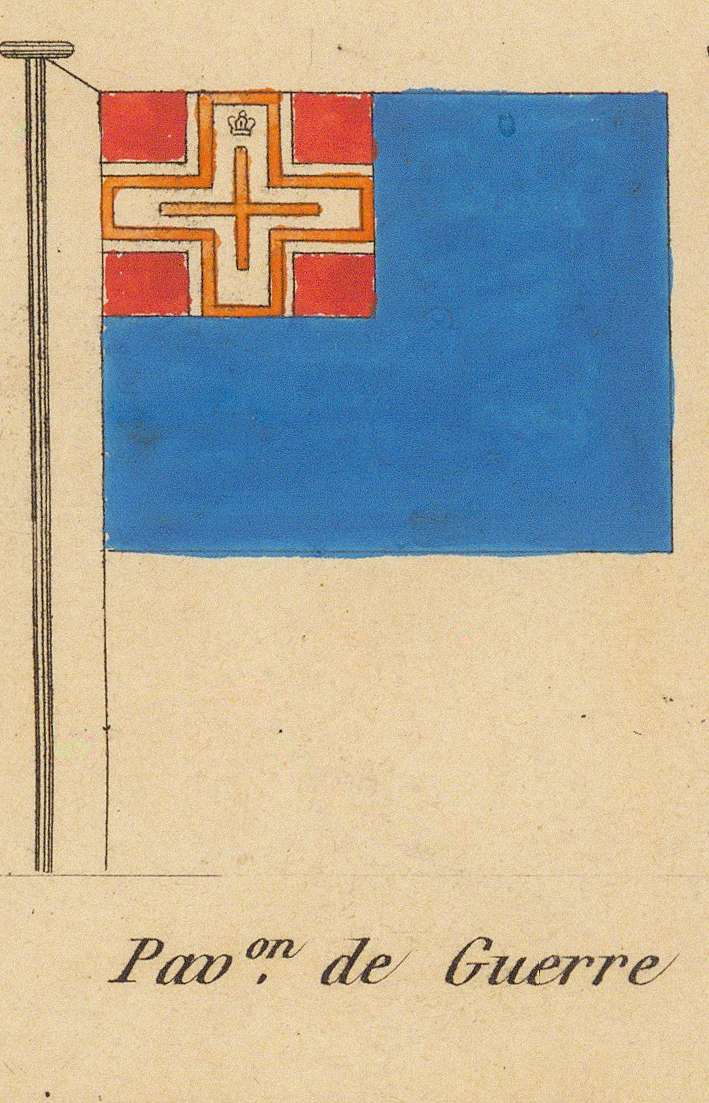
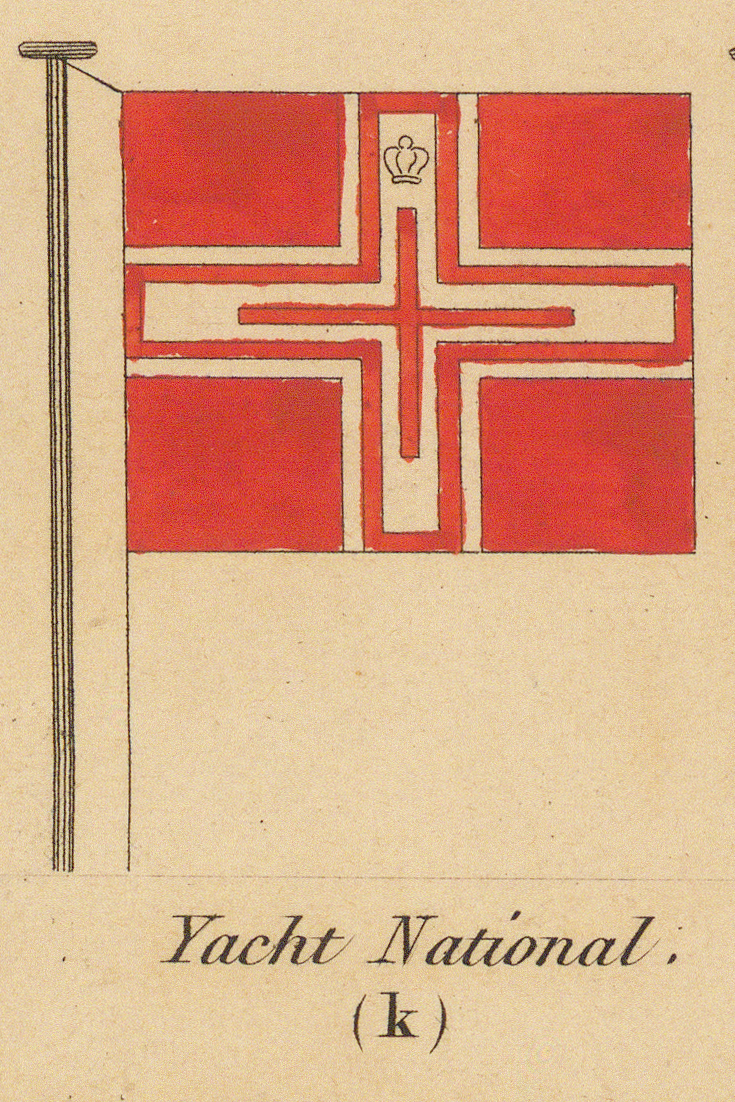
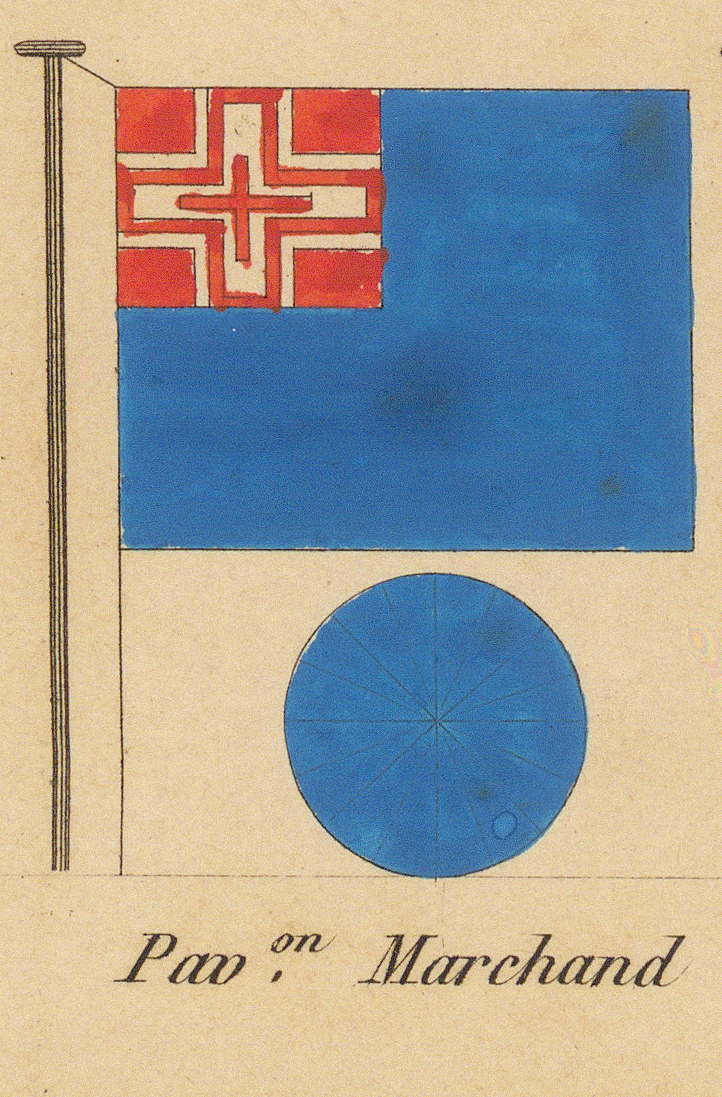
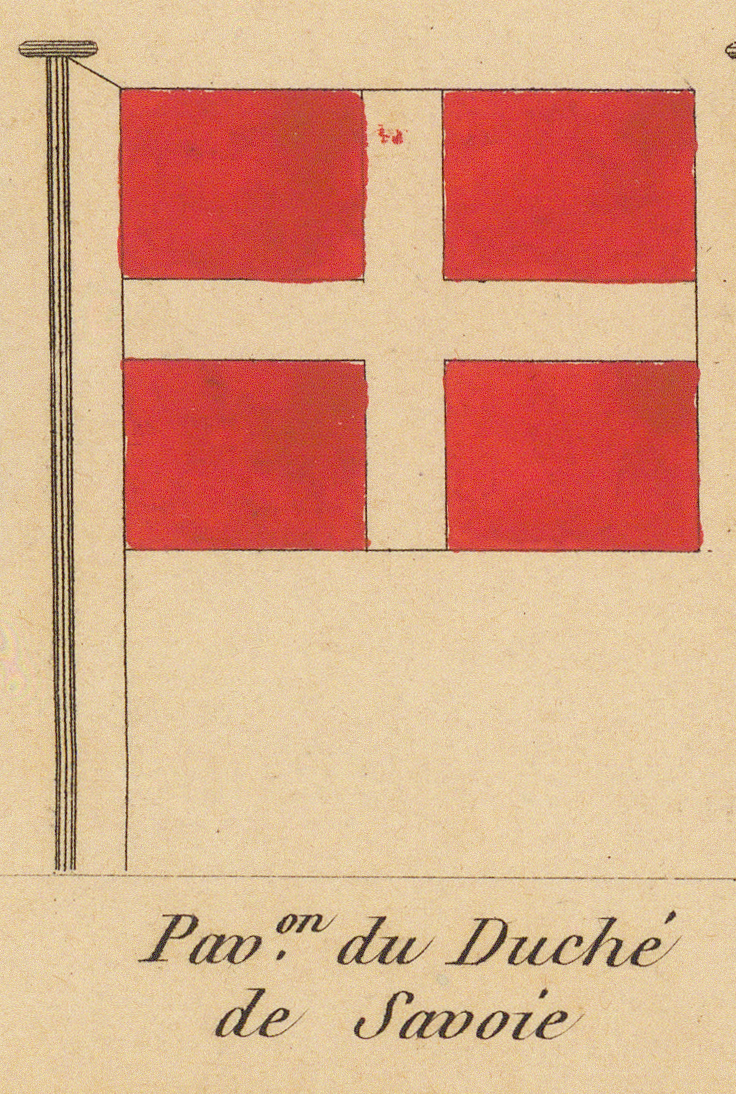
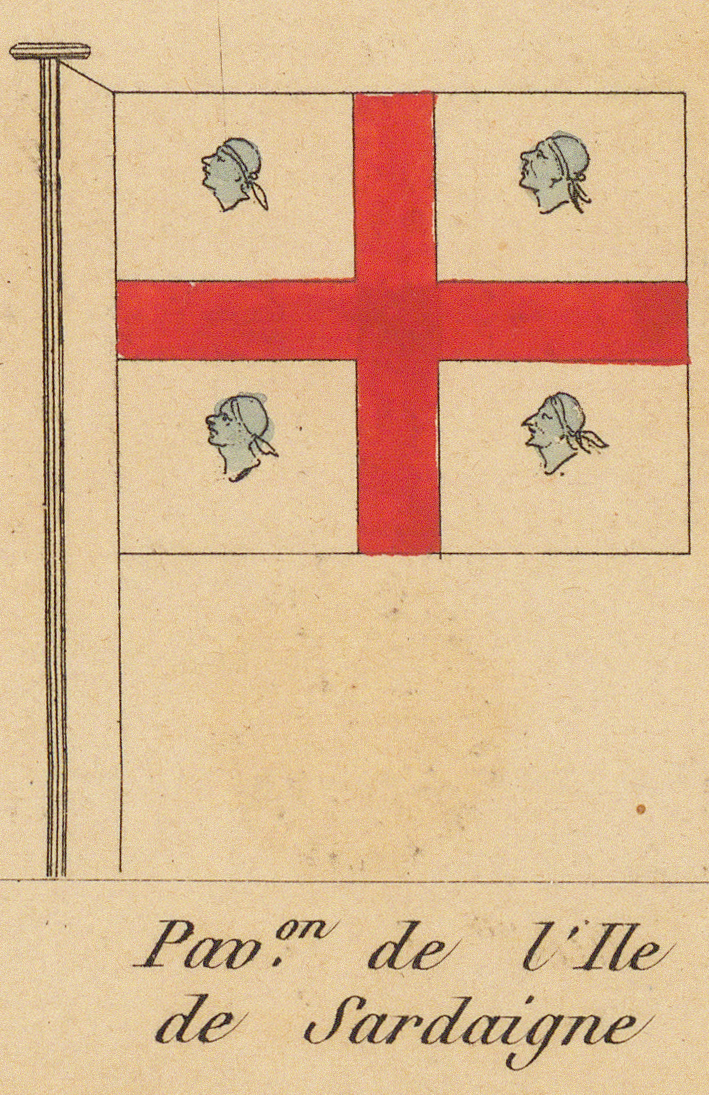
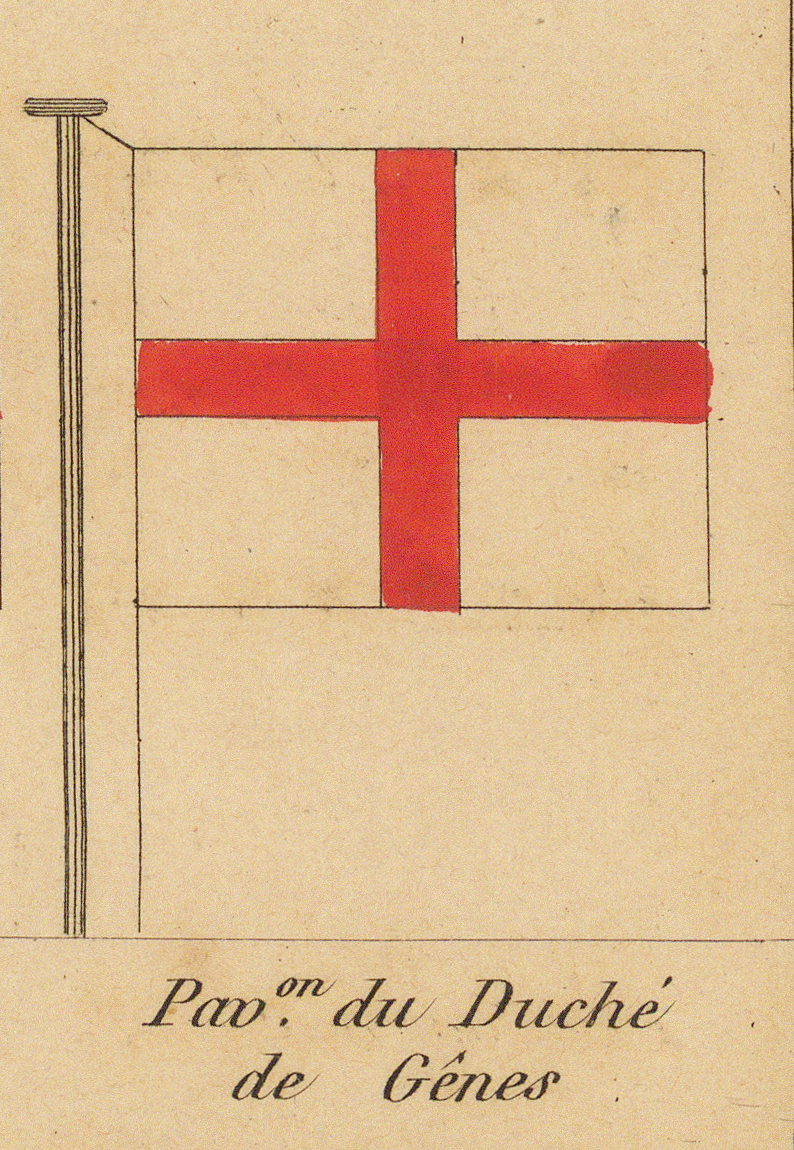
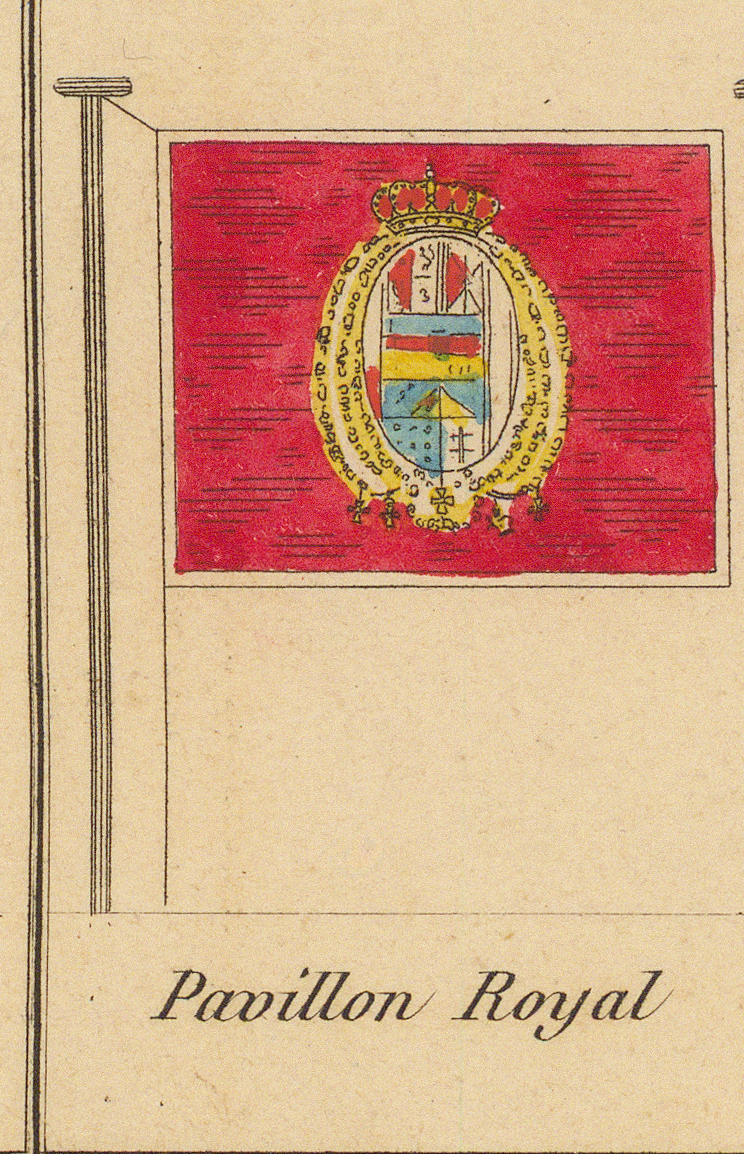
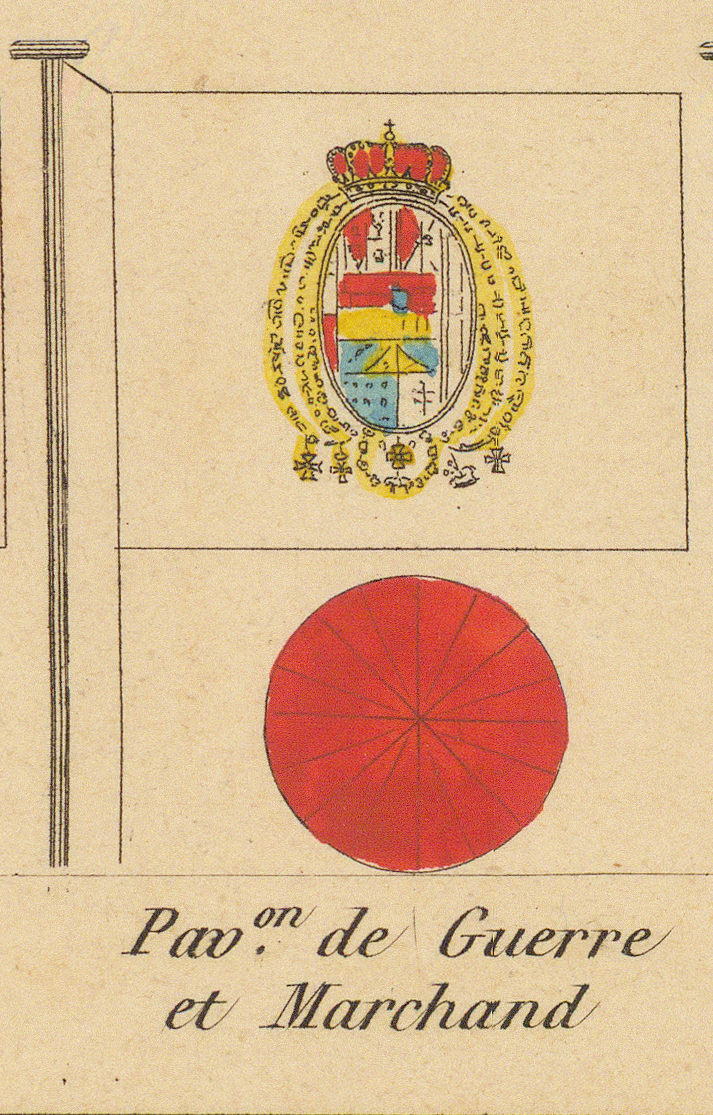
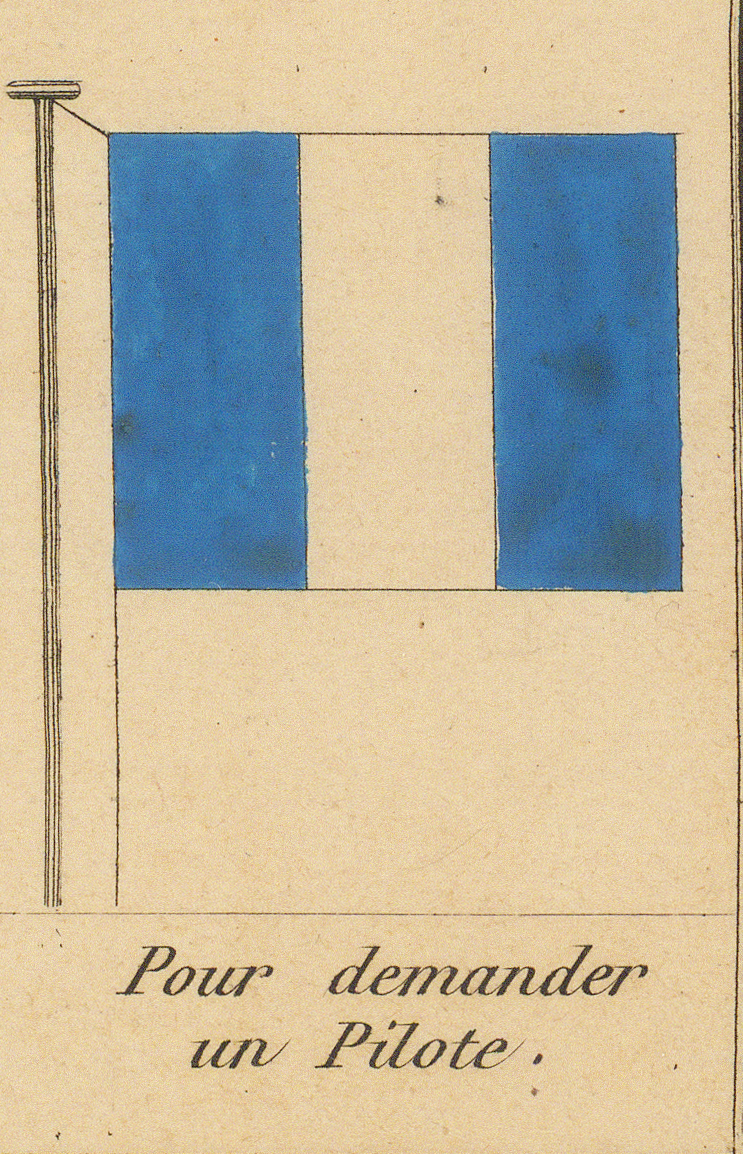
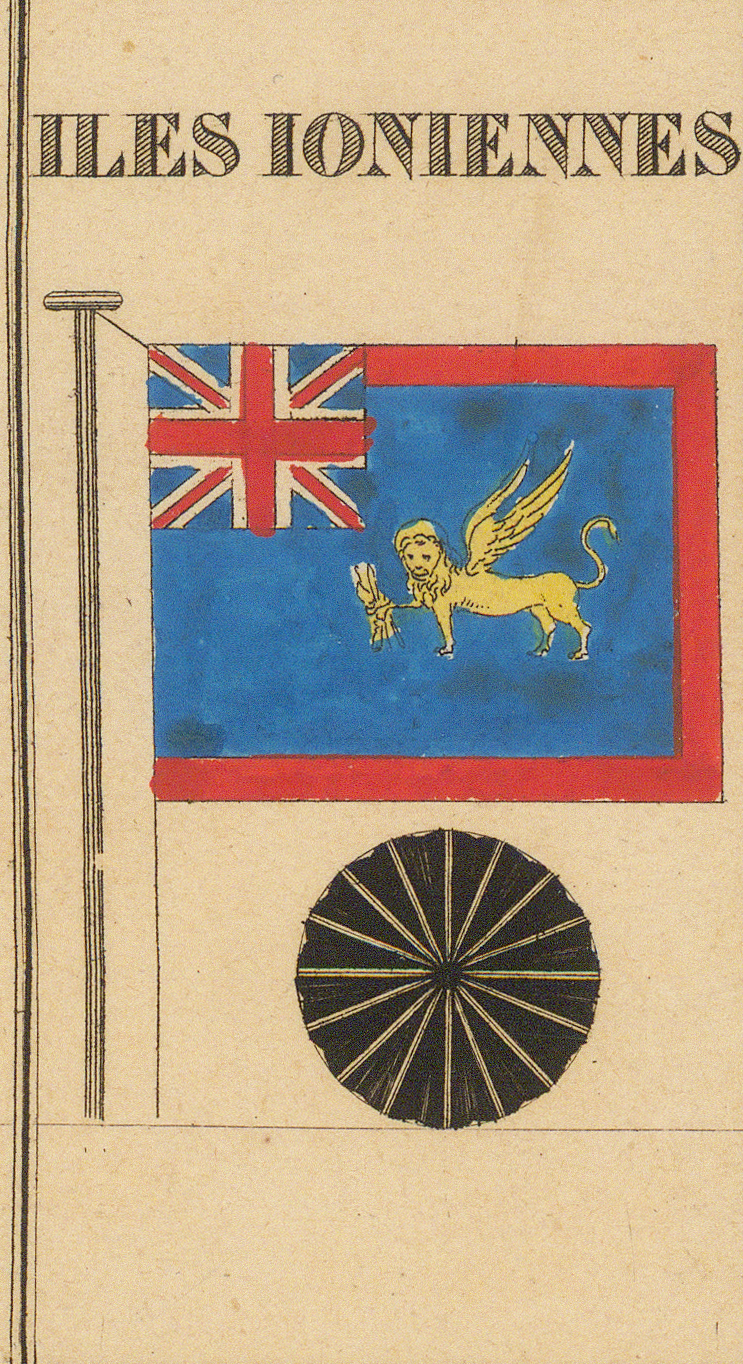
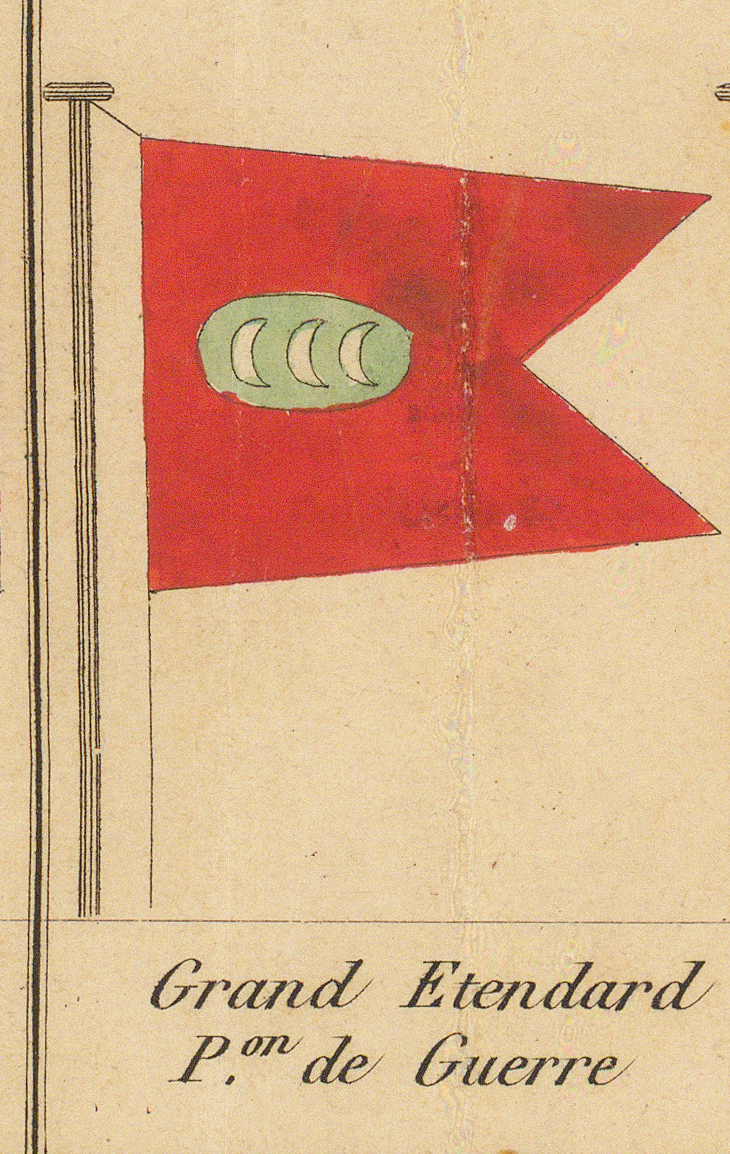
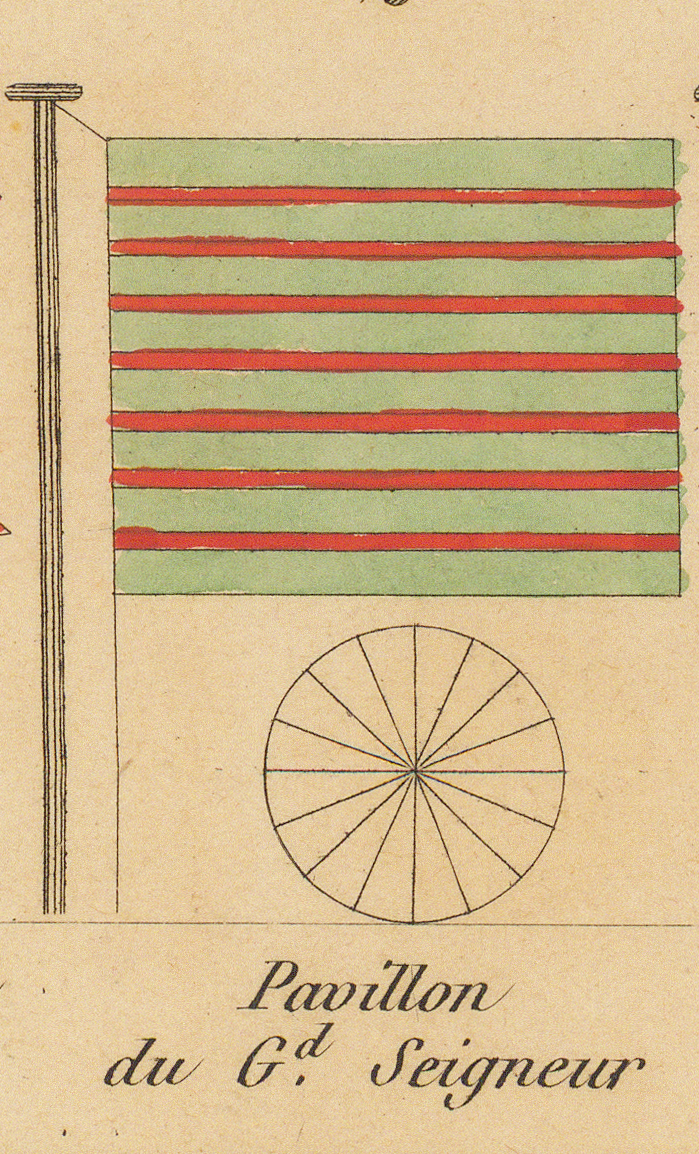
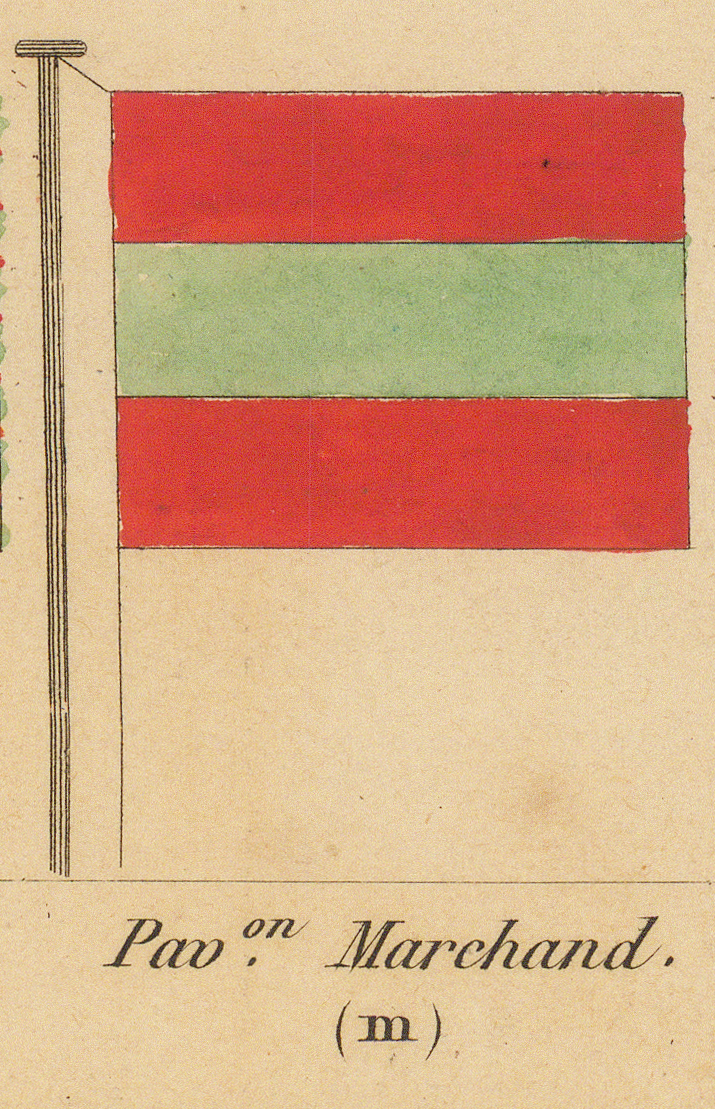
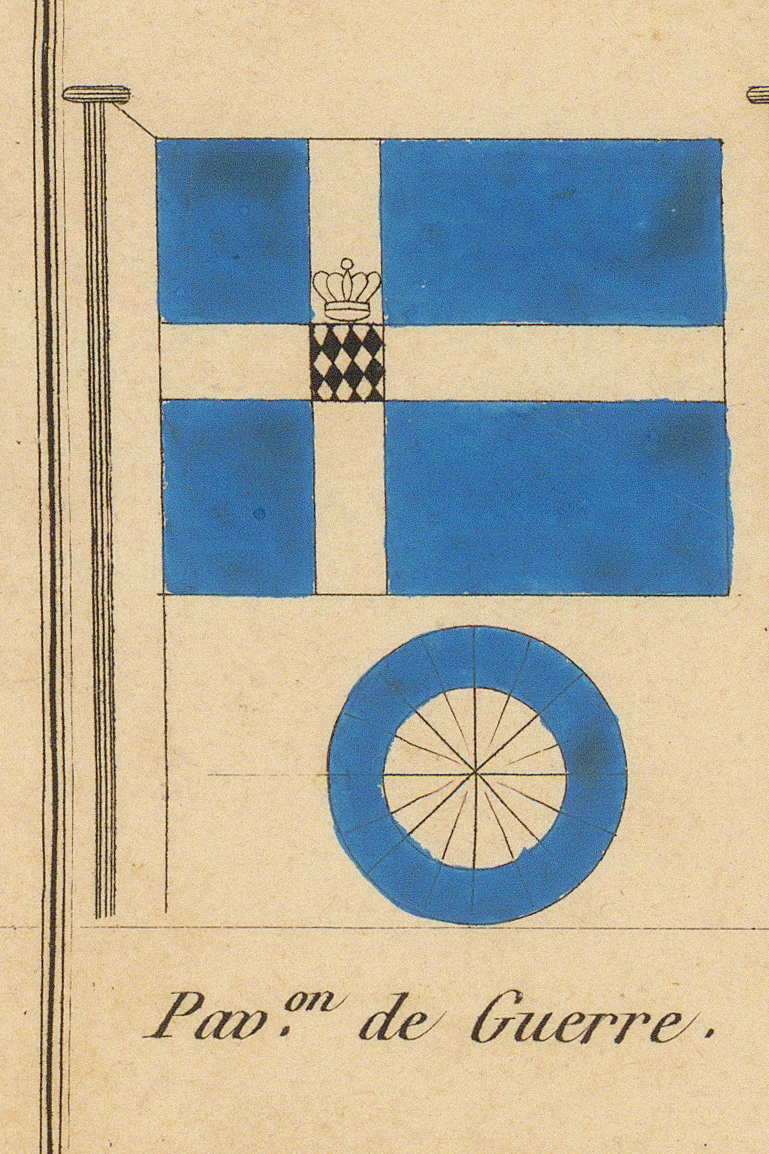
Lucques · Toscane · État de l'Église · Deux-Siciles · Iles Ioniennes · Turquie · Grèce · Perse · Chine · Japon
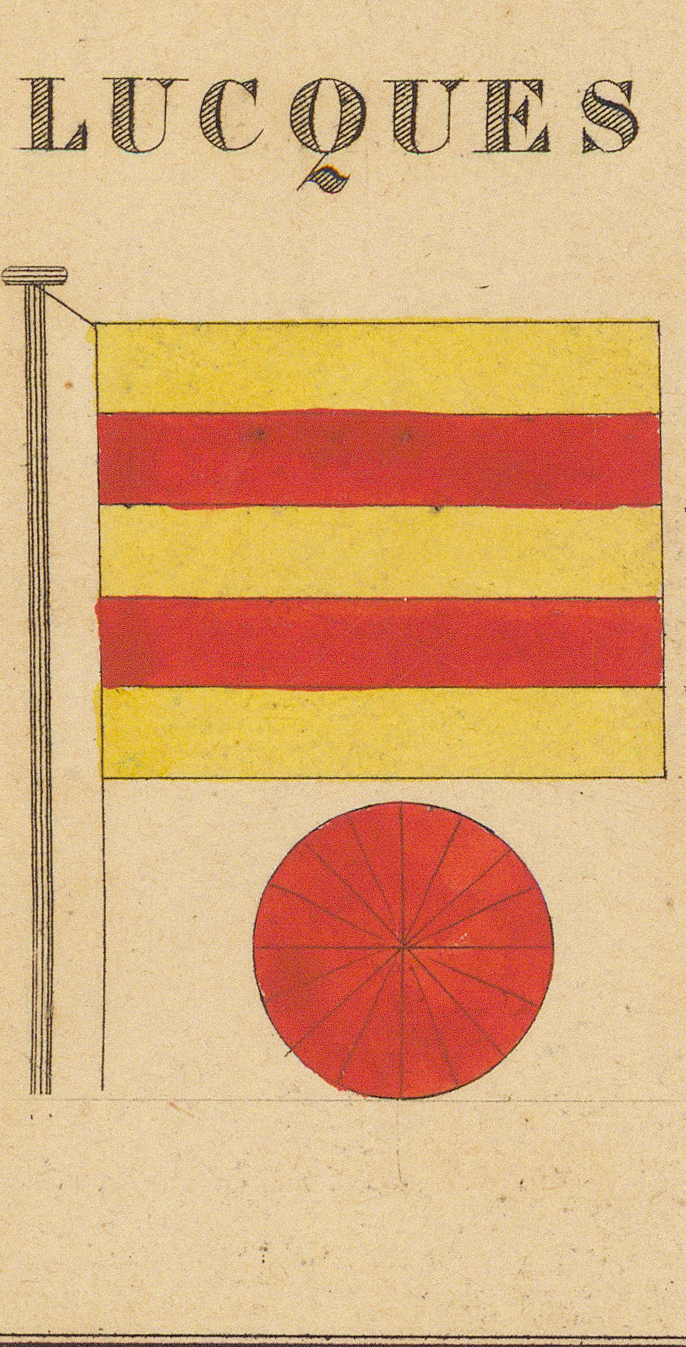
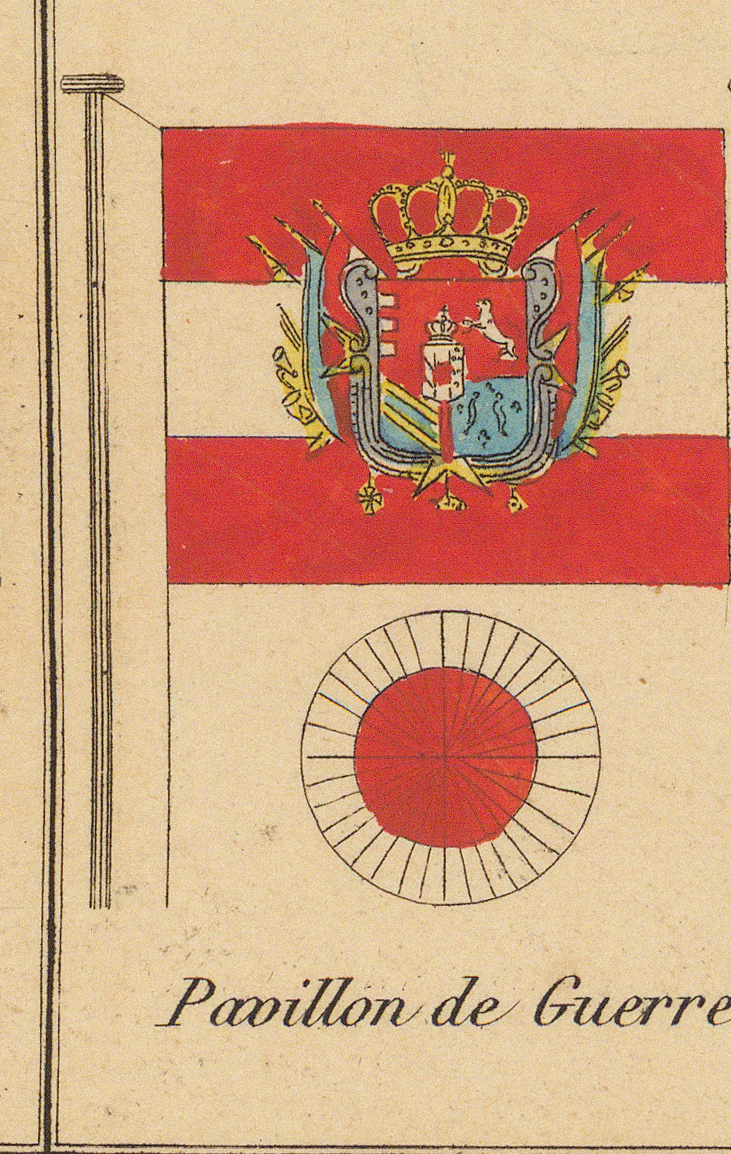
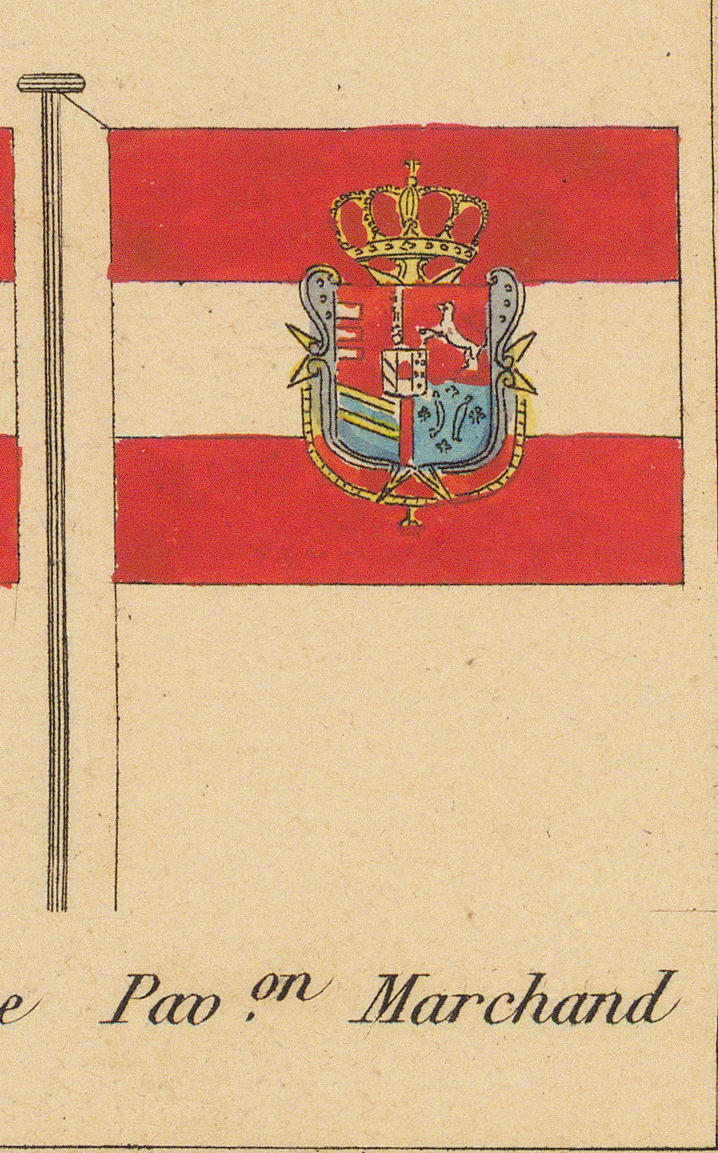
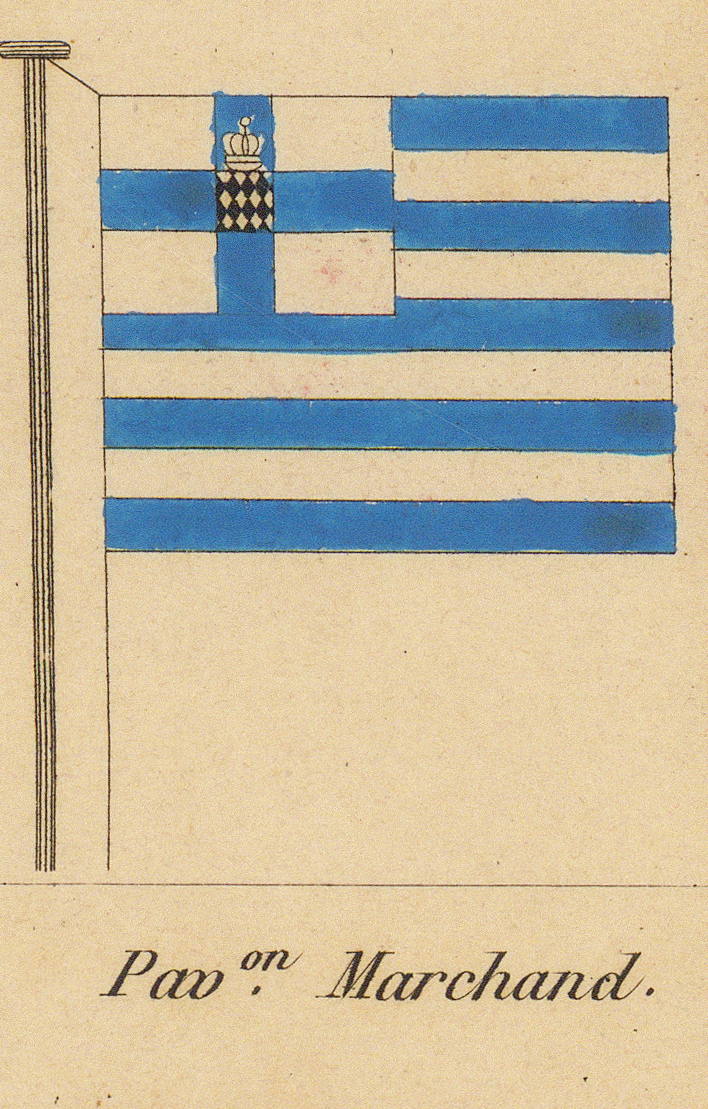
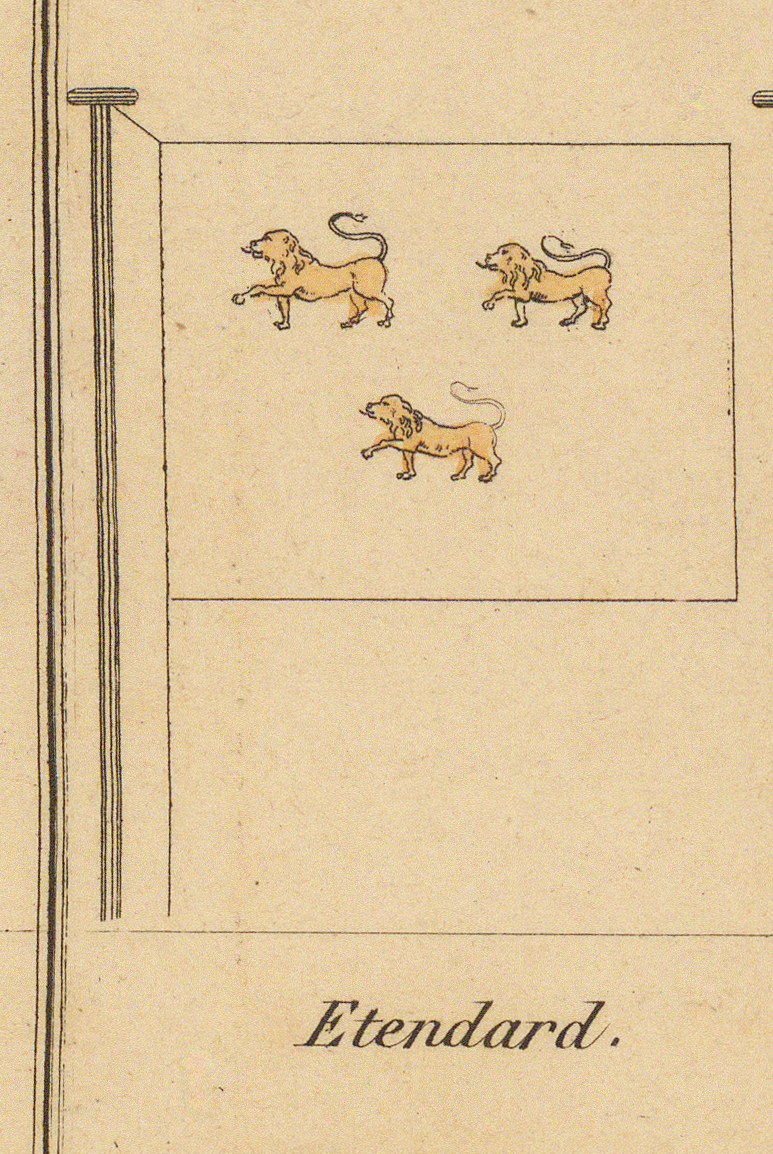
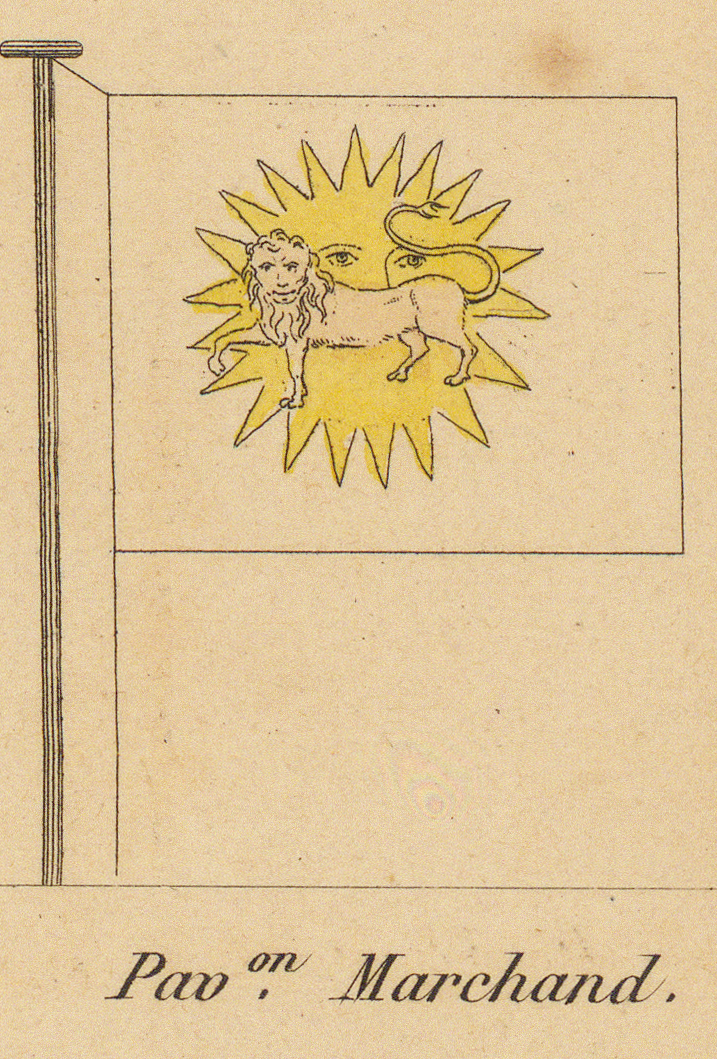
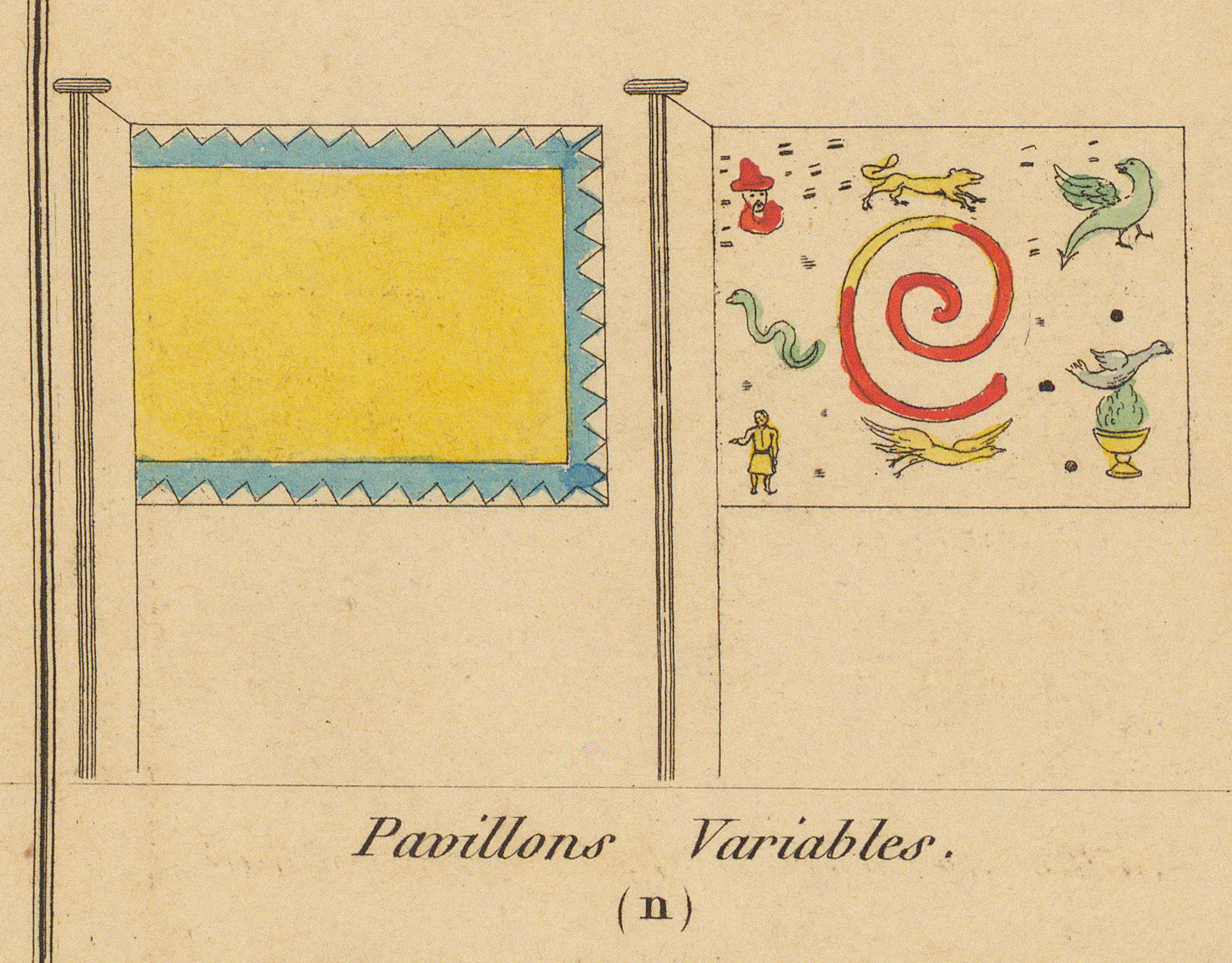
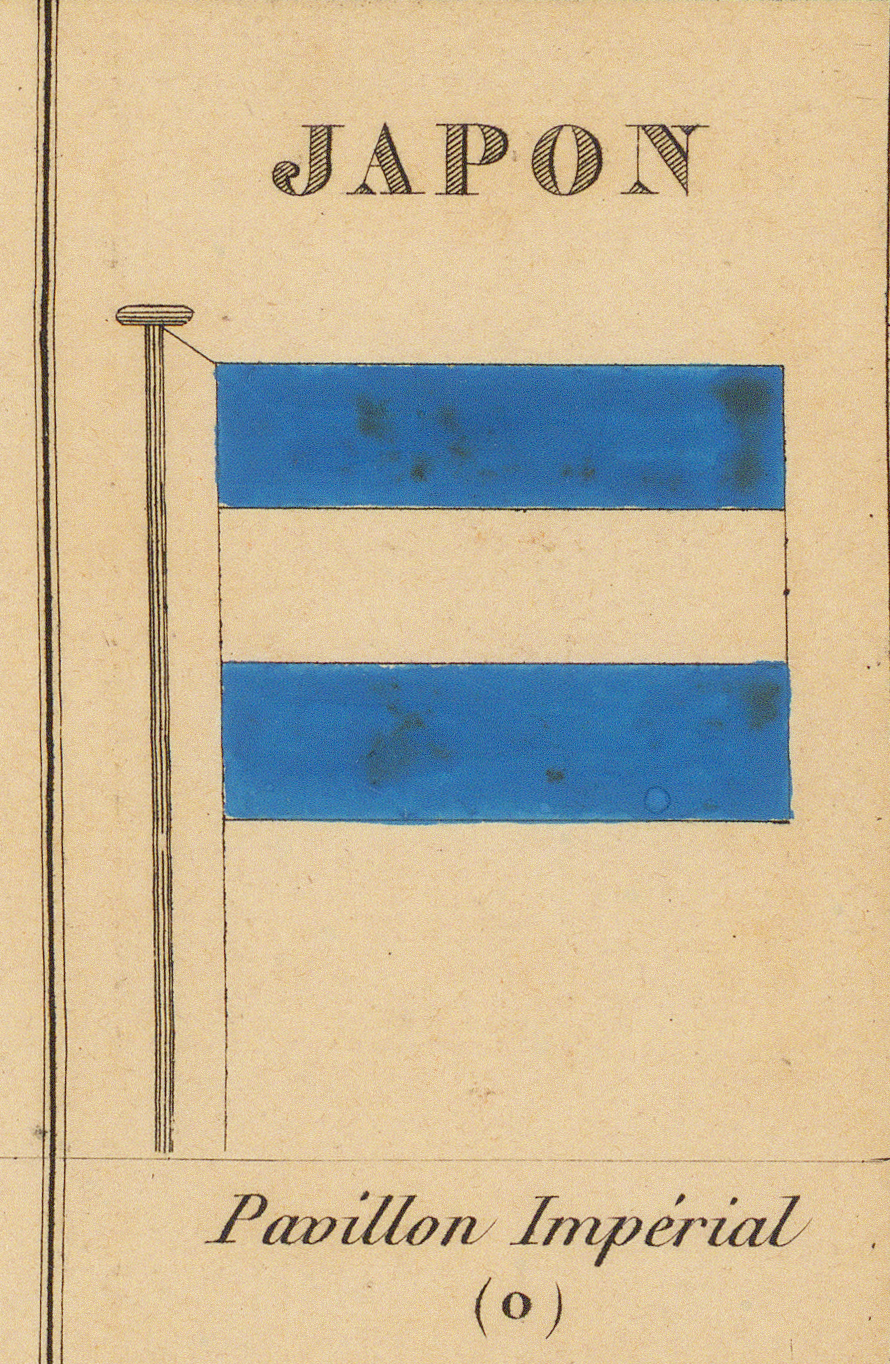
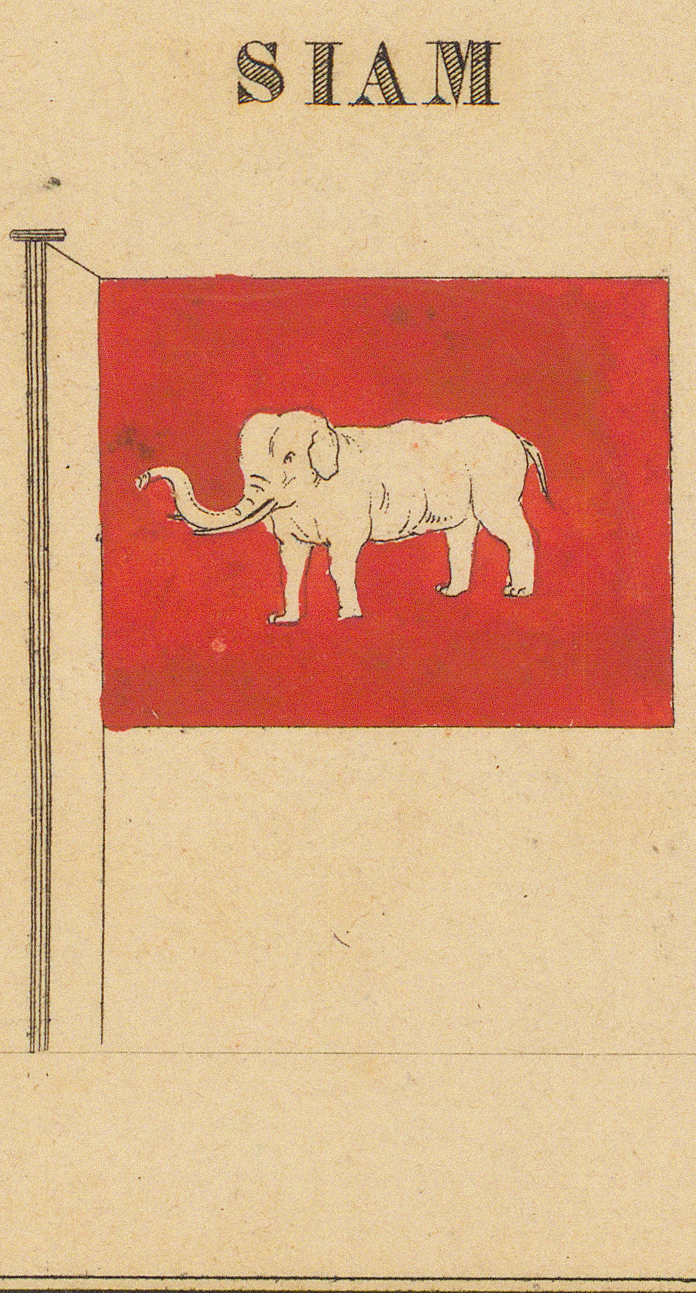
Siam – Pérou
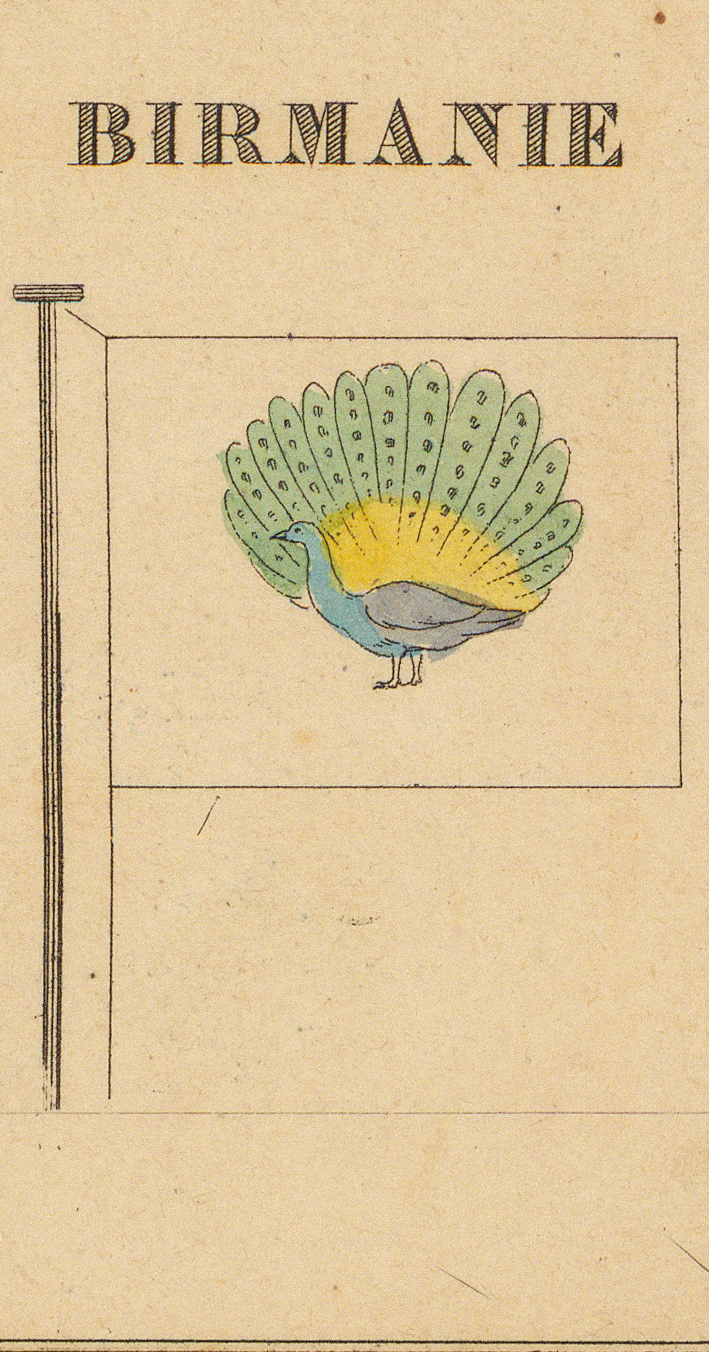
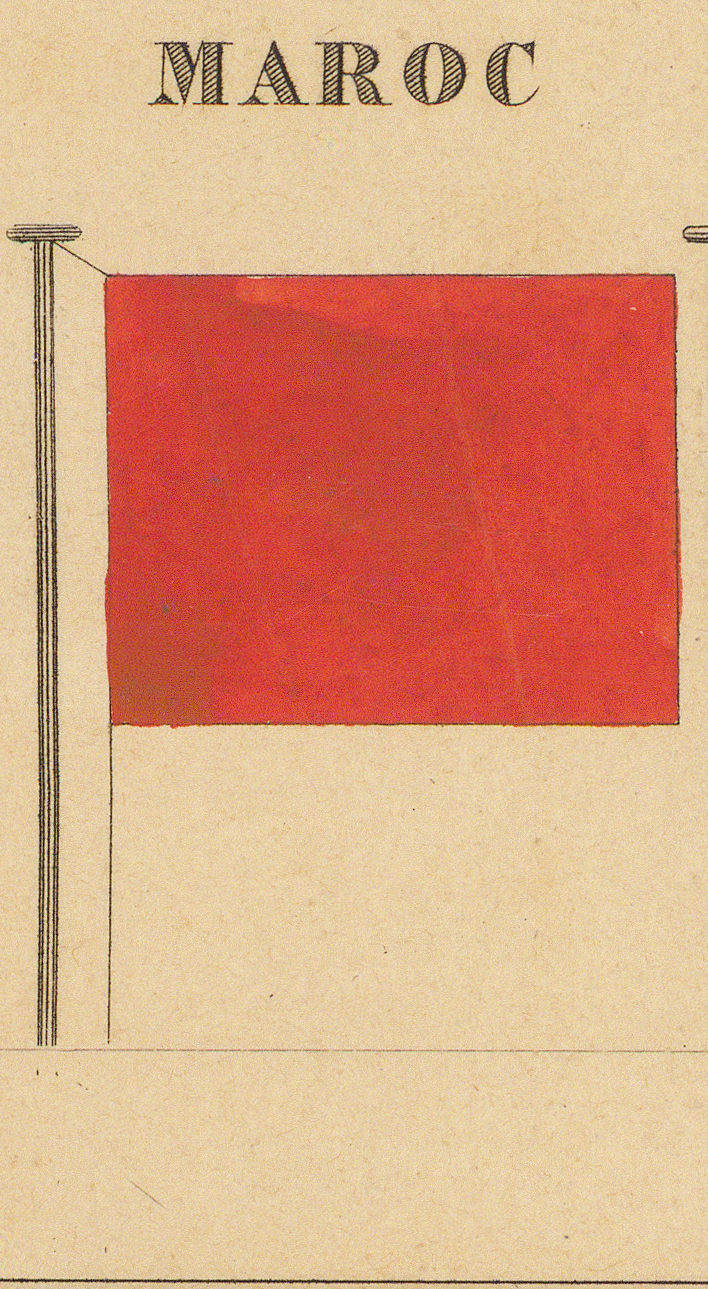
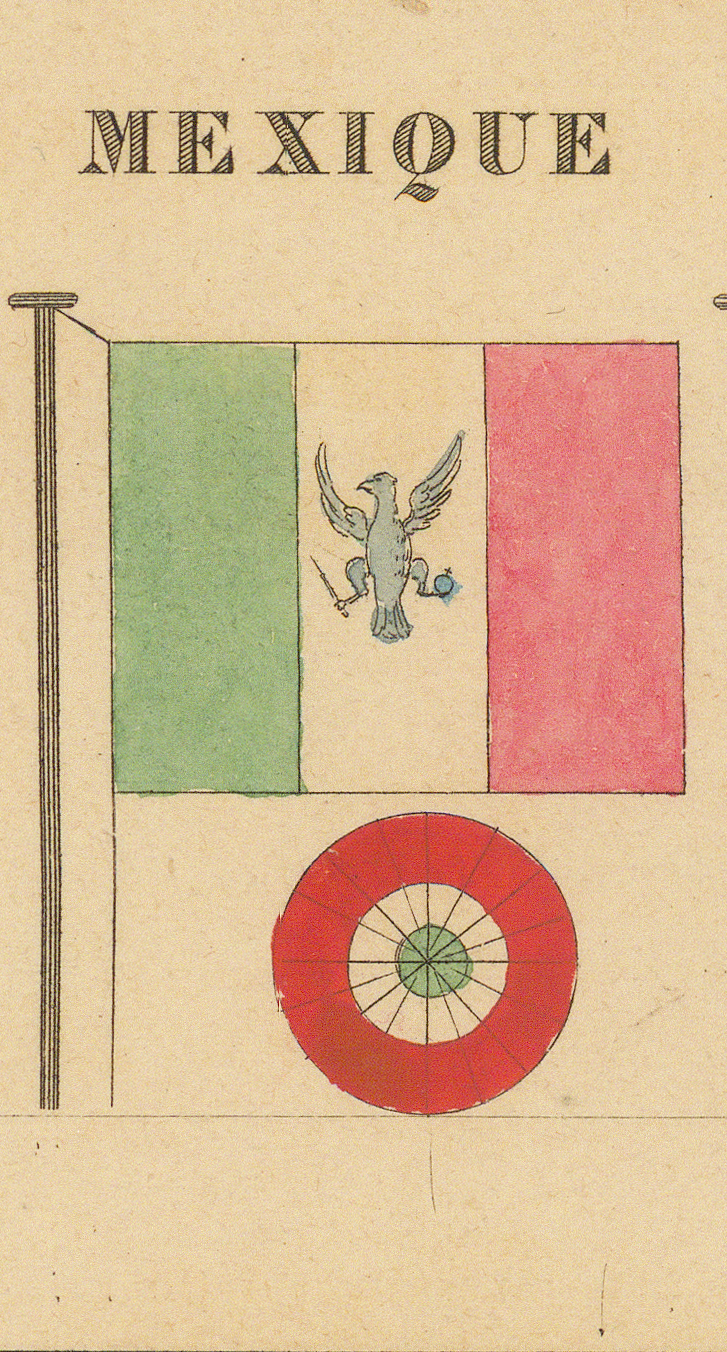
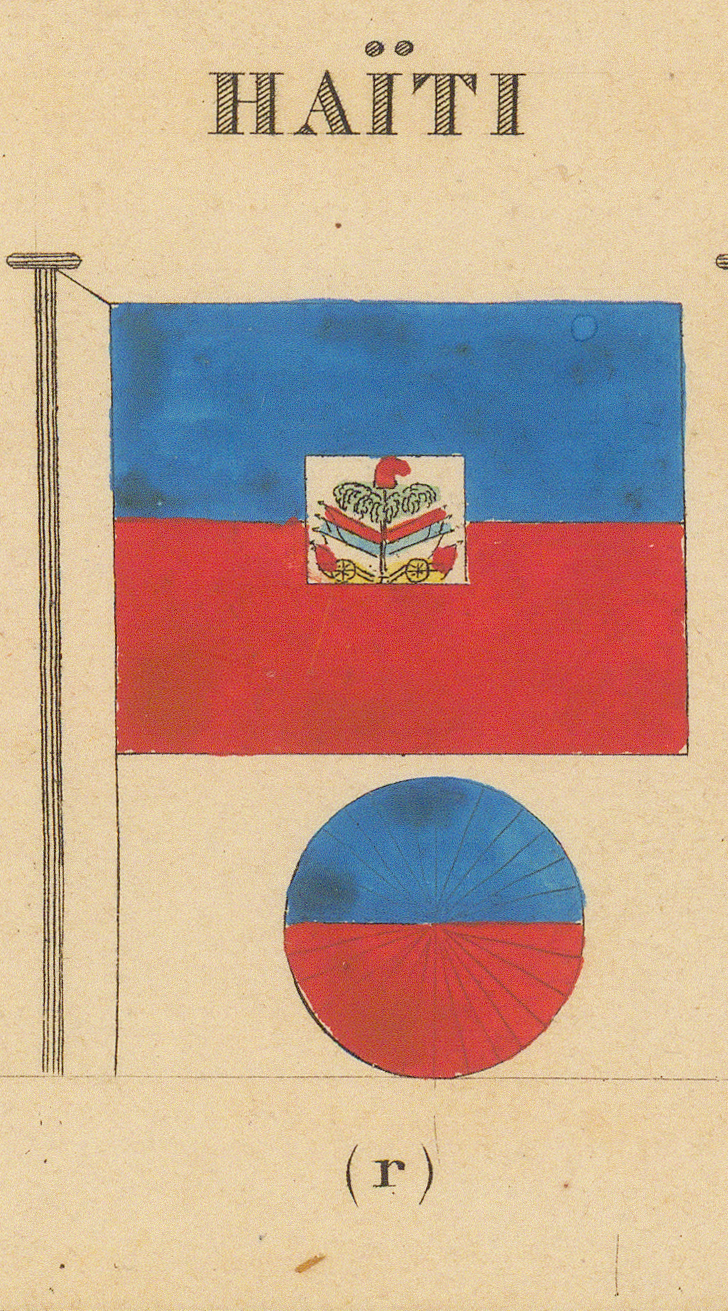
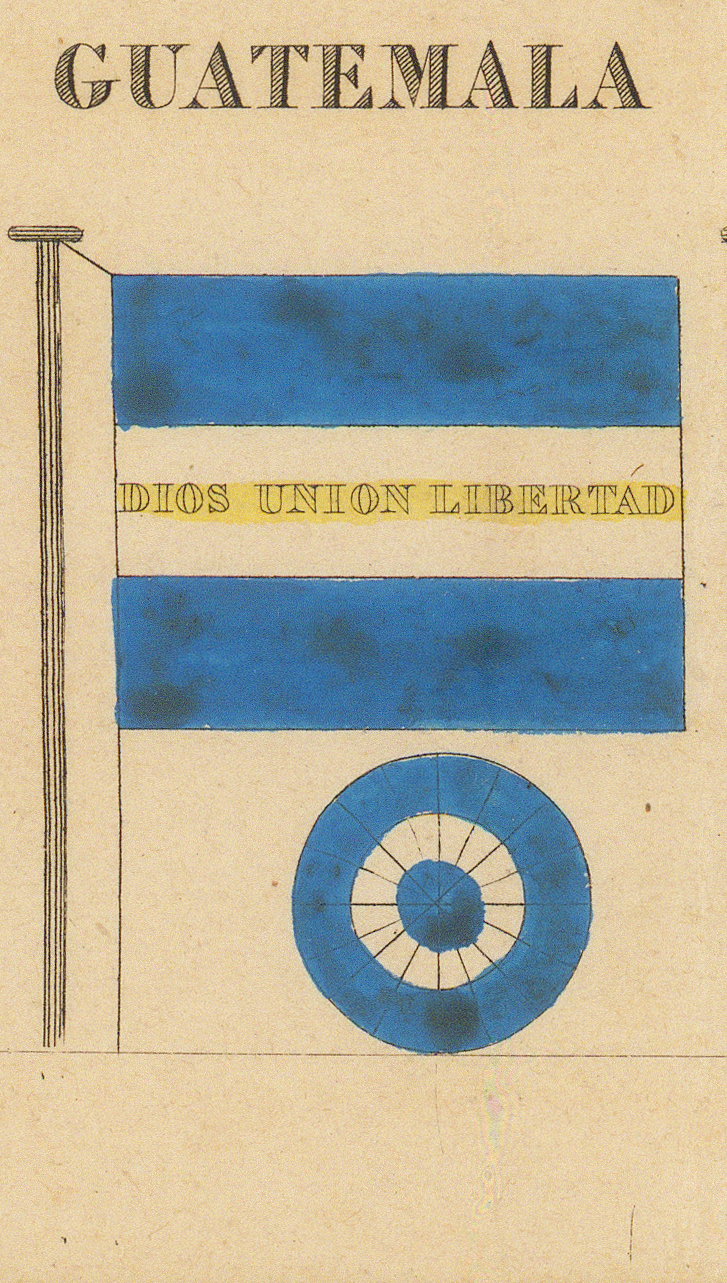
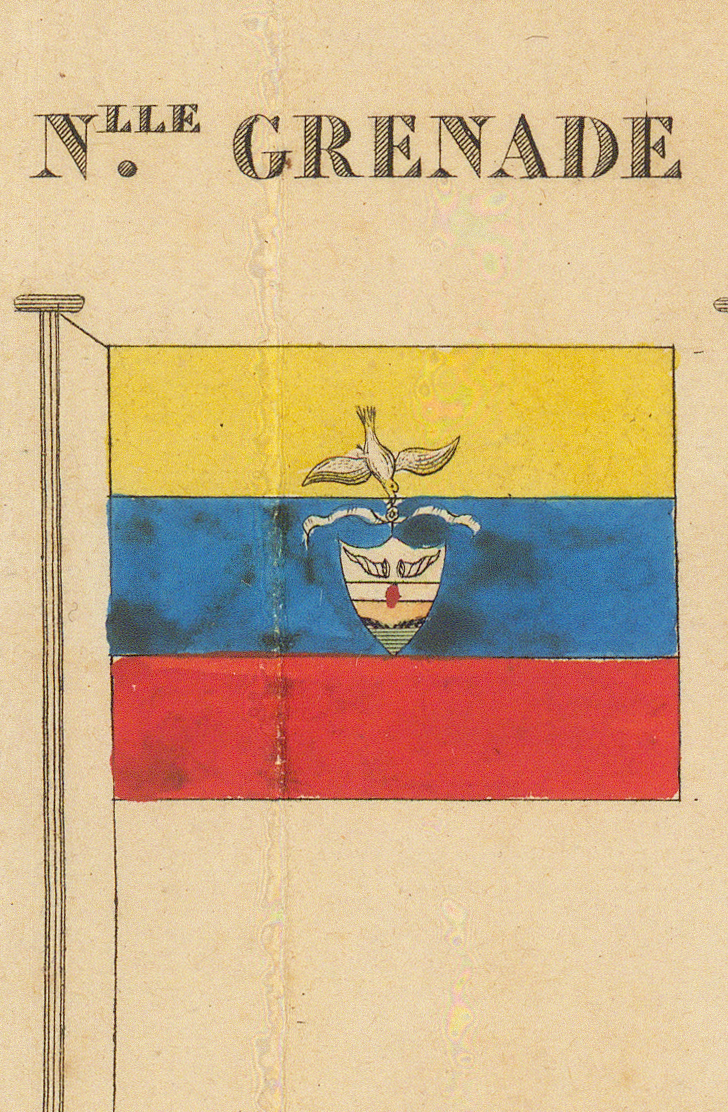
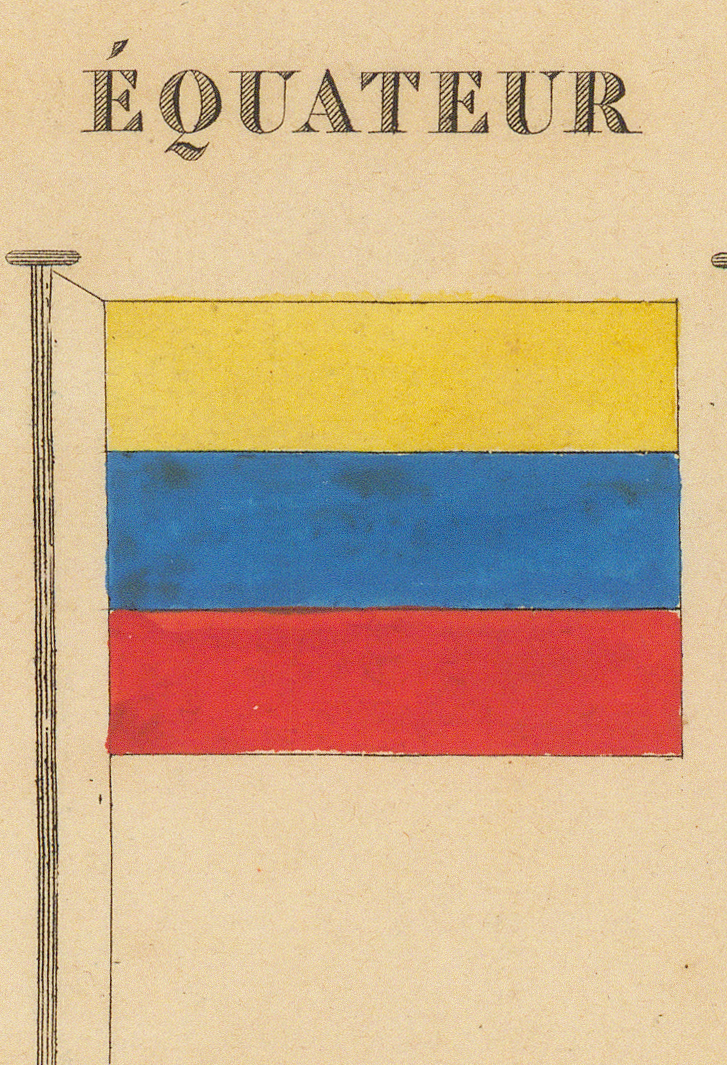
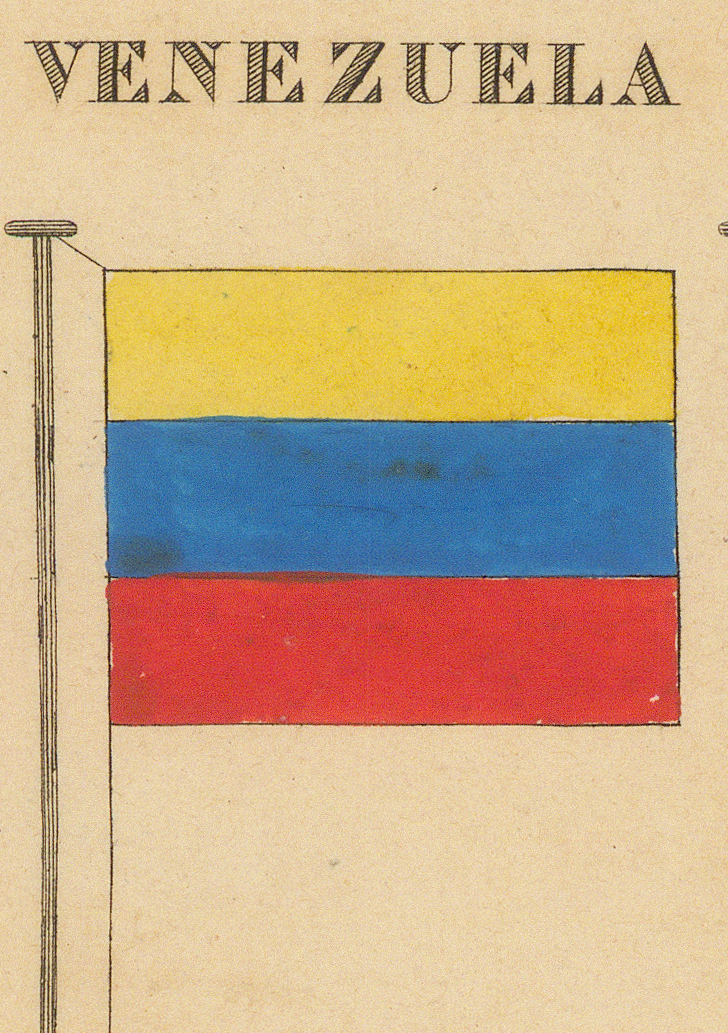
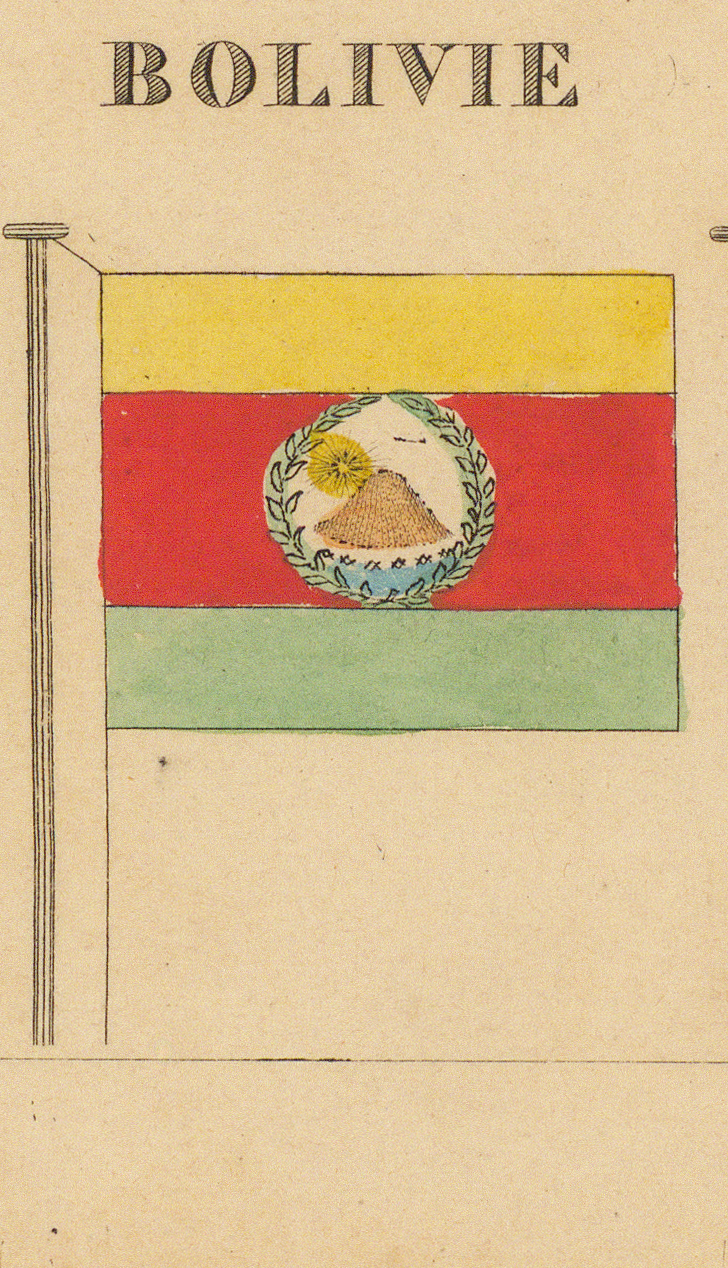
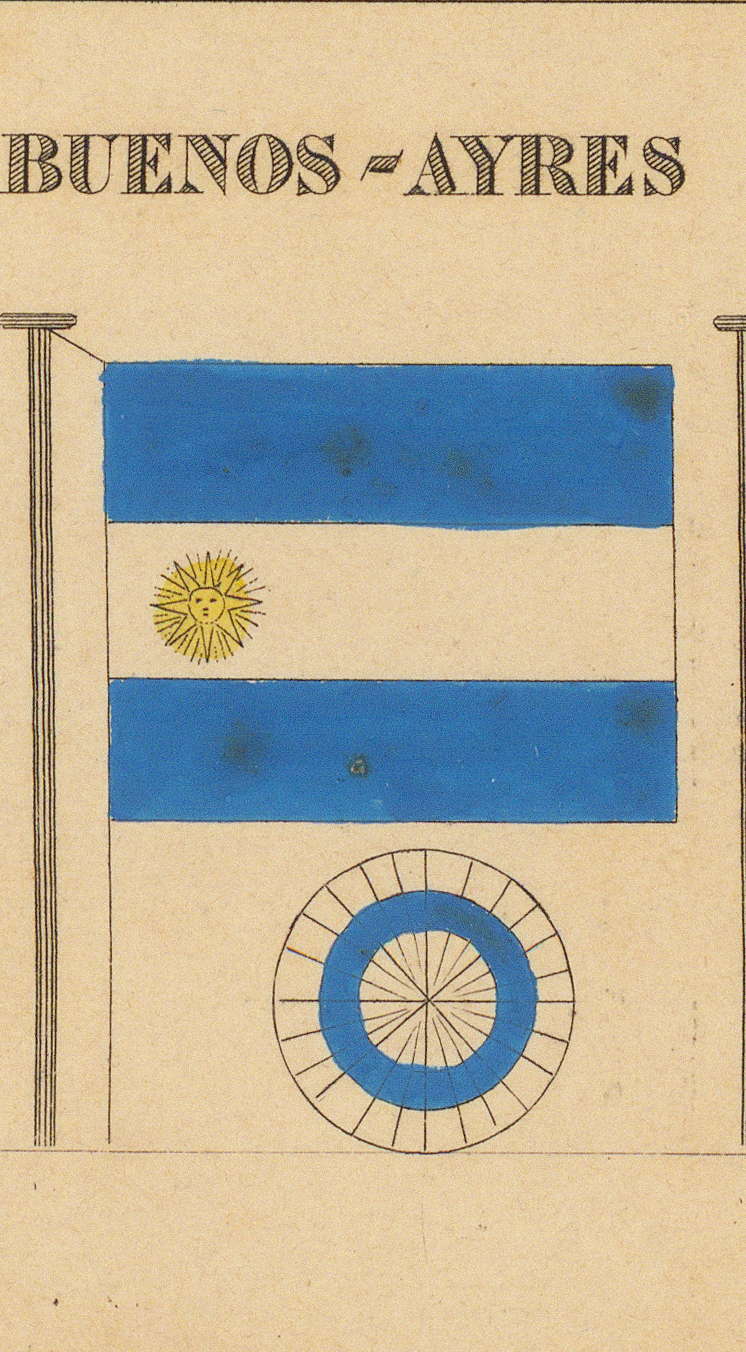
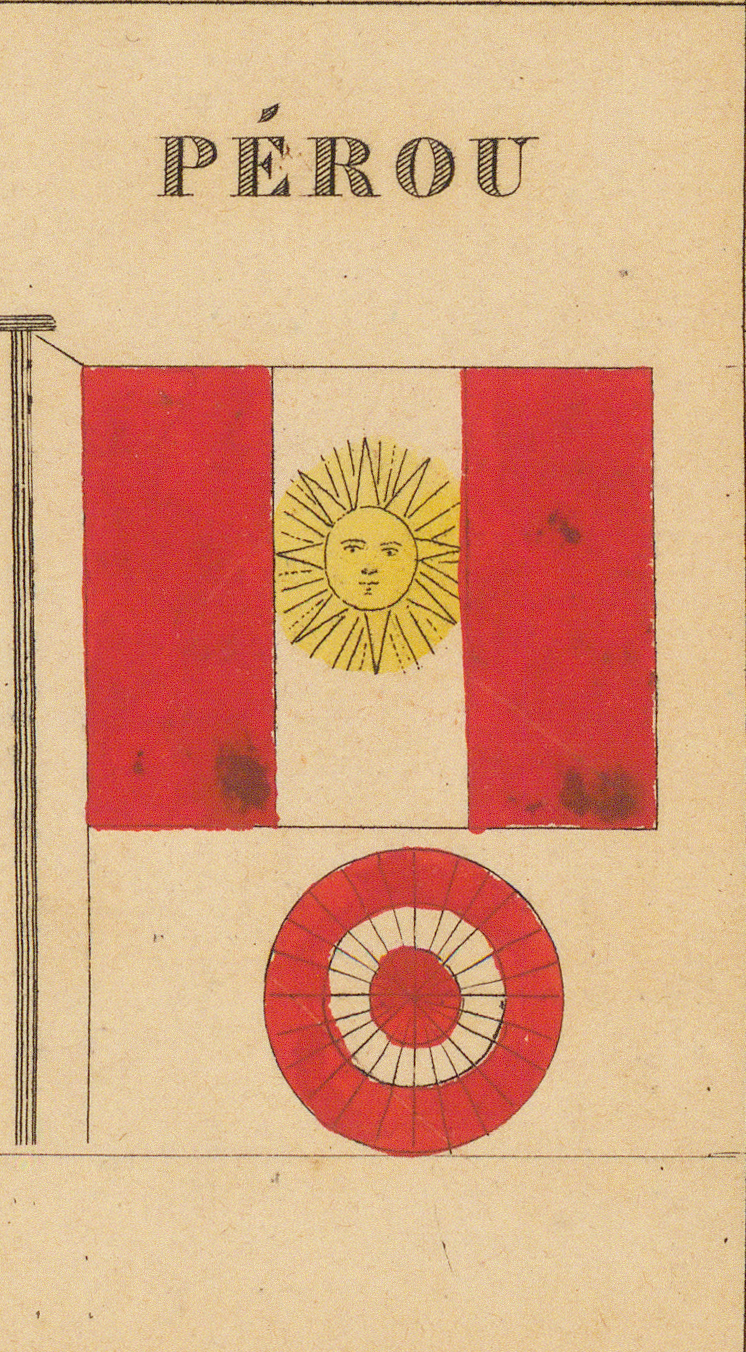
The sixth row gives one flag to each of nineteen states, the country name printed above each panel. Beneath the three flags of Nouvelle Grenade, Équateur, and Venezuela a shared note reads: (Ces trois Pavillons ne diffèrent que par l'Écusson.) — “these three flags differ only in the escutcheon.”
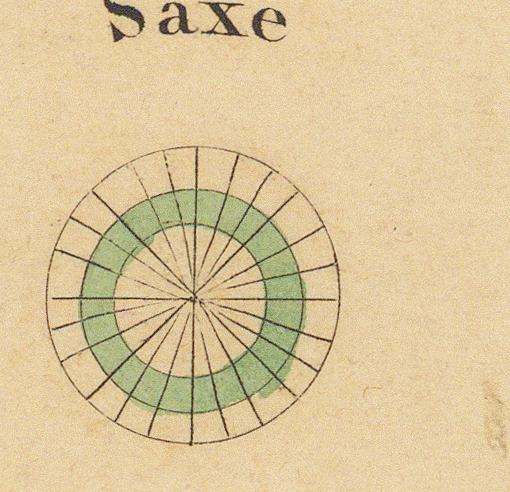
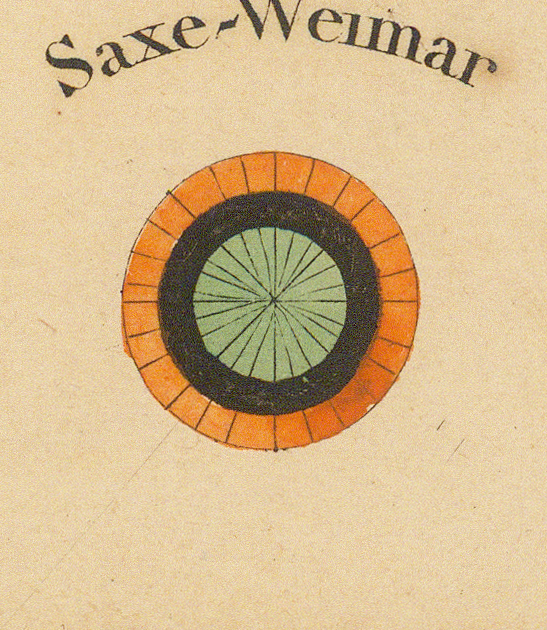
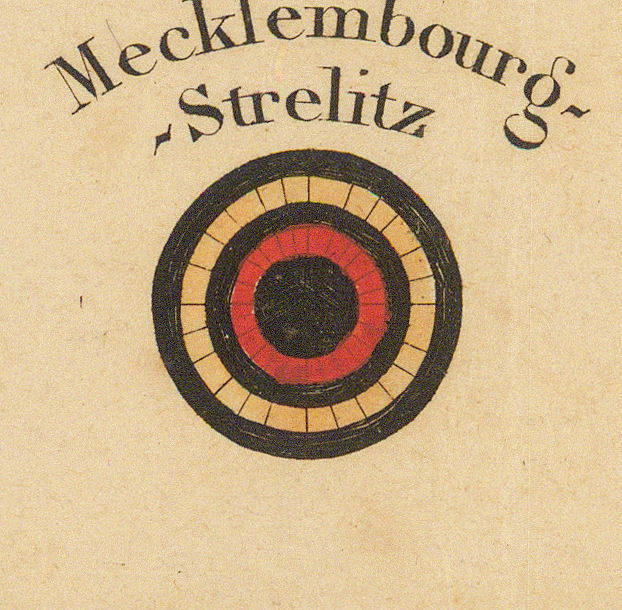
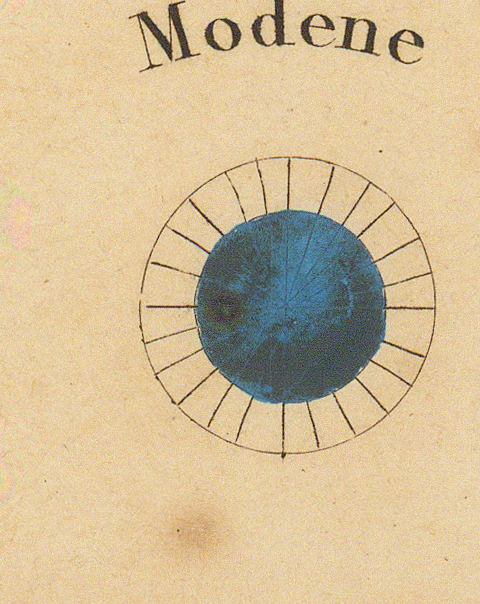
Cocardes
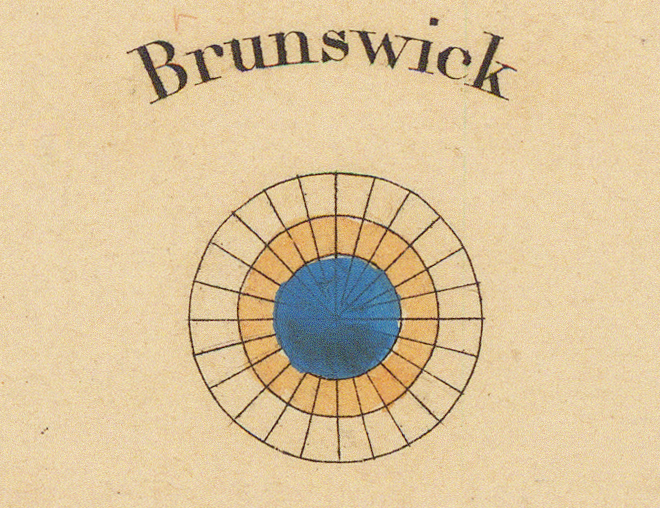
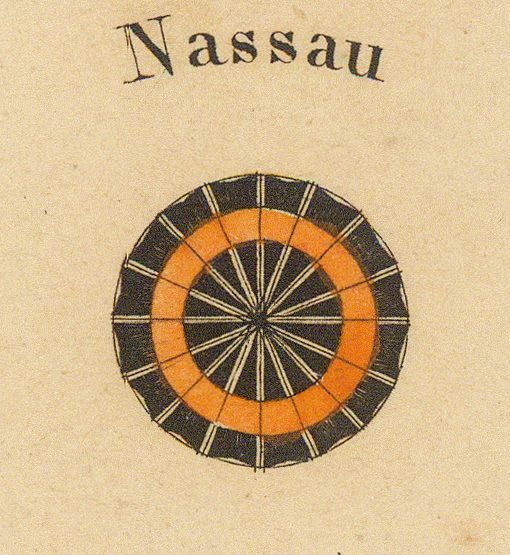
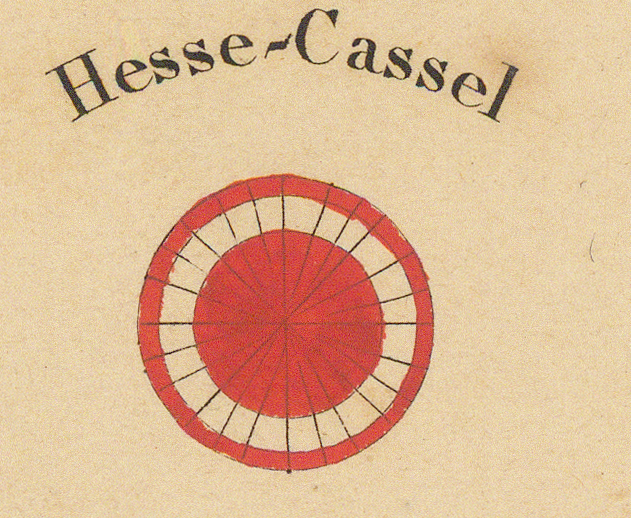
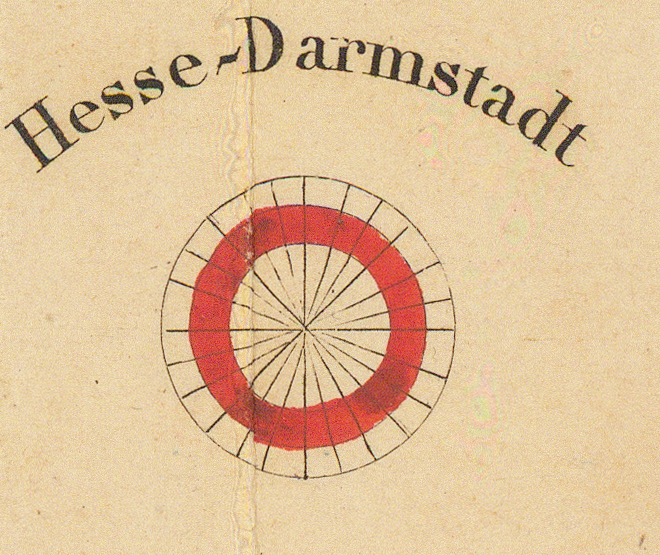
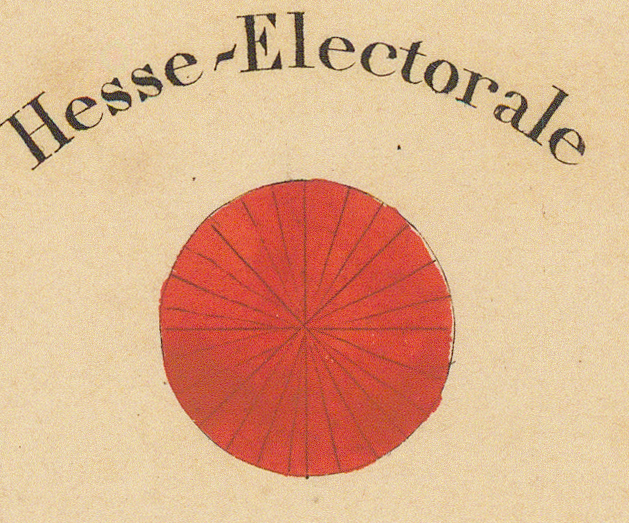
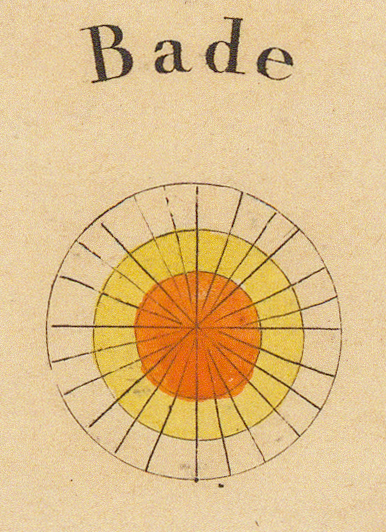
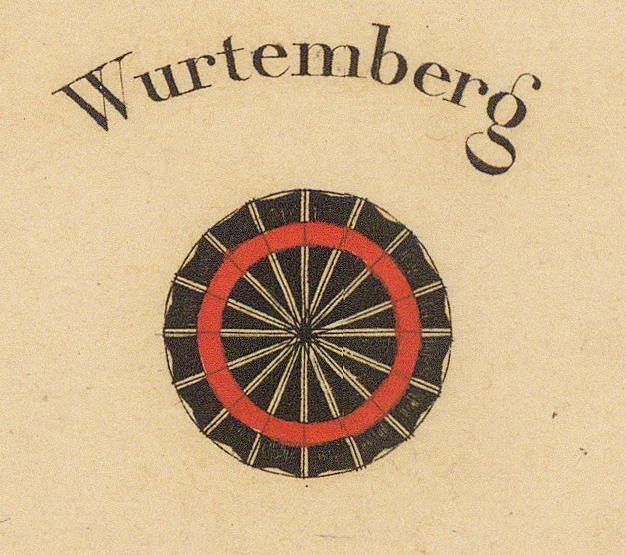
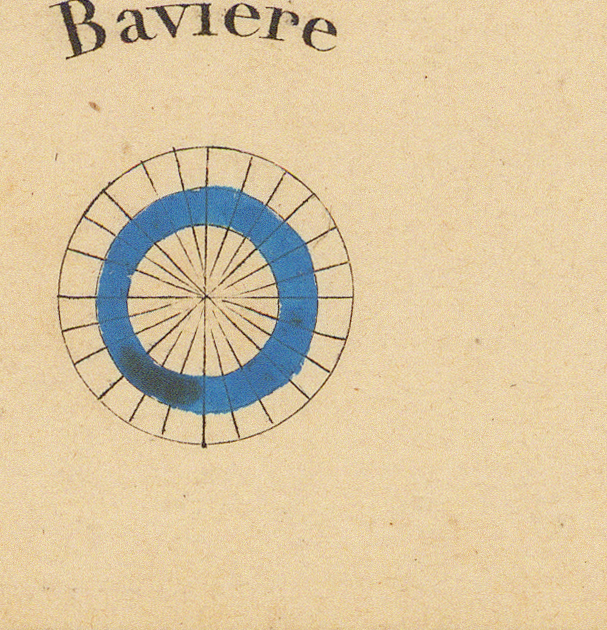
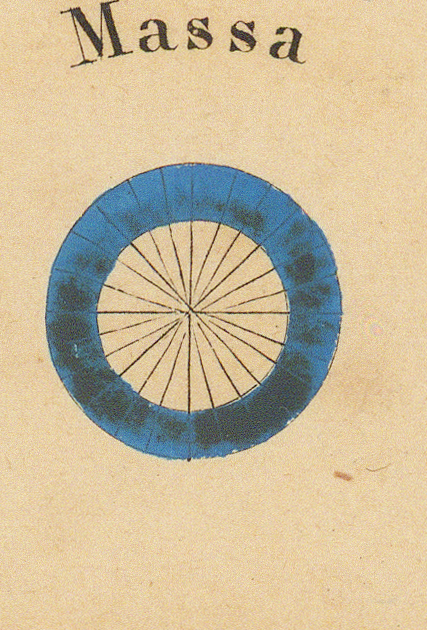
A band beneath the flag rows carries fifteen labelled cockades of minor states, complementing the unlabelled cockades drawn beside the flags of the greater powers. In this copy the Cracovie and Parme cockades were left uncoloured by the colourist, showing the bare engraved line-work.
Printed Notes
Two panels beneath the flag rows carry twelve footnotes keyed to letters printed under individual panels. They are transcribed here with English renderings; the abbreviations of the engraver are expanded.
| (a) | Le Pavillon Royal porte sur la partie blanche une couronne et le chiffre du Roi sur un écusson bleu. The royal ensign bears on the white part a crown and the King's cipher on a blue escutcheon. |
|---|---|
| (b) | Pour le Beaupré des vaisseaux de guerre. For the bowsprit of warships. |
| (c) | Ce Pavillon est celui des vaisseaux Marchands qui peuvent aussi arborer ceux des divisions bleue et blanche en les bordant de rouge. This flag is that of merchant vessels, which may also fly those of the blue and white divisions when bordered with red. |
| (d) | Les Vaisseaux de guerre portent à leur Beaupré un Pavillon semblable sans bordure blanche. Warships carry at their bowsprit a similar flag without the white border. |
| (e) | Ce Pavillon est quelquefois bleu ou blanc avec le château rouge. This flag is sometimes blue or white with the castle red. |
| (f) | Ce Pavillon se porte aussi sans le nom de la ville. This flag is also flown without the name of the town. |
| (g) | Ce Pavillon est celui de la Confédération Helvétique pour tous les Cantons réunis. Chaque canton a aussi son Pavillon particulier. This flag is that of the Helvetic Confederation for all the cantons together. Each canton also has its own flag. |
| (h) | Marque distinctive du commandement d'un Amiral ou d'un officier Général. Distinctive mark of the command of an admiral or a general officer. |
| (i) | Les Bâtiments Marchands armés en course portent les armes Royales comme le Pavillon de guerre. Merchant vessels fitted out as privateers bear the royal arms like the war ensign. |
| (k) | Servant aussi de distinction à l'Amiral en chef. Serving also as the distinction of the admiral-in-chief. |
| (l) | Il y a un autre Pavillon qui n'est arboré que pendant la vacance du St Siège. There is another flag which is hoisted only during the vacancy of the Holy See. |
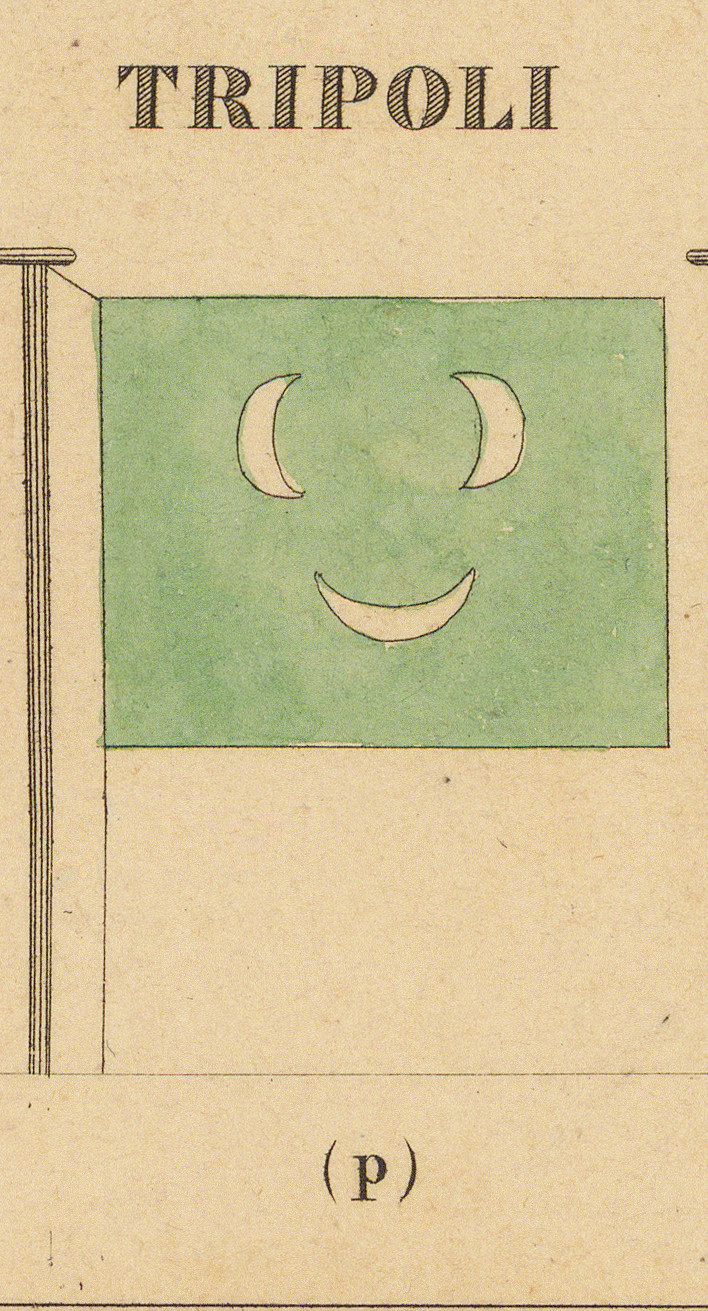
| (m) | Les Navires marchands portent aussi un Pavillon tout rouge et aussi un Pavillon jaune avec 3 croissans blancs. Merchant ships also carry an all-red flag, and also a yellow flag with three white crescents. |
| (n) | Il y a dans cet Empire plusieurs Pavillons de couleurs variables. There are in this empire several flags of variable colours. |
| (o) | Chaque Prince Japonais a un Pavillon particulier. Each Japanese prince has his own flag. |
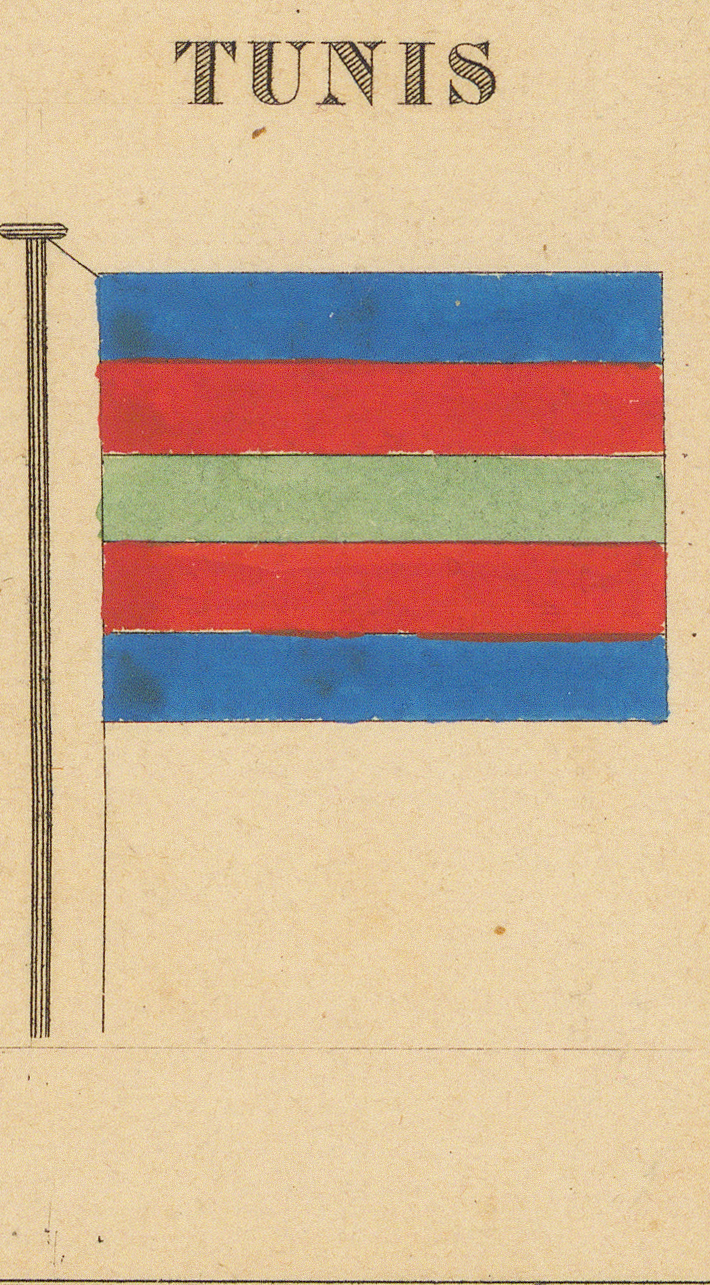
| (p) | Les Pavillons particuliers des États Barbaresques sont souvent remplacés par un Pavillon tout rouge. The particular flags of the Barbary states are often replaced by an all-red flag. |
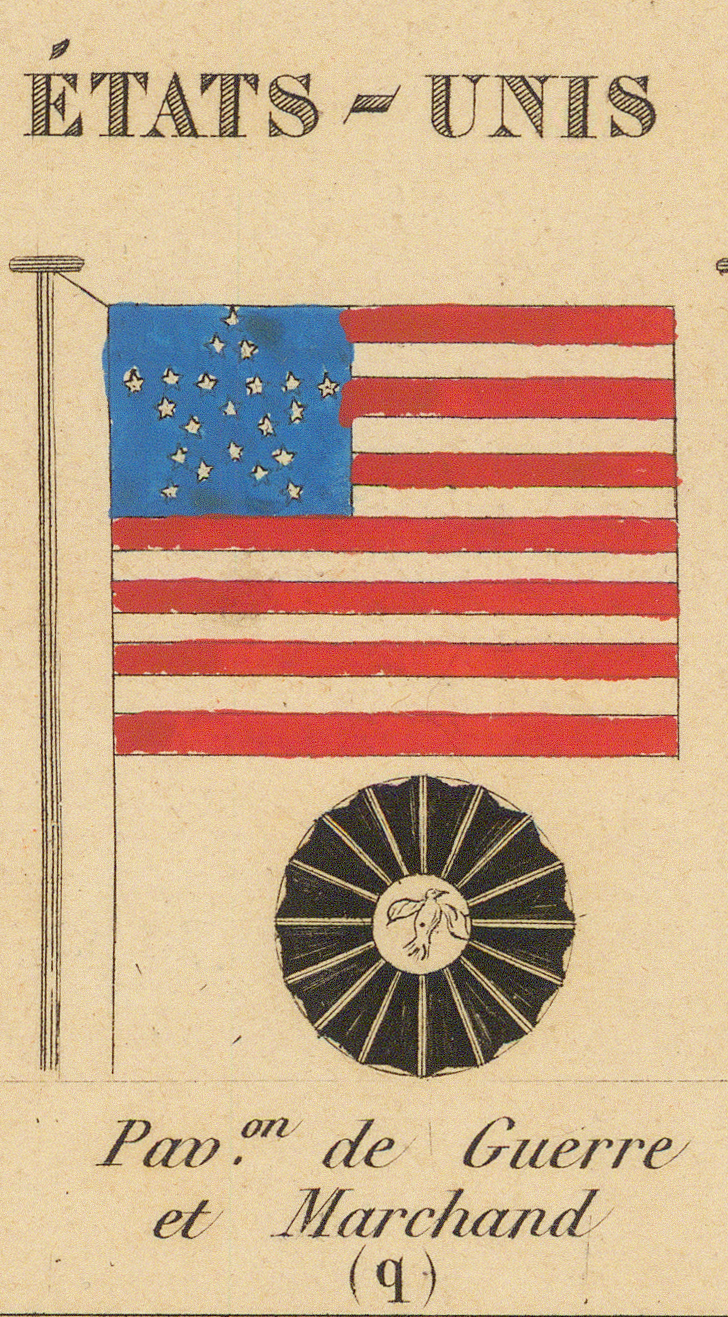
| (q) | Le Pavillon de la Douane porte les bandes rouges verticales. Le 1er Commodore porte un pavillon à pointe bleue avec des étoiles blanches, le 2e rouge, le 3e blanc, avec des étoiles bleues. Le Pavillon de Santé est tout jaune. The customs flag bears the red stripes vertical. The first commodore carries a blue-pointed pennant with white stars, the second red, the third white, with blue stars. The quarantine flag is all yellow. |
| (r) | Ce Pavillon est celui qui est arboré les Fêtes et Dimanches; celui des jours ordinaires ne porte pas d'écusson. This flag is the one hoisted on feast days and Sundays; that of ordinary days does not bear the escutcheon. |
Method and Next Stage
This preliminary index records what is present before interpreting it. The sheet's claim to follow des Documens Officiels makes it a valuable benchmark for the state of European knowledge of world flags in 1837, and several panels invite individual study.
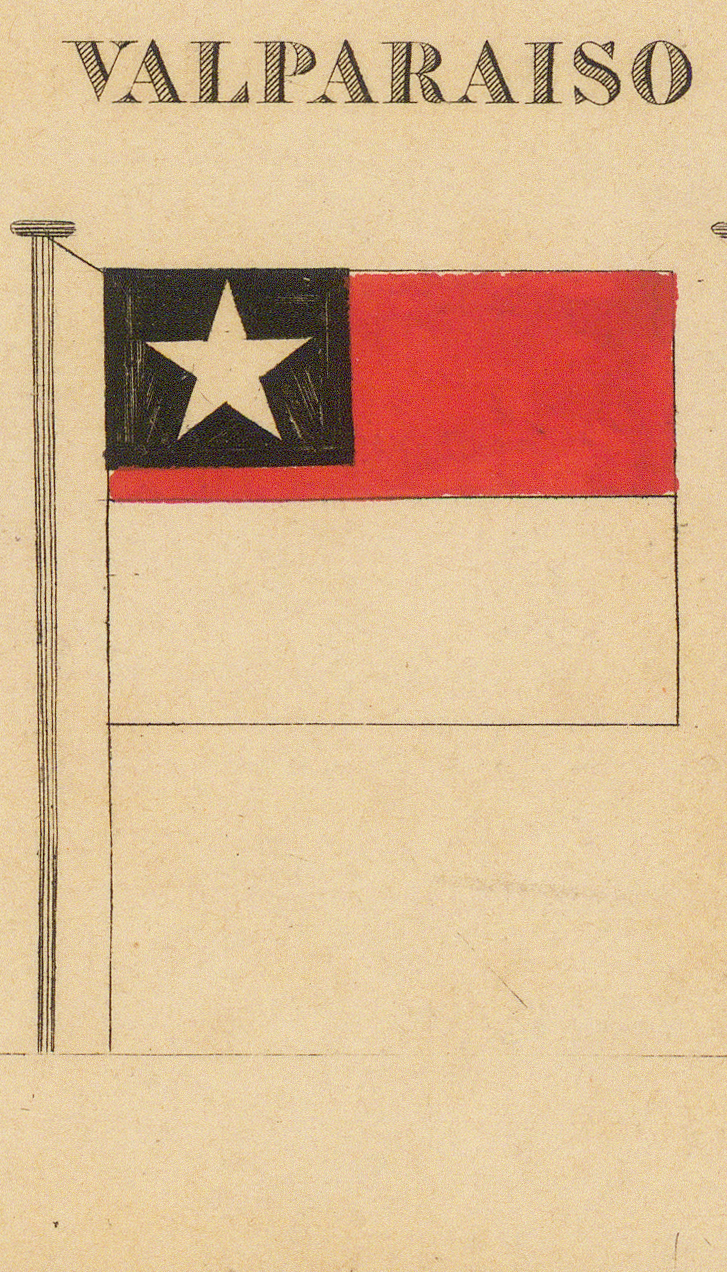
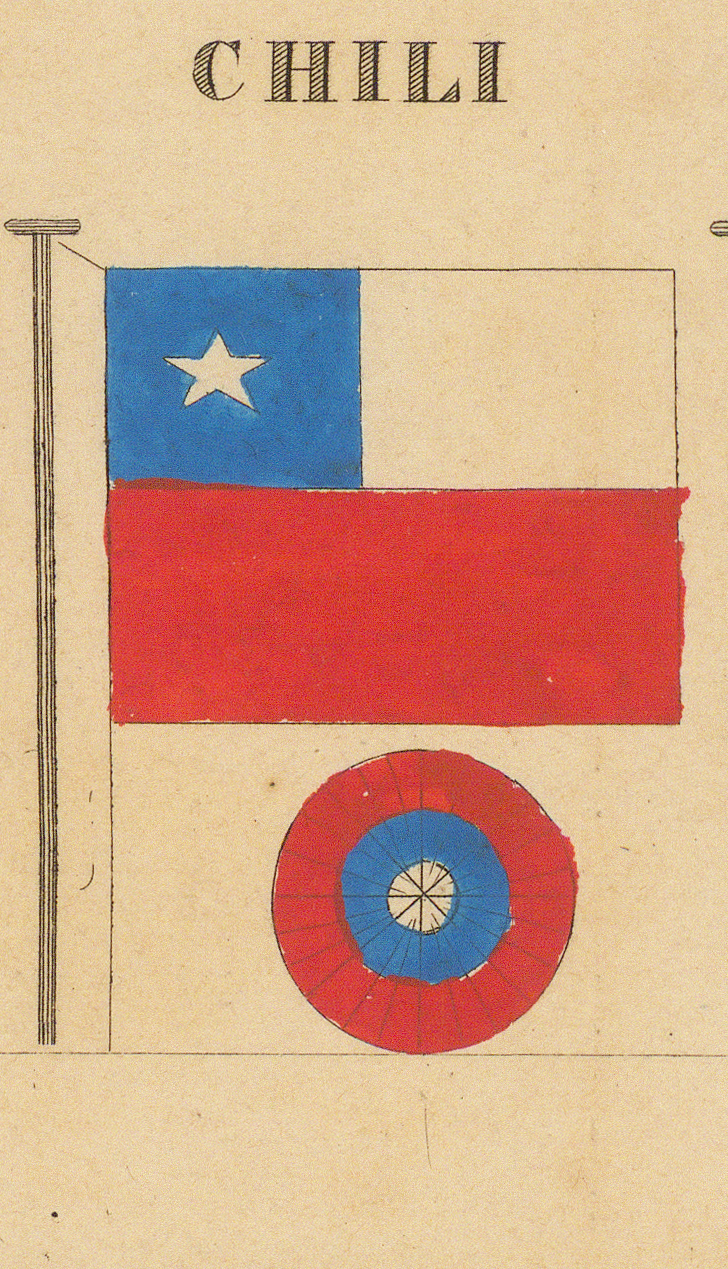
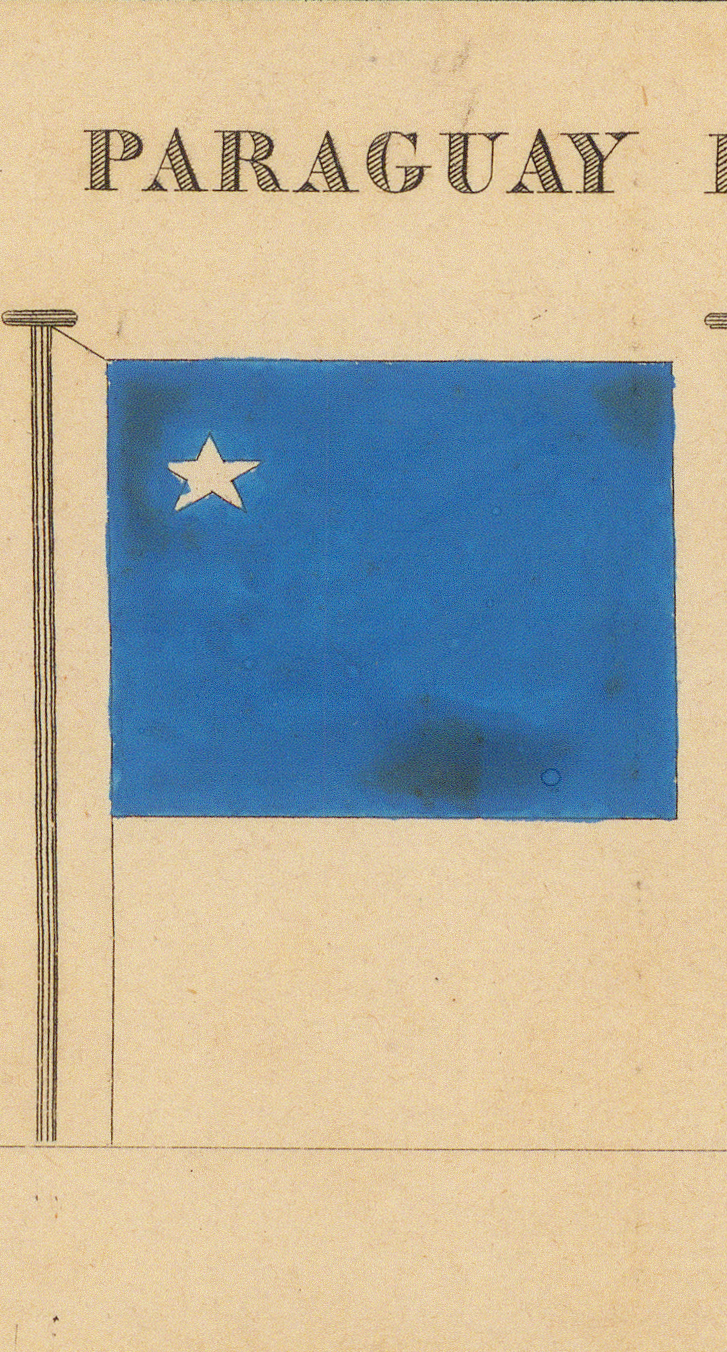
Among them: the Paraguay panel shows a plain blue flag with a single star, wholly unlike the documented red-white-blue tricolour; Valparaiso is given a flag of its own beside Chile; Poland retains a panel six years after the November Uprising was suppressed; the Japanese and Chinese entries — drawn before either state adopted a national flag — document the publisher's honest uncertainty, stating that Chinese colours are variable and that each Japanese prince has his own flag.
The five French arrondissement panels, with the same district numbering and coastal stretches, reappear almost unchanged on the 1863 plate in this collection published a generation later by Armand Le Chevalier — a direct case of the copying relationships this atlas is designed to trace.
Bibliographic References
- Pavillons et Cocardes des Principales Puissances du Globe, complete sheet in the present collection; title, imprint, date, series marking, captions, and notes transcribed from the sheet.
- Bibliographic placement of the Andriveau-Goujon Atlas Universel and this issue's place within it remains to be established.
© Encyclopaediae. Open educational reference project.